Seventh Sunday after Trinity Mark 8:1-9

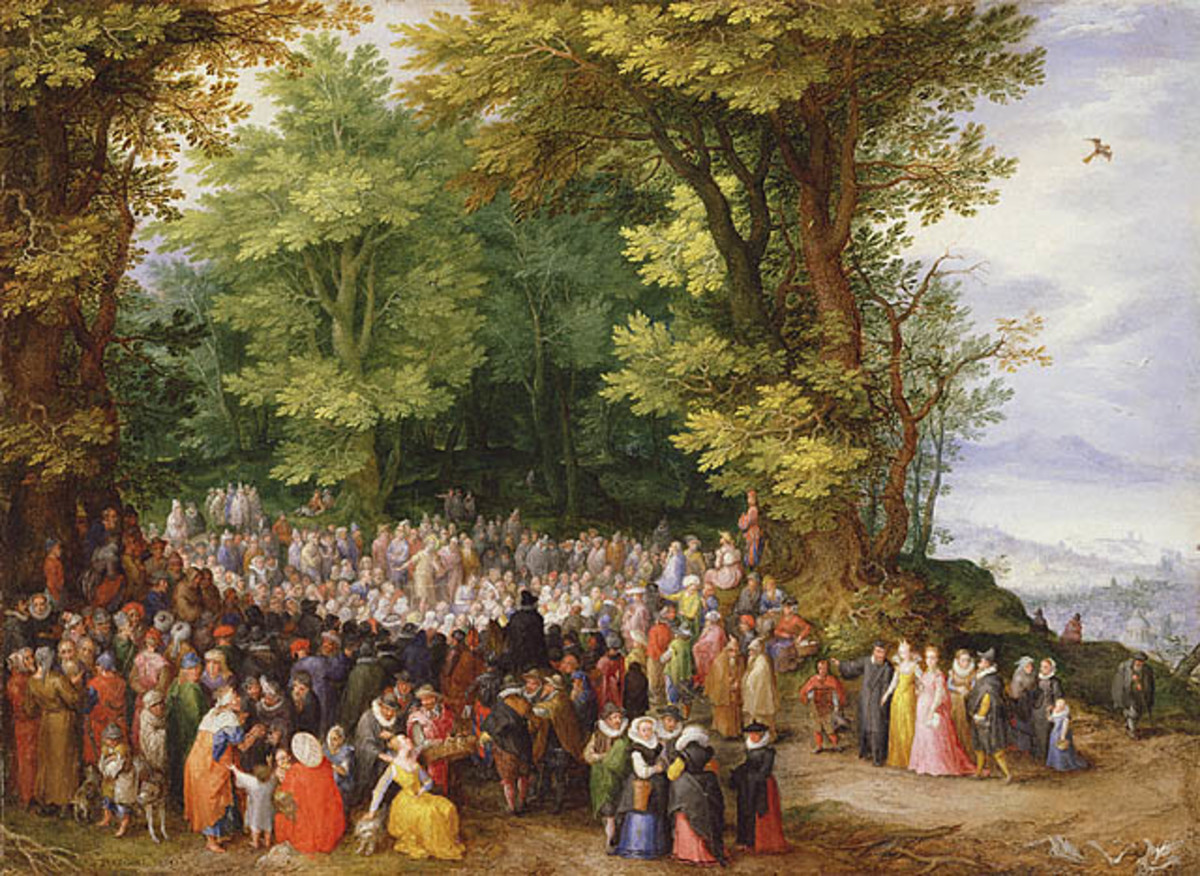
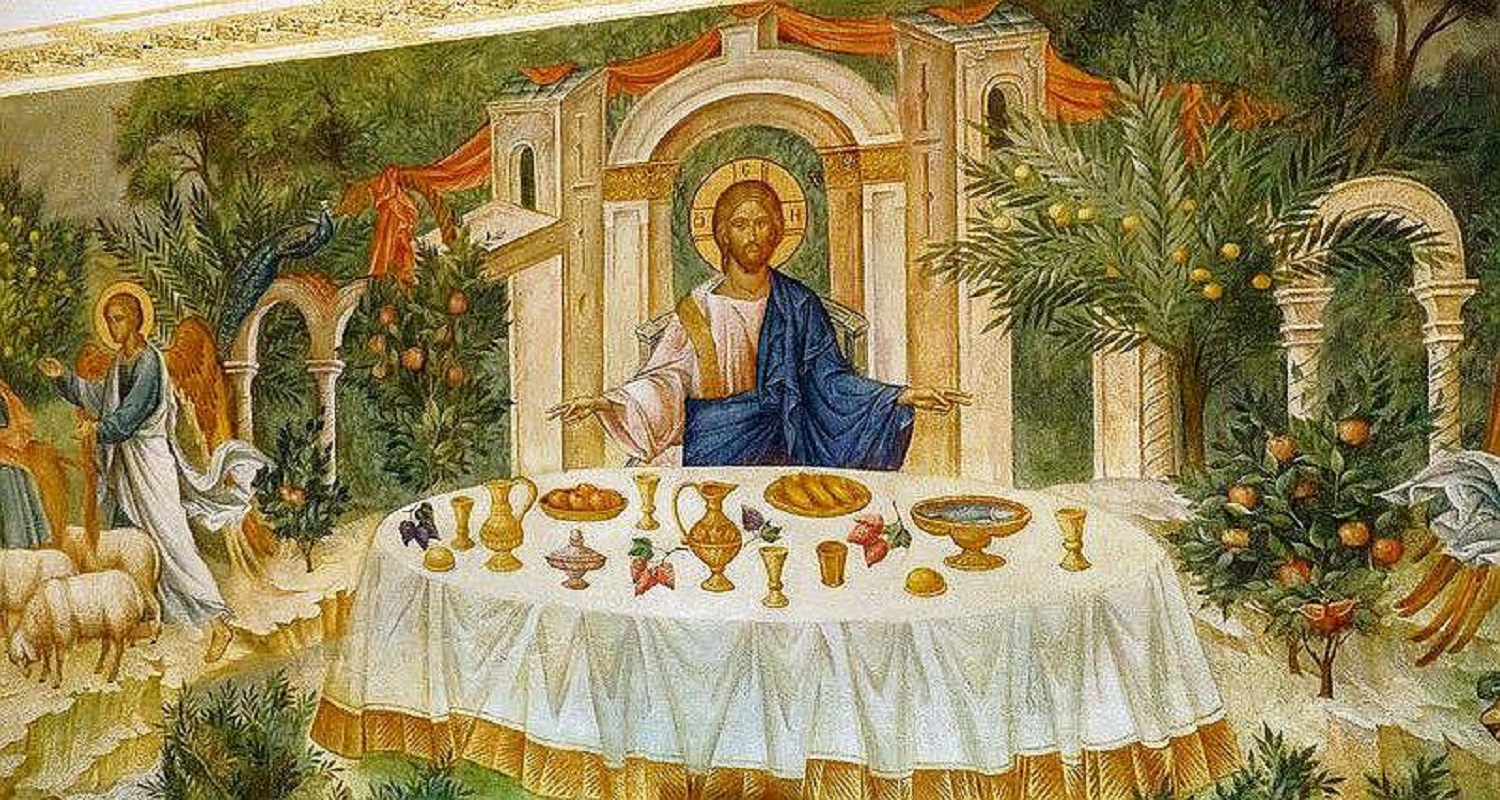
  Our Lord says, “Seek first the kingdom of God and His righteousness, and all these things shall be added to you.” Three whole days have passed, and four thousand men have not left Jesus’ side to find food or to take shelter. The people seek nothing from him but to hear his word. Though food will calm the stomach and shelter will preserve the body, the word of God satisfies the soul and raises the body eternally. In the people’s listening, they seek first his kingdom.

How easy would it have been to leave the crowds? There were undoubtedly 20,000 people, including their wives and children, who came to hear Jesus teach. To return to the farm to tend to the livestock, or to go home with a crying baby, or to go to the market to find some food, but none of the people leave the teacher. And when Jesus comes to bring them into a desolate place, a place without vegetation or water, the people remain steadfast. Jesus Christ, the Word of God in flesh and blood, is with them. For the people, why would they leave food and shelter that is the word of God? Gathered at the feet of Jesus, the crowds are unlike their forefathers, the ancient Israelites, who in the wilderness groaned against God. 

After the Israelites left Egypt, when they became hungry, they lost faith in God and his servants Moses and Aaron. They cried out to Moses, “Oh, that we had died by the hand of the Lord in the land of Egypt, where we were fed with pots of meat and we ate bread to the full! For you have brought us out into the wilderness to kill this whole assembly of hunger?” Even as they saw the mighty hand of God bring them across the Red Sea, they were led by the very presence of God to the land of promise by the pillar of fire and cloud. They who were set free from the bondage in Egypt now become slaves to unbelief. 

Israel did not put their trust in the Lord; The Lord still had compassion on them.  As God said to Mose, “Behold, I will rain down bread from heaven for you. And the people should go out and gather certain quail every day that I may test them.” The Lord puts the people to the test, and yet they fail. Later in their journey, the people resume their groaning. Telling Mose, “For there is no food and no water, and our soul loathes this worthless bread.” How can the people call worthless what God has provided? 

The people in Israel are blinded by sin. They cannot see beyond their own hunger. And when God provides, they become sick and tired and call the bread of heaven worthless. They become weary of God’s word and his mighty and gracious acts. This leads them to more hunger as they refuse to eat the bread and quail. Our old sinful nature has also fallen prey to this delusion. When our own desires and vices trap us, can we see the gift of God rightly? The word of God can be so easily pushed aside. Do we regard the word of God as essential, equal to our need for daily bread? We would not go an entire day without food. Then, why would we go a day without prayer, reading the scriptures, or singing a hymn? 

But dear friends in Christ, you are not the old man trapped in sin and bondage to Satan. You are the new man—the man who has been raised with Christ daily. For by his word, you have come to believe in your Lord Jesus Christ. And now you are like the people in the desolate place. The people who laid aside all needs for three days to listen to the words of Jesus. For you come to this place week after week, not seeking to be filled with earthly things, but to be filled with heavenly ones in his words and in the sacrament. 

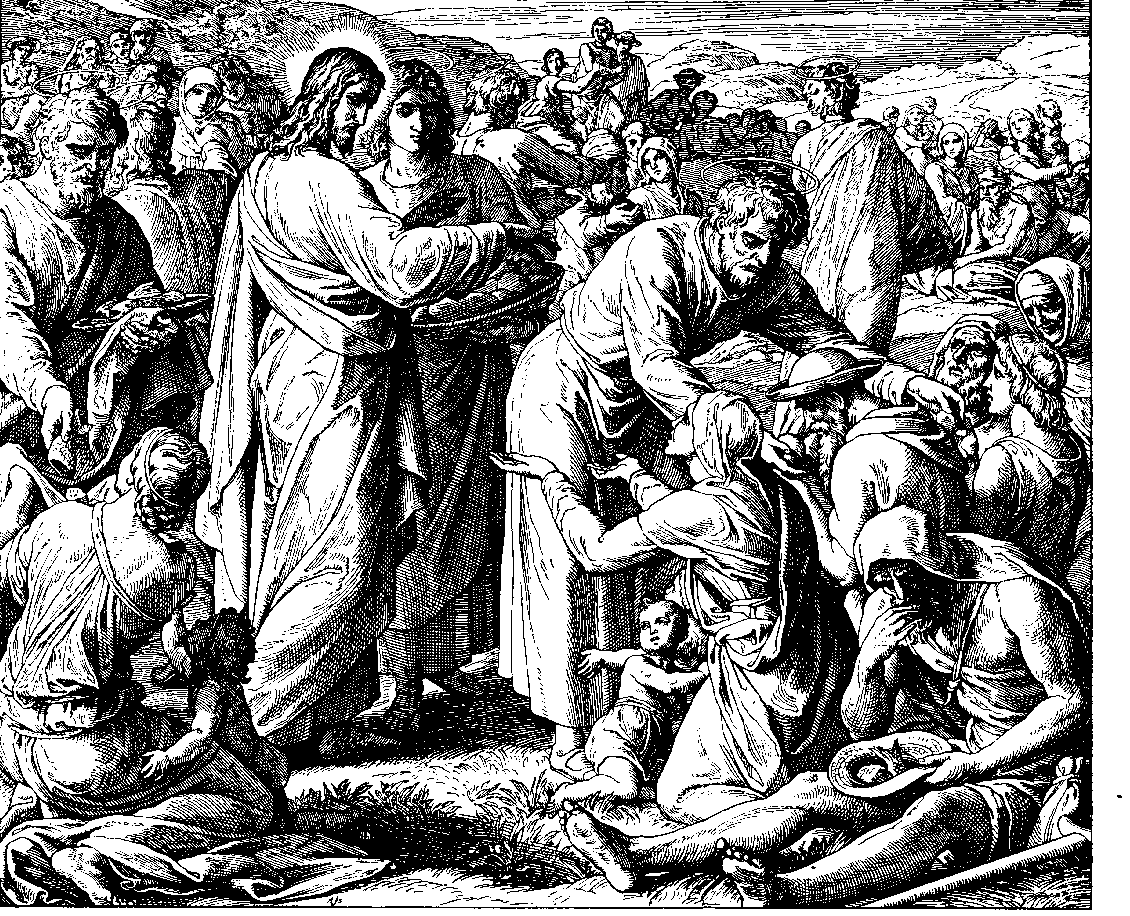
The words of Jesus are the power of salvation. Belief comes with hearing the word of God that clings to Jesus Christ as Lord and Savior. In faith in Christ, you continue to seek God first, knowing that he will provide all things that you need. For God cares, not only for your eternal needs, but also for your needs and your desires here and now. As Christ did not abandon those 4000 men in the desolate place, our Lord provided them with a meal that not only satisfied them, but there was an overabundance. Seven baskets remain full.

The Lord’s provision is immoderate. The abundance of the Lord is not contractual. The Lord sends rain upon the just and the unjust. God did not abandon the people of Israel. No matter how neglectful of God’s word we may become, God still provides for every need of body and soul because of His Son, Jesus Christ. Christ, who has died for sins, that we are reconciled to God. Our sins of doubt, unbelief, or unthankfulness are paid for on the cross. And from his open side pours forth the word of God and our daily bread. 

Look to the people in the desolate place and imitate them. Seek the kingdom of God and his righteousness first and foremost, and everything else will be added onto you. Seek His kingdom through His word. For Jesus Christ is in the preaching of his word, he is in the water of holy baptism, and he is in the bread and wine that is his body and blood. Christ Jesus is in His word for sinners to hear, and by his word, he gives forgiveness and pardon from his father, by his own suffering and dying. The word of God is Christ, who has paid for all your sins.

Through his word, he gives you his righteousness and brings you into his kingdom of grace and blessing. He seeks after you and cares for your needs. The Lord will not abandon you to the desolate places of this life, for he is eager to provide. So, wherever he leads, seek his kingdom and his righteousness, and all things will be added to you.

Sixth Sunday after Trinity Matt. 5:17-26

Self-righteousness has no place in the kingdom of God. As Jesus says, “For I tell you, unless your righteousness exceeds that of the scribes and Pharisees, you will never enter the kingdom of heaven.” In the eyes of the people, the religious scholars and leaders seemed to be the most righteous among all Israel. And now Jesus says that their righteousness must be greater than these. The scribe and Pharisees saw their righteousness based on themselves. That by their religious observance of every festival, their appearance to the law, and their knowledge of the word of God, they would inherit eternal life. For them, their righteousness depended on what they could do and how perfectly they could do it. In their eyes, this is how they could satisfy God: by always remaining ceremonially pure, not eating with tax collectors and sinners, and keeping the Sabbath day as perfectly as possible. And because of their works, they were seen as the most righteous of people.

So when Jesus says your righteousness must surpass the scribes and Pharisees, you can imagine the shock of the people listening. How can God require righteousness greater than theirs? You see, for the Pharisees to whom Jesus was referring, they may have kept the law outwardly, but in their hearts, they did not truly love God. For they believe they can satisfy God through their actions and could show God all that they had done, and they would enter the kingdom of Heaven. Yet, righteousness is a matter of the heart. The Pharisees desired to keep the law, but they did not seek God’s mercy and forgiveness. They believed they could hold themselves up to the Ten Commandments and be declared righteous. And so do we.

Christ has not come to abolish the law, but to fulfill the law on our behalf. Therefore, we do not fear its combination, but allow the Ten Commandments, as the will of God, to shape our Christian life. Knowing that we are justified by the blood of Jesus Christ and not our own appearance to the law, we do not view the Ten Commandments as the Pharisees; however, in them, we see Christ’s will, his forgiveness, and how to walk with him. 

The law has three purposes or uses in the Christian life. First, the law maintains external discipline and responsibility. The law of God is written on the hearts of all men. So, for example, when you find yourself in traffic and the person in front of you cuts you off or does something without thinking of the hazard they might have caused, it is the law that is written on our heart that causes us not to burst into instant road rage that would only make matters worse. This demonstrates Christians and non-Christians alike still have a righteous fear of the law, knowing that breaking the law could lead to punishment of one kind or another. 

The second and third uses of the law applied only to Christians. For those who have been washed in the blood of the lamb and forgiven all their sins in the waters of holy baptism, righteousness before God does not rely on obedience to the law, but on faith in Jesus. We have been baptized in Christ, and his death is our death, and his resurrection is our resurrection. Our old self has been crucified with Him, that a new man in us has risen because Christ has been raised from the dead and now is ascended to the right hand of God. Therefore, our righteousness is found in Jesus Christ.

And though we are dead to sin, we still struggle against sin, the world, and satan daily. We need the second use of the law in order that we recognize our own sins and repent before God. Because of Christ, we see sin in a new light. That sin is a matter of the heart. As Jesus discusses the fifth commandment, You shall not murder. Christ adds: “But I say to you that anyone who is angry with his brother will be liable to judgment; whoever insults his brother is liable to the council.” Jesus explains that the fifth commandment is simply not to slave your brother. It is much more than physical murder, but anger and insults harm our brother’s body and soul. How many Christians today are filled with anger and unspoken insults? The answer would be unbearable. Yet, it means that the law of God works in our hearts, calling us to repent of our sins and to cling to Jesus and His mercy and forgiveness for sinners. In this way, the law points us to Jesus and our need for a savior. 

And third, as those who have put on Christ in baptism, we are called to live and to walk in the law. Since we have been liberated from the law’s commands, we are free to practice daily the law of the Lord. Christians do keep and observe the law, though not perfectly. This happens because we are in Jesus Christ. When we love God above all things and love our neighbors as ourselves, this is the Holy Spirit at work in us through the power of Christ. Even as we are still in bondage to sin, our eyes have been opened, and we follow God’s commands out of love for Christ. Without Christ, we cannot keep his word or follow his commandments. 

So the times when we do avoid evil and do what is good. It is not out of fear of God’s wrath, but out of thanksgiving to God for his grace and mercy in His Son, Jesus Christ. The times when we do keep the fifth commandment of you shall not murder. When we do not become angry with those who have sinned against us. When we avoid insulting our brothers by encouraging them. When we defend him when he is wrongfully accused, or we offer our assistance when he is in bodily need. It is Christ in us who keeps the law who accomplishes his good and perfect will. 

As we are still enslaved by our desires of the flesh, the law serves as our guide to live for God and not for ourselves. We are now God’s children, and because of the Holy Spirit, we desire to do what is pleasing in our Father’s eyes. Even while we are often still deceived by the world and fall into sin, it is the inner man who has been washed by the blood of Christ who does not fear but rather walks in the law of Christ. 

The law is here for your good so that you may not be deceived by the Pharisees who seek their own righteousness. But the law is here to show you Christ and his righteousness. For Christ has fulfilled the law for you. He has kept every command of his father. Do not fear the law, for you cannot be justified by it. Rather incline your ear so that you may see all that Jesus has done for you upon the cross. And as his children learn his will, as Christ walks with you. 

For in the blood of Jesus Christ, your righteousness is greater than that of the scribes and the Pharisees. In Christ, the law is fulfilled, and your debt is paid. So do not fear the law for one moment, but rejoice in it for the sake of Christ. 

Fifth Sunday after Trinity Luke 5:1-11

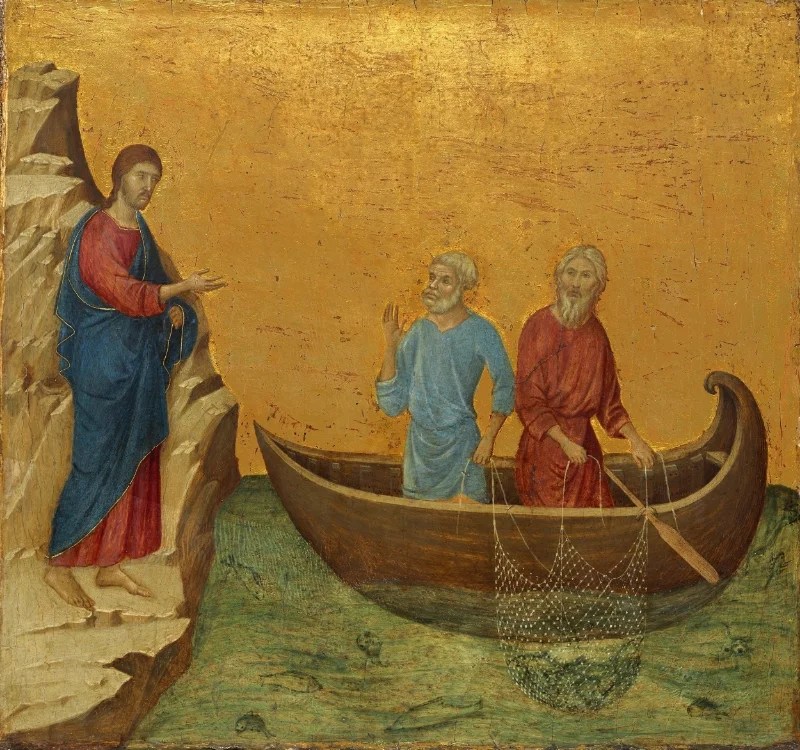
Jesus desires to be with sinners. He calls Simon, who would later be known as Peter, an ordinary man trying to provide for himself and his family. Simon is no Raddi, Pharisee, or tax collector. He is an ordinary fisherman. There is nothing notable about him. He is a sinner. Still, Jesus desires Simon to be a fisher of men. The Lord calls him with a miraculous catch of fish. In this miracle, he says to this ordinary man, “You are mine.” And though Peter tells Jesus to depart because of his own sinfulness. This does not change the Lord’s mind in the slightest.

In the same way, the Lord chooses you to be his sons and daughters. He has desired you to be his disciples, to hear and believe in his word, to bring you to faith, and to make you a fisher of men. God has looked upon you with favor. God has chosen you to believe in his son, not because of something you have done previously, but because of his abundant love and mercy. God loves the ordinary to bring you into the extraordinary, the kingdom of God, through the sacrifice of his son Jesus. For in Christ, your sins are forgiven, and you are made new so that you belong to God and God belongs to you.

You may not have a miraculous catch of fish to show that God has chosen you. Yet, you have something equally miraculous. The gift of faith, which comes by the Holy Spirit. This is the work of God, and not the work of man. For by our own strength, we cannot believe, we cannot be saved, and we cannot inherit eternal life. It is Jesus who does all these things and gives us the Holy Spirit to keep us in this one true faith. 

And as believers in Christ, he brings you into the boat of the Christian church, where he protects you and keeps you until he calls you to himself. You who were called like Peter are now like the fish in the miracle. Jesus sustained you and keeps you. And in this church, he gives you the word of God, the water of baptism, the words of absolution, and his holy body and blood to eat and to drink. 

These are the gifts of God to sustain you and preserve you in Christian faith. The remainder of my sermon, I would like to speak on one of these gifts of God, the sacrament of the Lord’s Supper. First, you may have noticed some differences in the way I perform the Lord’s Supper compared to other pastors, whether in the vacancy or those who have been called. These differences in practices are not corrections of what has been done here before. I initiated these adjustments to what I believe is a more effective practice and confession of our beliefs about the Lord’s Supper.

Our Lutheran understanding of Holy Communion always comes down to the words that Jesus used when he instituted his body and blood to eat and drink. Our Lord Jesus Christ, in the night that he was betrayed for us to accomplish our salvation by his cross and passion, takes the bread that was at the Passover table and tells us that this is his body. We have no reason not to take him at his word. This is truly a mystery: how can the body of Christ be in bread? And yet it remains bread that has been set aside by the word of God for us. And then, in the same way, he took the cup, which is the cup of wine for the Passover meal, and he said, ‘This is my blood,’ the blood shed for the sins of the entire world. Jesus is the final Passover lamb, and as he died upon the cross, he made a full satisfaction for sins. It is this blood in the wine that we are given to drink in communion. 

In 1 Corinthians chapter 11, Saint Paul offers his instruction, which he says “Was passed down from the Lord,” concerning holy communion. Paul states that the bread and wine are the body and blood of the Lord. So even after the words of Jesus are spoken over the bread and wine, they are now the body and blood while they still remain bread and wine. Eating the bread and drinking the wine unworthily results in sinning against the body and blood. So when you come forward to receive the body and blood of Jesus, they are still also bread and wine. 

This is why Lutherans hold such a high view of Holy Communion. Since we know the words of Christ and Saint Paul to be true, we should strive to follow them as closely as possible, out of love for Christ and His body and blood in the sacrament. Christ is present through His word. Jesus does not become present simply because the pastor decides to; rather, God uses the pastor to speak His word through him, and his body and blood are present because of the words of Jesus. The pastor, as the instrument of God, behaves and conducts himself in ways that the people are not obligated to. 

First, you may notice some of the gestures and postures I make during the service of the sacrament. Many pastors choose to kneel for a brief moment during the words of institution to acknowledge that Christ is present. This is not necessary, but it allows the congregation and the pastor a moment to reflect on the words of Jesus that were just spoken or chanted. And now the sign of the cross, which I will make over the bread and wine that I will consecrate for the body and blood of Christ. The sign of the cross goes back to very early in the church and was a sign of blessing of the Lord. Within the service of holy communion, the sign of the cross is used to indicate that the bread and wine have been blessed by the word of God in order that the people may know that this was done for them to eat and drink. I choose to do these things so that you may know that this sacrament is for you and for your salvation right here in this place. 

I would like to discuss one more noticeable difference. After everyone has received the body and blood of Christ, the elder and I will either at the altar or after the divine service consume everything that remains from what was blessed. This may seem odd or wasteful, but there is a reason behind it. Jesus tells us one thing to do with his body and blood, and that is to eat and to drink. We do not know how the bread and wine are the body and blood of Christ, and we do not know when or if they return to ordinary bread or wine. Therefore, we cling to Jesus’ words and promises to eat and drink. Jesus does not offer any additional instructions beyond this. Out of honor for the Sacrament and worship of Christ, I choose to consume everything that has been set aside by the word of God, simply because God does not tell us what else to do.

This may be quite the adjustment for our church. I desire to keep teaching on the sacrament. And as your Pastor, I am eager to serve you Holy communion. I invite you to continue asking questions and receive your Lord in the sacrament as often as you come. I do not do this to look down on former practices; I do all of these things looking to Christ and His abundant love and commitment to us in His body and blood.

Let us give things to God for his dear Son and receive Jesus as he intends in this most holy communion.

Fourth Sunday after Trinity Luke 6:36-42

L06MIM27A, 11/8/05, 9:16 AM, 8C, 2950×3946 (285+371), 42%, geclee 224, 1/8 s, R79.6, G59.2, B67.8

It may be a little-known fact among pastors that the texts for each Sunday repeat each calendar year. These are not selected at random. Pastors like myself, choose to read the same Old Testament, Epistle, and Gospel readings every year. So when you come next year, four Sundays after Trinity, we will have the same intro, gradual, and alleluia verse. Some people may ask why the repetition and how to prevent preaching on the same thing. It is repetition that truly teaches year after year, so that you come to know the stories of the text, and you come to expect what to hear in the sermon. Personally, I enjoy the clear theme of each Sunday in the church year. 

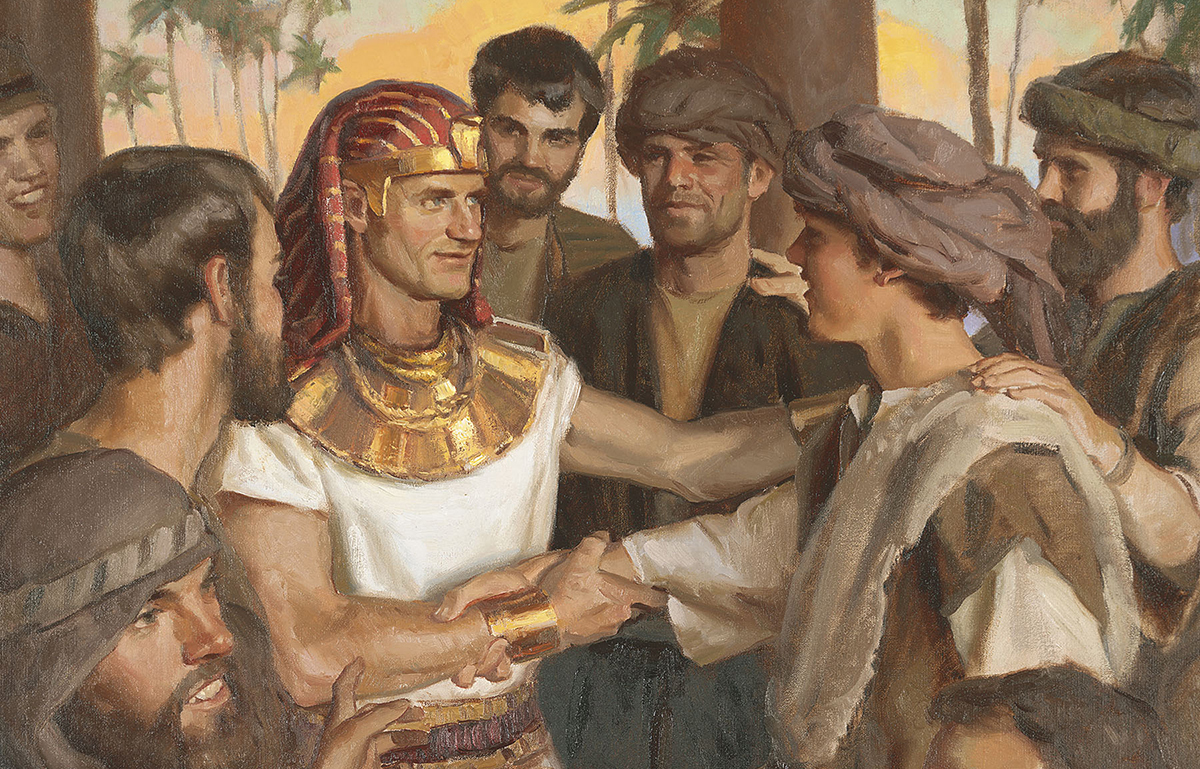
This Sunday is no different. First, we begin with the Old Testament reading. The final patriarch of the book of Genesis is Joseph, one of the 12 sons of Jacob. Earlier in the book of Genesis, he is sold into slavery by his older brother because they are jealous of Jacob’s favoritism towards Joseph and his ability to interpret dreams. Even though Joseph is sold into slavery in Egypt, he becomes one of the most powerful men of that country. And back in Israel, as there was a famine, Joseph’s brothers came to Egypt, not knowing that Joseph was still alive. They were seeking help from this important man. Then Joseph reveals that it was he all along. 

He has compassion for his brothers, the same brother who wanted him dead. Yet, he does not seek vengeance, but he desires to save his father, his brothers, and their household from certain death because of the famine. Joseph does not want them to repay. Instead, he tells him that all of the wealth of Egypt is now theirs. And when the brothers are sent home to bring their father and their families to Egypt. Joseph gives them the finest goods of the land to bring to Jacob and provide for them on their journey to Canaan. Joseph saves the lives of those who wanted him dead. He had mercy on those who deserved no mercy and repaid evil with good. 

Now, we turn to Saint Paul in Romans 12. In our epistle reading, Paul encourages the church not to let the ways of this world dictate how they treat those who have wronged them. Paul does not instruct them to persecute those who persecuted them. Instead, he tells them to “bless those who curse them and to rejoice with those who rejoice and weep with those who weep.”  He does not want the Saints to be vengeful or to pass judgment, for that is not their judgment to give. They are to live in harmony with one another, not just with fellow Christians, but with all people. 

Let us consider how impactful these words must have been to the Christians in Rome. Rome is not Jerusalem, where the early Christians were somewhat immune to pagan persecution. But these Christians were in the heart of the Empire. They were considered rebellious because they would not offer sacrifices to the Roman gods. And Paul does not tell them to give in. The people he is writing to are well aware of the Christians killed because they profess Jesus Christ. They are not only to keep steadfast in their worship of the one God. They are also told, “If your enemy is hungry, feed him, if he is thirsty, give him something to drink; for by doing you will heap burning coals into his head.” In other words, they are to be like Joseph to the people of Rome by overcoming evil with good. 

And now this brings us into our gospel reading from Saint Luke. The patriarch Joseph and the apostle Paul are expressions of the words of Jesus. As our Lord says, “Be merciful, even as your father is merciful. Judge not, and you will not be judged; condemn not, and you will not be condemned; forgive, and you will be forgiven; give, and it will be given to you.” Jesus instructs us to live in a way contrary to the world. Like Joseph, it would be much easier for him to abandon his brothers in their time of need, as they had abandoned him. And for Paul and the Roman Christians, if they saw someone who killed one of their own, hungry or thirsty, they are told to give them food and drink. 

Jesus calls us to a new way of life in the waters of baptism, where he forgives us all our sins, and now we daily rise as a new man. This means that we do not live according to the flash seeking vengeance and passing judgment. Christ desired us to seek him first, and it will be added unto you. As we have received mercy from God, we can now show mercy to our neighbors. For in Jesus Christ, he has become the mercy of God by dying for the sake of sinners, and he has risen again so that we are justified and inherit eternal life with him. Only by Christ and his Cross are we transformed to live according to his will. 

And to live according to his will means that we are honest about our sins, the people we have wronged, and our desire to do better. That is the will of God that we acknowledge our sins and believe in Jesus. It is only for the sake of Christ that we are merciful, as our heavenly Father is merciful, and we do not judge or condemn because we have not been judged or condemned. We forgive and give because Christ has forgiven our sins and has given us every grace and blessing. Since we do have the Holy Spirit working in our hearts day by day. We do show mercy, and we do forgive, not because of our own simple ways, but because the Holy Spirit continues to work in us. God is the first to act by showing mercy upon us and forgiving all our sins in order that he may not judge or condemn us. He sends the Holy Spirit to bring it to completion. By the Holy Spirit, we do live out God’s will. 

Because of God’s work in us, we take the log out of our own eye, so we can take the speck out of our brother’s eye. When we acknowledge our sin before God, we are able to help our brother. To recognize our own sins will serve our brothers well. We are not to leave our brothers in sin; that would be no benefit to them. This is how we have mercy on our brothers. Even when it may be difficult, we show them their sins that they have not repented of. Then, we point them to Jesus and his forgiveness. This is how we love our brothers. For what better way to love than to show Jesus and his forgiveness? 

When Christ does this, we imitate the patriarch Joseph, and we follow the words of Paul. Joseph showed love to his brothers because he knew the love God had for him. And Paul was able to bear his suffering because Christ suffered for his sins. The Lord works repentance in us that we can take out the log of our own eye and, in return, we are merciful by taking the speck out of our brother’s eye. `

So when we are tempted to pass judgment and to withhold forgiveness, do not fall into hypocrisy but fall into the forgiveness of Christ. The death of Christ opens our eyes so that we may see the log in them. Our sins no longer blind us, but we look to Christ, and through him, we see our brothers as forgiven by the blood of Jesus.

Third Sunday after Trinity Luke 15:11-32


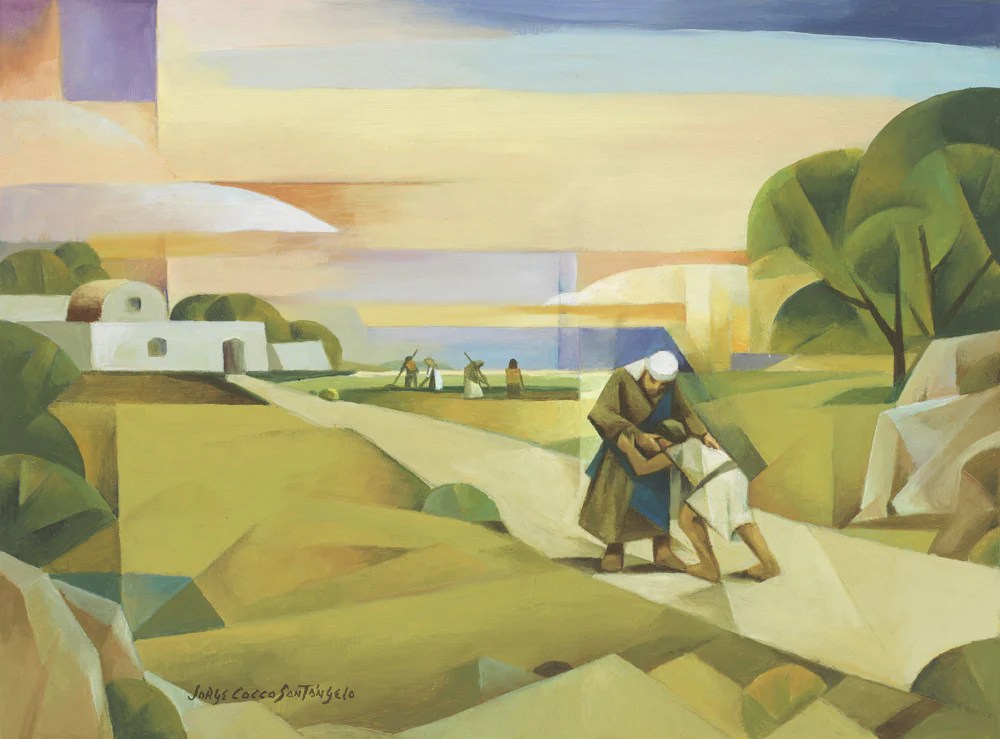
The parable of the prodigal son points to God’s mercy and steadfast love towards sinners. As the father waits for his son’s return, we see God our Heavenly Father, long-suffering, never abandoning his children, even as they are lost and held captive by Satan. When the son squanders his possessions with reckless living, he remembers his father’s love and pleads for forgiveness. The father does not receive him as his servant, but as his rightful heir. Yet, when the younger brother returns, the older brother becomes angry with the father for his desire to forgive.  Therefore, we must put ourselves in the shoes of all three of the main characters, as this parable serves as a guide for Christian life. We are not only the younger son, but as Christians, we are often times the father and even the older son. 

The first of the three characters is, of course, the younger son. He is much like his fathers before him. He sees what his father has and wants it for himself. Like Adam, the father of us all, eating the forbidden fruit so that he may be like God, his Father, knowing good from evil. The serpent enticed Adam and his wife, and their eyes were opened. Instead of finding out how they could be like God, they discovered their very nakedness and how they sinned against the one who supplied for all of their needs. The prodigal son is much like Jacob. Jacob also deceived his brother and his father to steal what was not rightfully his. He plotted against them to receive the blessing reserved only for his brother, Esau. 

The prodigal son steals from his father. He wants his father dead so that he can have his portion of the inheritance to spend on satisfying his desires. The son is reluctant to get what he wants. After he squanders his father’s inheritance, he finds his desires have led him astray. And now what does this have to say about us? How many times has our corrupted human nature, the world, and the devil himself deceived and made us their victim? The answer would be impossible to count. The prodigal son is prideful and arrogant. And so are we. We have seen what God provided us. And we say no. The younger son set his heart on more than what the father gave, and it led him down a terrible path. 

The younger son in the parable serves as a model of Christian life in his remembrance of the father’s mercy. Even as we sin in thought, word, and deed, we are not beyond God’s salvation. For Christ Jesus has embraced our sins upon the tree of the cross, and by his suffering, we are restored to God, not as servants, but as sons. No matter how great the sin, the blood of Jesus Christ is greater. No matter how distant your sins have separated you from God. Christ Jesus has cast your sins into the depths of the sea.

And now, as the new man washed the blood of Christ, we must turn to the Father in the parable. The love the father has for the son who rebelled against him is remarkable. He wasted away his father’s possessions, yet his father still accepts him. Love like this must come from Jesus Christ, since it is only by Jesus Christ that we can forgive as we are forgiven. The father and the parable know the love of God; he knows the words of the prophet: “[The Lord] does not retain his anger forever, because he delights in steadfast love.” Even as Israel continued to be against God, the Lord always called them back to repentance and to rejoice in his salvation. The father shows this love to his son. The son is forgiven and restored. 

To forgive and to restore those who sinned against us is what we are called to do as baptized Christians. The grace of God given to us in Jesus Christ is overabundant. We are forgiven by Christ so that we can forgive those who sin against us. This is not a backroom deal where, if we forgive our debts, God will somehow forgive us. It is God who acts; it is God who forgives first. Therefore, we forgive our brothers and all who have sinned against us for the sake of Jesus Christ. 

I know that you have been sinned against. I know this because our neighbors have also fallen victim to their sinful nature, the world, and Satan. And they have taken you with them. When your brother comes to you asking for forgiveness, and it seems that you are unable to forgive them because what they have done is so horrid. Do not put your trust in yourself, but in Jesus Christ. Say to those who have sinned against you, asking for forgiveness, “For the sake of Christ, I forgive you.” And you will free yourself, as well as your brother, because of Jesus Christ. 

And now we must examine the older brother. When the younger brother returns, the order does not see him as his own, but refers to him as “your son.” The spirits of jealousy and vengeance oppress him, as he tells the father of the works he has done. Even though the older son has not physically abandoned his father by going to a foreign country, he has certainly abandoned his father in his words and thoughts. The older son insults the father by saying, “Yet you never gave me a young goat, that I might celebrate with my friends.” He refuses to forgive his brother because he is envious of him. The older brother is a coward, as he wished to abandon his father, but he was unable to do so. His heart is turned towards himself, and not towards the gracious love his father has for both sons. 

The older son disowns his father and his brother. This serves as a warning in our Christian life. We inflict spiritual harm on ourselves when we do not forgive those who seek forgiveness from us. When we continue to shout out those who wronged us, we shout out Christ in his forgiveness for us. This is a spiritual tragedy that we have all found ourselves in. This unwillingness to forgive is misdirected anger. Those who have done us wrong should be called to repentance. Yet, it is Satan, the father of lies, who has deceived those who sin against us in order to separate us from our brothers. And the devil uses that separation to create more and more hatred in our hearts. But the devil hates forgiveness. Therefore, restore those who sin against you and forgive them for the sake of Jesus Christ. 

The parable of the prodigal son teaches us to seek Christ and his forgiveness. The world, our sinful nature, and the devil do not want you to be ready to forgive. Since you have been forgiven in the blood of Jesus, Christ desires you to forgive. Do not be deceived by the world and lost in the pit of despair. You are no longer lost, but found in Jesus Christ. Let Christ restore you, and Christ will restore your brother also.

Second Sunday after Trinity Luke 14:15-24

I want to begin my inaugural sermon by giving thanks to Almighty God, the Holy Trinity: the Father, the Son, and the Holy Spirit. Both congregations, my family, and I have witnessed God’s overwhelming compassion and faithfulness toward His church and those who desire the noble task of being a pastor. Many of you know there was no call extended to me on the appointed day for giving calls to the office of the Holy Ministry. Also, leading up to call day, Grace and St. John’s were informed that they would not receive a pastor. Yet in God’s abundant compassion upon his people, he works all things for our good for those who trust and love him. Much like the prophet Jeremiah, who doubted whether he could speak the words of a prophet, God puts his word in the mouth of Jeremiah so that he will not be afraid. The Lord’s mercy and faithfulness extend to his church. We see in Matthew’s Gospel that it is Jesus who has compassion for His people, as they were like sheep without a shepherd, and so He sends laborers into the harvest field. The Lord of the church does not desire to leave his flock; instead, he continues to train and raise up men to serve in his stead to feed and tend his sheep. 

The church is, by nature, the assembly of the baptized; those who put on Christ in the waters of rebirth, forgiving them all their sins. God has also given the baptized the right and the duty to call pastors to usher them into the wedding feast of the Lamb in His kingdom, which will have no end. It is the pastor who brings sinners closer to the kingdom of God and prepares the saints of God for one of two things: the second coming of our Lord Jesus Christ or their own Christian death. In baptism, preaching, and the Lord’s Supper, you are made ready to behold the face of Jesus Christ. The Lord desires all to be saved and to come to the knowledge of the truth, and the Office of the Holy Ministry is the embodiment of God’s invitation for all people.

So, let us turn to our gospel text to understand God’s invitation and His Holy Ministry as he instituted it. Jesus tells this parable in response to the statement, “Blessed is everyone who will eat the bread in the kingdom of God.” Indeed, this is a true statement made by the man; yet, Jesus tells the parable to reveal how this heavenly bread is given to sinful men.

The master who gave the great banquet in the parable is none other than God, the Father. God earnestly desires to feed his people so that he can eat with them. Eating with the Lord is his demonstration of love for and communion with sinners. The Lord feeds his people in the wilderness with manna and quail from heaven. The prophet Isaiah foresees a feast of rich food and well-aged wine upon a mountain as the Lord has swallowed up death forever and wipes away tears from all faces. And in the desolate place, Jesus receives five loaves of bread and two fish from his disciples and feeds over 5000 men. Therefore, God is the host of the great banquet, and he eagerly awaits those he has invited.

The Lord sends out his servants to those he previously invited to his banquet. But none of those, except the invitation. All those who reject the invitation are those who knowingly or unknowingly reject the Lord. Luke tells us that they all began to make excuses. The first man says he has bought a field and must go and examine it. These people prioritize the earthly and temporal gifts given by God over God Himself. They give up or forget about God to focus solely on the vocation and riches that God has graciously blessed them with. Instead, he should have received the invitation graciously, knowing that God has already given him everything he needs.

The second man rejects the invitation because he has recently bought five yoke of oxen. These people are those who may not even know God at all. They only believe that this world is all that is out there, and nothing else is waiting for them. So they focus on accumulating as much as they can for themselves. For they believe that if they accumulate enough possessions, wealth, and influence, they might leave some mark on the world. By creating a legacy of more, it will soon fall apart because eventually, someone will always have the most, leaving their legacy forgotten. Instead, he should put his legacy in Christ, for in Jesus, no one is forgotten.

And finally, the third man, who has recently taken a wife, rejects the invitation because he prioritizes his relationship with her over his devotion to God. They are worried that attending church will lead to judgment by others. They might offend their family because someone may not like what the Bible teaches. They are afraid that if they are honest about their faith in Jesus Christ with their loved ones, they will be an outcast. They might rather sacrifice knowing Jesus Christ than risk appearing as if family doesn’t matter. Yet, Christ, our brother in human form, brings us together to be one with him as the family of the baptized.

Dear friends in Christ, you may know some of these people, for we were these people. Yet God does not give up, as he has prepared the great feast and desires his banquet hall to be filled. And so he sends his servants again, first Jesus Christ, then the apostles, and now his pastors. The invitation is the Holy Spirit, who creates faith and is received with gladness. The invitation they speak of in the parable is the proclamation of the kingdom of God that Christ has come to call sinners to repentance and believe in him. 

God has not sent His Son for the righteous, but for the unrighteous. This is why the servants of the master come and extend their invitation to the poor, crippled, blind, and lame. In other words, God now sends his message to poor, miserable sinners. God’s compassion is so deep that he desires the banquet hall to be filled with sinners. Sinners that are forgiven the blood of Jesus Christ, who have received his word by the power of the Holy Spirit, who has created them anew through Word and Sacrament. 

This is the will of God that the banquet halls of heaven would be filled and overflowing. For this purpose, he has given us his only begotten son, who was sent to bring the message of the Father’s invitation and pay the cost. It is only by the blood of Christ and his sacrifice on the cross that we are able to come into the Father’s presence. It is only for the sake of Christ, and the Holy Spirit that comes into our hearts, that we receive his invitation. We do not accept it by our strength or merit. Yet because of Jesus Christ and him crucified.

And now we come to the end of the parable. The most uncertain phrase that Jesus has to say about this banquet is: “For I tell you, none of those men who were invited will taste my banquet.” As those who rejected the Father’s invitation, now the Father has also rejected them. For those who come to the Lord’s banquet, do not forsake the grace of the Master. Now you may ask, “How do I do this, pastor?” The answer is certain. Continue to put your trust in Jesus. This parable teaches that Christ is the invitation extended and accepted by the Holy Spirit, and apart from God, we can do nothing. Continue to hear his word, cling to his promises, do not abandon the baptized, and receive his supper often. 

When we hear the invitation of the God Father through Christ, the Holy Spirit is at work, bringing you closer and closer to his final banquet. He desires you to be in the banquet hall of heaven, filled with forgiven sinners for whom Christ died. Jesus is our only hope. May by God’s grace and his holy spirit, we always put our trust in Jesus, who brings us to His Father’s banquet.

Run That You May Obtain It

Text: 1 Corinthians 9.24-10.5

In the Gospel reading this week, we heard about God’s gracious attitude toward us in Christ. Throughout the generations, through His many faithful witnesses, the Lord has sent the Good News of the forgiveness of sins out into the world. According to His will, He causes people to hear His Word at various times and in different ways and works in them the gift of faith: now, some people over here; then, some over there. Through hearing the Word, faith is created and the forgiveness of sins is bestowed. Through the same Word, all who are called to faith in Christ are also led by the Holy Spirit to share His Good News with the world. Our Lord describes this to us as a master calling laborers at different times to work in His vineyard. By His grace, they all received the same wage – whether they had worked long or short. So, too, does the Lord reward us not according to our many years in the congregation but according to His grace.

At the end of the day, though, those who had worked the entirety found themselves at odds with the master of the house. They had agreed with Him for a denarius (which was a day’s wage) but, when the time came to receive their payment, they figured to receive more. They wanted more because they had changed for themselves the expected outcome of their labor. Our Lord doesn’t say whether they actually received their denarius. It’s possible, knowing what we do about people, that they were so upset they left it behind. Jesus said in another parable, “To everyone who has more will be given…But from the one who has not, even what he has will be taken away.” (Matthew 25.29 ESV) Those laborers, to bring in St. Paul’s epistle, were found to have been boxing with the air and running aimlessly. They did not receive the end of their labor. Today, St. Paul encourages us to run our course of faith with purpose, that is, that we keep what God has promised as our sole focus.

I.

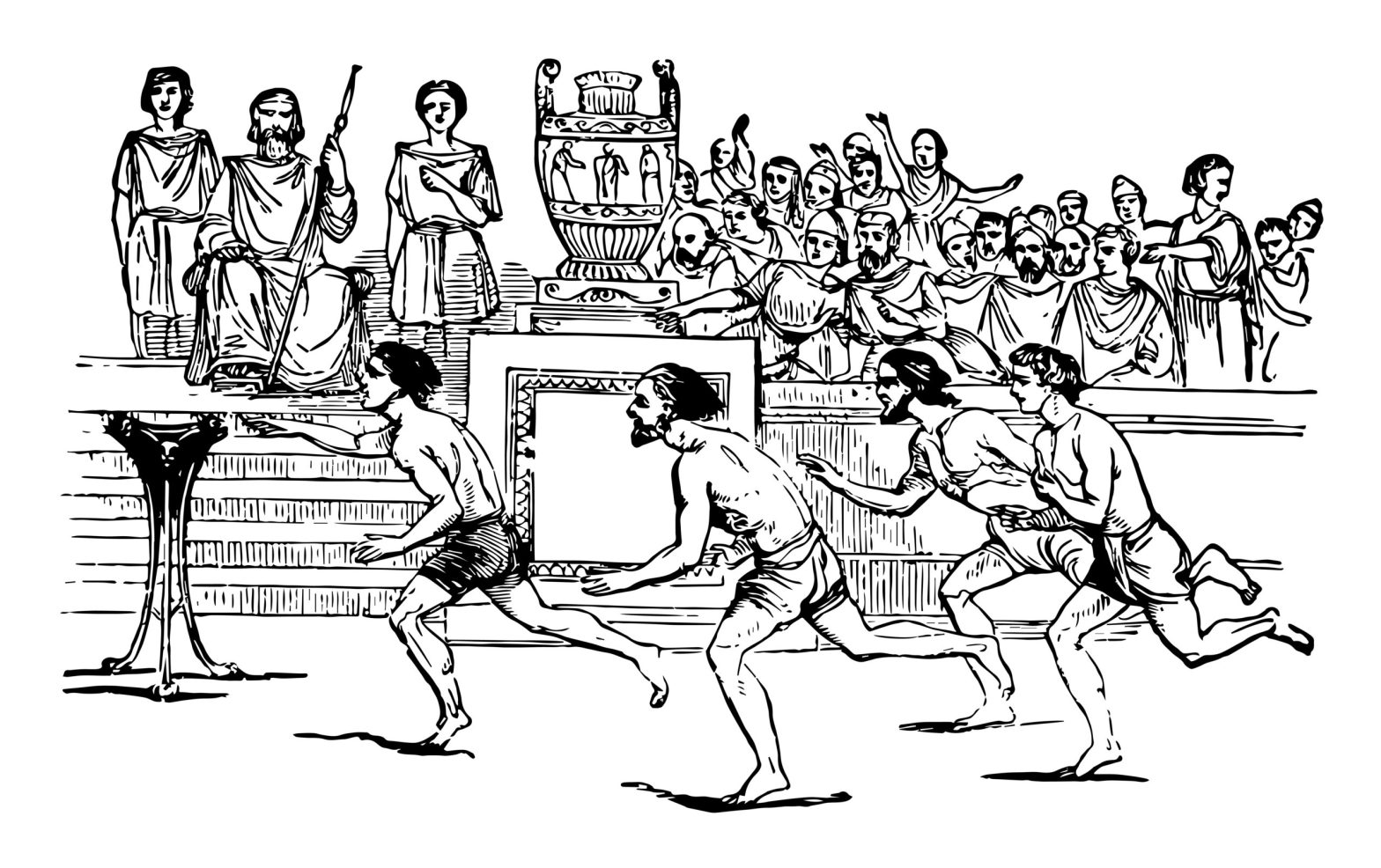
By the inspiration of the Holy Spirit, St. Paul writes to us, “Do you not know that in a race all the runners run, but only one receives the prize? So run that you may obtain it. Every athlete exercises self-control in all things. They do it to receive a perishable wreath, but we an imperishable.” (1 Corinthians 9.24-25) Apparently, not far from Corinth, there was an athletic competition that was second only to the Olympics. It was called the Isthmian Games, which featured events such as running, wrestling, boxing, javelin throwing, jumping, and the discus. It seems that one of these games was held during St. Paul’s stay in Corinth. He and the congregation would’ve had the opportunity to witness these events and ply their trades. Paul, by vocation, made tents – useful for out-of-town visitors to the games. So, Paul used here something in the mind of the Corinthians to teach them. 

Of course, he’s not preaching to the Corinthians about running or boxing in the games but running the race, fighting the good fight, of faith. In that regard, the Corinthians were in danger of missing the finish line or landing punches only on thin air. The Corinthians had lost sight of what the Lord had called them to. When they received the forgiveness of sins through faith in the Gospel preached to them, they had been called to lives of faith and service. They had been freed from the condemnation of the Law and the chains of sin and death. Sadly, they were misusing their freedom. In close connection to our text was the issue of eating food sacrificed to idols. Truly, there is no reality behind an idol. There is no real figure or power behind their representation because there are no other Gods other than the Lord. Knowing this, it was permissible for the Corinthians to eat food that had been sacrificed – but not if it caused spiritual harm to their neighbor. Some newer members, who had not yet fully realized that there were no other gods, could see older members eating that food and reach the wrong conclusion. But, apparently, that didn’t stop them.

There were other ways that the Corinthians were running the wrong way. One among them was in a sexual relationship with his stepmother – with the knowledge of the rest of the congregation – who did nothing. The members of the congregation brought lawsuits against each other. Some continued to engage prostitutes in the pagan temples. In short, they were very much in danger of running their course in vain. It was very possible that they would end up like so many of the Israelites, who were laid low by God in the wilderness. Moses tells us that 600,000 fighting-age men went through the Red Sea out of Egypt but only 2 – Joshua and Caleb – made it to the Promised Land. Rather than receiving the call of Christ as an invitation to love and service, reflecting the free forgiveness of sins, the Corinthians claimed Christ’s power as their own and were in danger of missing the finish line.

II.

This is a danger we, too, face. The reality of the Corinthians is also ours. Just as Jesus Christ came in the flesh for them, so He entered His creation for us, too. He placed Himself beneath the Law for us, as well, and kept its righteous demands in our stead. He suffered for our sake the punishments due our sins and bore the wrath we merited when He was forsaken by the Father for us on the cross. When He rose from the dead, it was so that death’s hold over us would be ended and that the devil no longer have any power to threaten us. In a word, we are free. We are free from sin, free from death, free from the devil and hell. We are free to serve, wherever the Lord has placed us. We have received His gracious invitation and look forward to its reward. Or, at least, we should.

Rather, the danger we face with the Corinthians is that we misuse our freedom in Christ. Instead of using our freedom to serve Christ and our neighbor, we serve ourselves. That’s pretty much the definition of sin, that we serve ourselves instead of God and others. When the Corinthians knew there was a man caught in sexual immorality among them, they didn’t do anything. St. Paul called their reaction to the matter, “arrogant,” for they decided that, since Christ’s grace is more powerful than sin, they could just let him continue. Don’t we do this with our sins? None of us has struggled against temptation as strongly as we should. Sure, we resist for a time but, almost inevitably, we give in. As this pattern becomes a habit, we begin to excuse ourselves. We figure, since Christ is going to forgive us, what difference does it make if we add another sin to our account?

We do this with the Third Commandment when we don’t read our Bibles. Maybe we think that, since we’re not all pastors, we don’t need to study it or grow in our understanding. We fail to see that as rejecting the Word of God. When we are angered by our neighbor, we don’t immediately repent of it but entertain it, sometimes for a great long time. When our neighbor is angry at us, we hesitate to be reconciled because we don’t want to admit our sin. We all can think of things that our neighbor has, that we feel we would more justly enjoy. Lastly, we misuse our freedom in Christ as a coverup for evil against the Sixth Commandment when we do not honor our marriages as we should: by loving, sacrificing joyfully, and forgiving one another; by extolling marriage and commending it to future generations. Instead, our marriage, at times, is the last thing on our minds. All these things, and more, we have done as Christians. We’re running the race, sure, but we’re veering off the course. St. Paul envisioned a race in the stadium around a track. Perhaps we could think of running cross country but missing a turn and wondering where the course is going.

III.

St. Paul said, “So I do not run aimlessly; I do not box as one beating the air. But I discipline my body and keep it under control, lest after preaching to others I myself should be disqualified.” (26-27) For the Corinthians, there were some definite literal applications here. The man who shared a bed with his stepmother had to stop (which, he did). Those who engaged temple prostitutes in their former lives must do so no longer. If someone is burdened by lust, he or she should seek to be married. Those who were hungry for meat could get it somewhere other than the in-house restaurant at the local pagan temple. Running the race to which God had called them in Christ required bearing their crosses and keeping their bodies (and minds) in check. Same for us.

Many of us, most of us, were called to faith in Christ as children, in our Baptisms. We have been drafted into the Lord’s vineyard for service in His name or – to stay with St. Paul – entered into a race. This race has a great reward for its price, the imperishable wreath of eternal life. We want this prize, therefore we must run this race with purpose. We must keep our bodies in check and desire firmly what our God has promised. On our own, this is impossible. We all learned in the catechism that there is no merit or worthiness in us. Thankfully, God the Holy Spirit is already working in our hearts. For one, we are here right now. He has placed a desire to hear God’s Word in our hearts. May He grant us, also, to listen to it and earnestly desire what He says. We know that He will. May He grant us contentment with the denarius promised – the forgiveness of sins and eternal life – and a desire to live and serve accordingly. Amen.

A Divine and Loving Order

2024.01.14 Epiphany II – Manuscript

Text: Ephesians 5.22-33

In the Fourth Commandment, the Lord our God commands us to honor our father and mother. We all learned in the Catechism that we should take from these words that it is our duty not to despise or anger our parents, or others in authority above us, but, to “honor them, serve and obey them, love and cherish them.” We understand from these words, and other words of Scripture, that God has built an order into creation. Of course, He is at the top, but beneath Him – as far as Scriptures are concerned – come parents. The family is an original institution of God in the Garden of Eden. God brought Adam and Eve together, giving us the gift of marriage. He blessed their union so that it might bear fruit in the birth of children. According to His will, God places each person in their station, and He calls us to live within the authority entrusted to us. Parents honor God by bringing up children faithfully (and in the faith). Children honor God by serving their parents. We all honor God by being obedient to the authorities He places above us for our good.

Our text today concerns the oldest institution there is in creation, the relationship between husband and wife, marriage. Unfortunately, if we didn’t have the lectionary to bring it up each year, this text would have long fallen out of use in the Church for the sake of one word: submit. The people of our time hear this word, in connection with the relationship between a wife and her husband, and they dismiss it as demeaning and patriarchal. A better translation is “be in submission to,” and St. Paul doesn’t primarily have earthly marriage in mind here but the relationship between Christ and His bride, the Church. Jesus Christ, being the Lord of all things, made Himself a servant and gave Himself up for His bride. She, in turn, willingly serves Him in thanksgiving for the redemption she has received. God the Holy Spirit produces this will in her heart. By the gift of the Holy Spirit, the Lord leads us all to live faithfully where He has placed us.

I.

It’s too bad that this text is not read and taught more often, as St. Paul so beautifully describes for us what Jesus has done for us. We sometimes are told that this text is primarily about husbands and wives but, really, it’s about Jesus first. St. Paul wrote, “Husbands, love your wives, as Christ loved the church and gave Himself up for her.” (Ephesians 5.25 ESV) This letter to the Ephesians is very well known to us Lutherans because this is one of the books that teaches us explicitly that we are saved by God’s grace through faith in Christ. But, before saying this, Paul lays out what we needed to be saved from. Paul called us, by nature, children of wrath. We were enslaved to the devil, carrying out at all times the desires of our corrupt bodies and minds. If left to our own devices, we would have perished eternally. But God had mercy on us and He came into the flesh for us. Then, He gave Himself into death for us.

We remember that when Judas came with soldiers and officers of the temple to arrest Jesus, St. Peter drew his sword and cut off the ear of the high priest’s servant. Jesus told him to put the sword away. If He wanted, Jesus could’ve asked the Father and He would’ve sent twelve legions of angels; but He didn’t. Jesus gave Himself into death. He willingly bore our sins and the pains of the nails and thorns so that we might be “sanctified,” that is, made holy “through the washing of the water with the word.” (26) Although He is the Lord and creator of all things, Jesus made Himself a servant on our behalf, sacrificing Himself for our good. Through His death, He atoned for our sins. In Baptism, He applied that forgiveness to us. Through our Baptism, we are made righteous and holy in His eyes. By the benefit of His love for us, He views us as having no “spot or wrinkle or any such thing.” This means, Christ looks at us and cares for us as if we had no sin at all. He nourishes us now, and feeds us, through His Word and Sacrament because, through these things, we are His same flesh and blood. In return, we, as the Church, place ourselves at His feet. We listen to what He says and strive to do what He teaches. We do this, not out of compulsion, but by the guidance of the Holy Spirit. 

II.

St. Paul wrote,

‘Therefore a man shall leave his father and mother and hold fast to his wife, and the two shall become one flesh.’ This mystery is profound, and I am saying that it refers to Christ and the church. However, let each one of you love his wife as himself, and let the wife see that she respects her husband.

Ephesians 5.31-33

This relationship of Christ and the Church is the model for our earthly marriages. Ours is a God of order. Although, equal to the Father with respect to His divinity, God the Son places Himself beneath the Father. The Church lives in submission to Christ. God places children beneath their parents. All these things serve for our benefit, including the order in marriage. God calls husbands to be the head of their wives just as Christ is the head of the church. When we consider it this way, how Christ serves His bride, we can understand that husbands are not called the lords of their wives, but heads. This is a position of service. The husband’s call from God is to care for his wife as his own body, to love her, and to forgive her. He is to sacrifice of himself for her good.

Now as the church submits to Christ, so also wives should submit in everything to their husbands.” (24) There, again, is that word submit. For the sake of this word, this reading is often passed over. This word does not mean to be subservient to, but to willingly make yourself of service and be obedient. Just as there is order within the Trinity and the created world, so in marriage, God calls husbands to love and sacrifice for their wives and He calls wives to place themselves under the authority of their husbands. Their role is to pray for them, be a helper to them, and be cared for by them.

III.

When the Holy Spirit caused St. Paul to put these words into writing, He wasn’t just repeating the cultural norms of the time. Rather, he was speaking counter-culturally, first, by calling upon husbands to love their wives. In the ancient world, there were as many customs surrounding marriage as there were societies. These customs ranged from wives being (nearly) slaves to their husbands, to being their legal equals. However, none of them stressed the importance of love in this relationship. Among the Romans, marriage was a civic duty. One owed it to the state to be married and have children. Here, St. Paul bucks the culture and explicitly calls upon husbands to truly love their wives: to view them as sanctified and pure, and to be prepared to sacrifice everything for their good.

The second way St. Paul speaks counter-culturally is the why and the how of this order within marriage. When St. Paul calls upon husbands to love their wives and wives to respect their husbands, he does not speak to their human nature – the old sinful Adam in each us of – but to the new creations we are in Christ. Through the redemption of Christ, applied to us in Baptism, we received the Holy Spirit. He creates new desires in our hearts and a willingness to serve as God has called us. It is the Holy Spirit that leads us, husbands, to love our wives as our own bodies and to sacrifice of ourselves freely and joyfully. It is the Holy Spirit that leads wives to respect and be submissive to their husbands, not resentfully but purposely, knowing that their submission is truly to Christ.

We can learn all of this just as easily from the Fourth Commandment. In it, God teaches us that there is an order to all things. At the top is God the Father. Since His ascension, Christ is at His right hand ruling over all things for our benefit. As far as the Commandment is concerned, next comes parents and then children. At each level, God gives authority and responsibility. Parents are to care for their children, children are to honor their parents. Marriage was instituted by God as an earthly picture of the care our Lord has for His bride, the Church. In a way, it is also a living enactment of the Gospel: the husband gives himself in love for his bride, and the wife receives this love and reflects it in service. To this end, may God grant us His Holy Spirit, bless all who are married among us, and grant faithfulness and contentment to those who are not. Amen.

Walk As In The Daytime

Text: Romans 13.8-14

The end of the year and the start of another is a time when a lot of people review their priorities in life. We call it a New Year’s resolution when someone decides to change something in or about their life in the new calendar year. Usually, they have to do with adding or subtracting from life. Someone wants to lose weight, another to eat more vegetables. One wants to spend less time on their phone, another more time with family. Often, these things are combined. It’s common for us Christians to resolve to read the Scriptures, pray, and go to the worship service more in the new year. Today, St. Paul – or, rather, the Holy Spirit through St. Paul – invites us to love more.

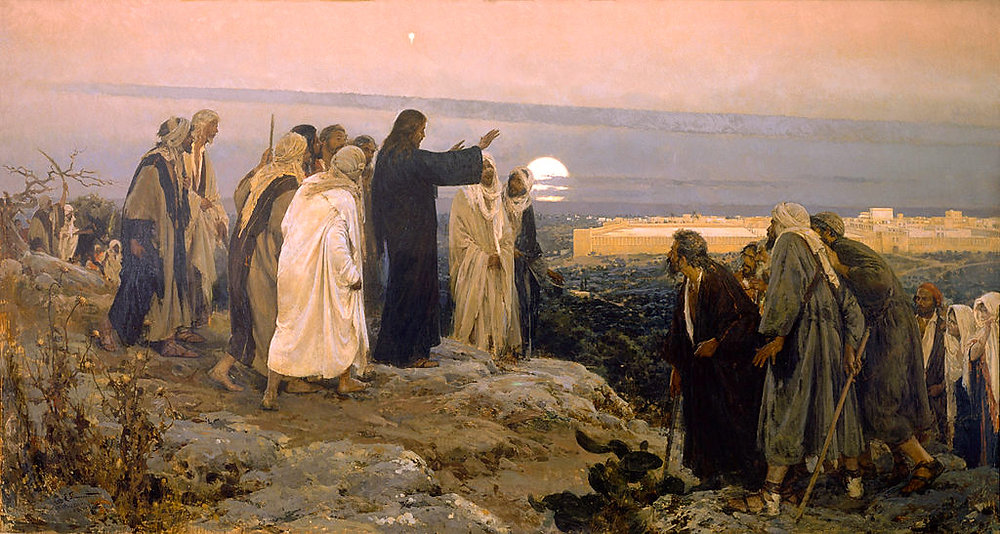
Here in the Church, we have ended one year already and are starting a new one. We heard the account of our Lord’s triumphal entry today to be reminded that our Lord comes to us anew this year in His Word and beneath the humble forms of bread and wine. We are also reminded that the same Lord who came once in humility will come again in glory. He came once to secure our salvation, He will come again to judge the living and the dead. The time between these two things is growing ever shorter. It will not be long before the goats are separated from the sheep. In this in-between time, how shall we wait and conduct ourselves? By making no provision for the flesh but being clothed fully in Christ, St. Paul says. Today he encourages us: since the Day is at hand, let us learn to love.

I.

We have to say this because we live in a world, in a society, that has a different definition of love than what the Bible means. Since we live in the world, it has even infiltrated our hearts to an extent – we, who have been redeemed by Christ the Crucified. When the world defines love, it more or less means: being allowed by others to do whatever pleases you and, in turn, allowing others to do whatever it is that pleases them. As of late, when the world speaks of loving behavior, it means affirming and celebrating whatever pleases our neighbor’s flesh. Ultimately, the world’s definition of love is, first, a love of self. That is a term you can hear all over, self-love. We should prefer the old word for such a mindset, selfish.

In contrast, when the Bible speaks of love, such as in our text when St. Paul says, “Love does no wrong to a neighbor; therefore love is the fulfilling of the Law,” it means something else. (Romans 13.10 ESV) This love, of which the Bible speaks, is primarily a sacrifice of self. Its model is, of course, the love of God toward us in Christ. When God called upon Abraham to sacrifice his only son, it foreshadowed the completed sacrifice of the only-begotten Son of God on the cross. We’ve all learned this when we first memorized John 3.16, “For God so loved the world…” A more accurate translation would be, “In this way, God loved the world,” that He gave His Son into death for us. The love which we have received and to which we are called in Christ is not the love of ourselves but of God and our neighbors. It is self-sacrificial love that genuinely seeks the good of another above our own.

This is the aim of all the Commandments. St. Paul lists, “You shall not commit adultery, You shall not murder, You shall not steal, You shall not covet.” (9) They can all be summed up, “You shall love your neighbor as yourself.” (9) Adultery is the love of self because it seeks the pleasures of the flesh apart from the obligations to spouse and children. Murder, too, is the love of self because it places one’s feelings above the life of another person. Stealing and coveting both place one’s desires above neighbor and even God. Stealing and coveting imply that God has failed in His care for us. St. Paul says that the time has come to put these things away. 

II.

In his words:

You know the time, that the hour has come for you to wake from sleep. For salvation is nearer to us now than when we first believed. The night is far gone; the day is at hand. So then let us cast off the works of darkness and put on the armor of light.

Romans 13.11-12

He reassures both his original hearers and us with these words. It is true, salvation is nearer to us now. Every day that the Lord grants us to live on this earth is a day closer to His return. The night of sin is ending and soon the day will come. Although the world is filled with scoffers who doubt and deny our Lord’s coming and, although every day more Christians join their ranks, St. Paul calls us to faithfulness because the Lord will come.

Therefore, he says, “Make no provision for the flesh,” “but put on the Lord Jesus Christ.” (14) We might recognize this as baptismal language. Through the Fall into Sin, we were all conceived and born corrupted by sin. Our thoughts and desires were all turned inward and we had no hope in, no trust in, or love for God. But that was all washed away. When we were baptized, our sins were forgiven. As with the high priest Joshua in the Old Testament, our filthy clothes were taken away and we received the pure white vestments of Christ. When we were washed with the water and the Word, we were clothed in Christ’s righteousness that has covered our sins. We also received in Baptism the gift of faith and the Holy Spirit. Through faith, the Holy Spirit produces in our hearts new desires. Now, through our Baptism, we have learned to love God and to love our neighbor. We love God’s Word and want to do what He commands. 

Since we live in the flesh, though, we will continue to struggle with temptation. Although the spirit is willing, our flesh is often weak and gives into temptation. As an aid against this, St. Paul offers us positive advice. He says, “The one who loves another has fulfilled the Law.” (8) When we sin, we end up with a harmed conscience. We are afraid of God’s wrath and the punishment we’ve deserved. Therefore, we confess our sins and God is faithful and just to forgive us. If we would like to continue in the forgiveness we’ve received with a good and peaceful conscience, St. Paul encourages us to love. 

He does not mean that our loving fulfills the Law as if the Law would then be completed. He means, that when we – mindful of the love and forgiveness we have received in Christ – love our neighbor more than ourselves, we are living as God has called us to. It is the whole point of the Commandments. God gave them to us to show us our sins and, after we have been forgiven, to guide us in righteous living. To that end, He has given us the Holy Spirit so that we do keep the Law.

After our Lord was baptized in the Jordan by John, His ministry began in full. At times, people came to Jesus and His disciples would baptize them. Over time, the balance shifted as more people came to Jesus than to John. John’s disciples came to him once and pointed this out – that Jesus was gaining a following larger than his own. John said, “[My joy] is now complete. He must increase, but I must decrease.” (John 3.29-30) Isn’t that the point? At this beginning of a new church year, let us hear St. Paul’s (and John’s) encouragement. The night is far gone and the day is at hand. Let us, therefore, resolve in this new year to love our God and neighbor more than ourselves. Amen.

One Little Word

Text: Genesis 3:1-21

The account we hear tonight of our first parents’ fall into sin is familiar to us. We hear it each year during the first week in Lent. It’s also a lesson we cover 3 out of the 4 years in our Confirmation instruction. It’s a lesson we’ve taken to heart because the outcome of this event has affected all humans ever born, even us. Well, all humans everyone except for One – our Lord.

We know this text but, at times, we show we’ve failed to learn from it. We very easily fault our first parents. Then we go and do the same thing. The temptation wasn’t really to eat from the tree. It was to doubt God’s Word. Our parents did that first, and then they ate. We do the same every time we sin. Tonight, we confess and mourn our sin. We are comforted that God continues to give us His Word, that we might stand firm against the devil.

I.

Our text tonight takes place in the Garden of Eden. The Holy Spirit doesn’t tell us plainly how much time has passed since Creation. Martin Luther suggested not much – that this all happened on the very first Sabbath. If true, it only makes what ensues sadder. On the Sixth Day, our Lord created man and woman. He placed them in the Garden to work and keep it. They were to live in perfect fellowship with God and each other. It was His will for them to be fruitful and multiply and fill the earth. There was but one prohibition. God said,

of the tree of the knowledge of good and evil you shall not eat, for in the day that you eat of it you shall surely die.

Genesis 2:17

Along came the devil. The Spirit teaches us to understand this from Moses’ word. He said, “Now the serpent was more cunning than any beast of the field which the Lord God had made.” (1) He came to the woman and asked her if God had forbidden them to eat from any of the trees in the Garden. With his question, we already see the devil’s technique – to drive a wedge between the believer and God through doubting the Word. Eve perceived this and did attempt to answer correctly. But it was too late. It’s very easy to miss what happens. Listen to how Eve ended her response. “You shall not eat it…lest you die.” With her words, Eve suggested that God did not really mean what He said. Perhaps He was a liar. Perhaps He wouldn’t make good on His threat. By then, it was too late. The devil capitalized on the breach. Adam and Eve ate and the whole creation was plunged into sin.

II.

St. Paul encourages us to not be ignorant of the devil’s schemes. The devil’s plan in the Garden wasn’t immediately to get our parents to eat. It was to get them to abandon God’s Word. He knew it would all be over if he could do that. It has been said that since the devil is an angel, he can’t actually create anything. He can only corrupt. This might even extend to his tricks. He does still use the same one, even now, even on us. Sadly, he is often successful.

The devil’s trick is to remove the Word from the believer’s heart. This is hard to do, so he enlists his helpers – the world and our own flesh. Since the Fall, we all have been affected by concupiscence. This means, in part, that we – by nature – don’t want to have anything to do with God’s Word. The Old Adam is beaten back in our Baptism, but this corruption remains. We must work to keep the Word in our daily lives. But that takes effort – to plan ahead and set aside time daily for family and personal devotions. Do you know what makes that even harder? Everything! We all have many commitments. We have work and family. For many in our parish – and in every parish – it’s fun, our commitment to pleasing ourselves, that pulls us away. Why else are sports on Sunday mornings, if not to remove the Word from our hearts and mouths? Why else have we become so convinced that doing nothing feels so much better on Sundays than other days? 

There was one, though, who did not let the Word depart from His heart. We heard about Him, too. Jesus was not defeated by the devil but defeated him by the Word. That way, Jesus could fully crush the devil, sin, and death through His own death and resurrection. Through these, we are forgiven. God triumphed for us so that He might be gracious to us. By His grace, someday we will joy in a renewed creation at our Lord’s Return. May He grant us, in the meantime, the continued grace of the Holy Spirit. When we are faced with temptation, may He grant us to remain in the Word. St. James says, “Resist the devil and he will flee from you.”(4:7) In the Name.