Every Word is Possible For God

Text: Luke 1:26-45

The angel answered [Mary], ‘The Holy Spirit will come upon you, and the power of the Most High will overshadow you; therefore the child to be born will be called holy—the Son of God. And behold, your relative Elizabeth in her old age has also conceived a son, and this is the sixth month with her who was called barren. For nothing will be impossible with God.’

Luke 1

With these words, all the promises of God concerning the birth of the Messiah come to fulfillment. By these words, the Holy Spirit caused the virgin Mary to conceive in her womb the second person of the Trinity, the Son of God. He who created all flesh became flesh for us to redeem us from all sin, from death, and from the power of the devil – for nothing will be impossible with God.

    That phrase which we heard, “nothing will be impossible with God,” is a good English translation of a Greek idiom. An idiom – for those of us who haven’t been to an English class in a while – is a word or phrase that really only makes sense in its original language. A couple examples for us would be to say, “It’s a piece of cake,” or, “kill two birds with one stone.” That phrase, “nothing will be impossible with God,” is an idiom that literally says, “Every word is not impossible to God.” In Greek, this is really an interesting way for Gabriel to phrase it because the word that he uses for, well, “word,” has a specific meaning. It means a spoken word and, often, a spoken word from God through a prophet. In essence, what Gabriel told Mary is that nothing that God spoke and promised through the prophets is impossible for Him to do.

    We heard an example of God’s promises in the Old Testament reading tonight. When David was an old man, and the Lord had granted him rest from all his enemies, he set out to build a house for the Lord. But the Lord said to him through the prophet Nathan,

The Lord declares to you that the Lord will make you a house. When your days are fulfilled and you lie down with your fathers, I will raise up your offspring after you, who shall come from your body, and I will establish His kingdom. He shall build a house for My Name, and I will establish the throne of His kingdom forever. I will be to Him a father, and He shall be to Me a son.

2 Samuel 7

Another example we are reminded of tonight is this, from Isaiah 7, “Behold, the virgin shall conceive and bear a son, and shall call his name Immanuel.” (v. 14) What Gabriel said to Mary is that, when God makes a promise, He is able to keep it – no matter how impossible it may seem to us.

II.

    Often, God’s promises do seem impossible to us. Yet, that does not limit Him. We would never reach an end if we were to speak of all of His promises. But, remember now Sarah, Rebekah, Hannah, and Elizabeth. Each of these women was barren, but the Lord by His Word of promise gave them great joy in the birth of children. They who were barren gave birth, because none of God’s promises are impossible for Him to keep. These miraculous births in Scripture point ahead to the true miraculous birth, of the Son of God from the virgin Mary. Gabriel said, “He will be great and will be called the Son of the Most High. And the Lord God will give to Him the throne of His father David, and He will reign over the house of Jacob forever, and of His kingdom there will be no end.” (vv. 32-33)

    He continued, “The Holy Spirit will come upon you, and the power of the Most High will overshadow you; therefore the child to be born will be called holy – the Son of God.” (v. 35) St. Paul wrote to the Corinthians that all the promises of God find their “Yes” in Jesus (2 Cor. 1:20), and we see that beginning tonight. Here, in this text, at the moment Gabriel spoke these words – that is when the Son of God became flesh in Mary’s womb. The Holy Spirit worked through the Word to bring to fulfillment all of His promises through the prophets. But, it’s not just God’s promises of old that are easy for Him to keep – He also keeps His promises to us.

    He has promised to send us out leaping like calves from the stall, as we heard on Sunday. He has promised to cleanse us from all our iniquities and cause our sins to be remembered no more. He has promised to deliver us from all our days of trouble and be with us always, even in the midst of them. These promises are not difficult for God to keep, a fact He demonstrates in our text tonight. Just as He was able to cause a virgin to conceive and give birth without the intervention of man, so He is able to grant us the forgiveness of sins, rescue from death and the devil, and entrance into His eternal kingdom. All of that starts here, which is why John the Baptist leaped in his mother’s womb. He knew, as we are reminded tonight, “Nothing is impossible with God.”

The Sun Rises

Text: Malachi 4:1-6

It was three Sundays ago, on the 2nd to Last Sunday of the Church Year, that we heard from St. Peter’s second epistle. He wrote to us, “[Know] this first of all, that scoffers will come in the last days…they will say, ‘Where is the promise of His coming?’” – referring to our Lord’s return. St. Peter continued, “Do not overlook this one fact, beloved, that with the Lord one day is as a thousand years, and a thousand years as one day. The Lord is not slow to fulfill His promise as some count slowness, but is patient toward you.” (2 Peter 3:3-4, 8-9; English Standard Version) Peter went on to explain that, although the Day of the Lord seems to us a long time in coming, it will certainly come – like a thief in the night.

St. Peter touched on an experience that has been common among the people of God throughout time: the experience of waiting. The Lord is not man like we are, who live fast-paced and time-conscious lives. We are bound and subject to the passage of time; we experience reality through it. But the Lord is not so bound. And, even though He is not bound, yet He chooses to bless us through certain events that happen in time. In our text, the prophet Malachi spoke of a Sun of Righteousness with healing in His wings. Friends, Jesus is that sun and He has risen upon us, even as we await His full shining on the Last Day.

I.

Like we said, the experience of waiting for the gracious activity of the Lord has been common to all His people throughout time. Scripture abounds with examples for us to learn from. Abraham, for example, waited 20 years from the time the Lord promised him a son until the time Isaac was born of Sarah. It was about 30 years between when David was first anointed by Samuel until he finally reigned as king in Jerusalem. Joshua and Caleb wandered in the wilderness with the children of Israel for 40 years. When Israel returned from captivity in Babylon after 70 years, it says that some men were there at the laying of the foundation of the new temple who had seen the original. Waiting is a common experience among God’s people.

The difficulty with waiting, though, is that you get tired of it. We will witness this among our children as Christmas nears. The prophet Malachi’s ministry was after the return from exile and, evidently, a decent distance from the temple being rebuilt and regular worship being reestablished. However, all was not good. The priests, in particular, had grown weary of waiting for the Lord, for the Messiah. In fact, they pretty much concluded there would be none. Instead of worshipping the Lord according to His instructions, they offered blemished and sick animals in sacrifice. They no longer made distinctions between true and false doctrine and were loose with the Word of the Lord. The people, in turn, behaved the same. Adultery and divorce, specifically, are called out among God’s people through Malachi. The laity robbed the Lord by refusing to give the whole tithe. Finally, this was the conclusion of God’s people: “It is vain to serve God. What is the profit of our keeping His charge?” (Mal. 3:13)

Last week we said that we are in the same position as God’s people of old. We always have this temptation to look back at God’s people then and pretend we’d be better. The fact is, we’re not. The same temptations the people had in Malachi and the sinful things they did, we have done and still do. Our commitment to the Lord’s teaching is not as strong as it should be. Our giving patterns show that we are not fully given to support the spread of the Gospel here and abroad. Our laxity as a whole when it comes to regular attendance at the Divine Service throughout the whole year is evidence, too, of our sinful hearts. Times change, we don’t; waiting for the Lord is hard.

II.

Behold, the day is coming, burning like an oven, when all the arrogant and all evildoers will be stubble. The day that is coming shall set them ablaze, says the Lord of hosts…But for you who fear My name, the sun of righteousness shall rise with healing in its wings.” (Mal. 4:1-2) The experience of waiting is common to all of God’s people, as is bearing the weight of sin and battling against the temptations of the devil, the world, and our own sinful flesh. The things that I mentioned just now are not things that we’re proud of. We know that our devotion to the Word fails, along with our zeal in giving and to attend worship together. And we know, from the Commandments, that these are sins by which we merit God’s present and eternal punishment. Let us not just know our sins, but repent of them also, that we might be comforted by the Sun of Righteousness.

This Sun promised by God, would be His own Son, Jesus Christ. The healing that He brings is the forgiveness He earned for us by His perfect keeping of the Law and by the giving of His life in trade for ours. The healing He gives is the free, full, and complete forgiveness of sins. No matter what sin you’ve committed, no matter how bad you think it is – Jesus died for it. That forgiveness, He gives to you freely through His Word, in Baptism, in the Absolution, and in the Holy Supper. When we hear His Word in faith and, by grace receive the Sacraments, we receive the complete forgiveness of our sins. By faith in His promise, we receive this great healing, and we go out leaping like calves from the stall when we realize that we are loosed from the bonds of sin and death. Christ is the Sun of Righteousness, and He has risen upon with the healing of forgiveness.

III.

But if the Sun has risen on us, what are we waiting for? I don’t think I need to tell you we’re waiting for something. We are all here, after all; living the lives in which God has placed us. A while back we talked about the concept of “now, but not yet.” This week is another reminder of that. The Sun of Righteousness has risen upon us in the life, death, and continued presence of Christ in Word and Sacrament. We have not yet reached the day where all who have despised the Lord and His Word are reduced as to stubble and ash, when they are left neither root nor branch. Even though we have forgiveness and life now, we have not yet tread Satan underfoot. As we have heard in recent weeks, that day will come. And, until then, we wait.

How shall we wait? Not like the people of Malachi’s time. The Lord said, “Remember the law of My servant Moses.” (v. 4) By this, He encourages us to be wholly given to His Word. In the Word we find the balm to heal all our ills of flesh and soul. It it we are reminded of all that Christ did and suffered for our sake. In the Word we are reminded of those things which are good and right. In it we learn how best to serve God and our neighbor. By the Word, we receive the strength to wait with patience for the coming of the Lord. The Lord is not slow to fulfill His promise; He is patient with us. Even still, the day is coming when the sun will fully rise, and we who fear and love God’s name shall eternally leap like calves from the stall. In Jesus’ Name. Amen.

The Lord is Our Righteous King

Text: Jeremiah 23:5-8

The earth is the Lord’s and the fullness thereof, the world and those who dwell therein, for He has founded upon the seas and established it upon the rivers…Lift up your heads, O gates! And be lifted up, O ancient doors, that the King of glory may come in.” (Psalm 24:1-2, 7, English Standard Version) Such are the words of first Psalm we’ve spoken together in this new Church Year. With these words, we confess the Christian faith that God is the one who created and who continues to preserve all things. Because He is the Maker of all things both visible and invisible, all things belong to Him: the sun, the moon and stars, the land, seas, and rivers; ourselves. Yet, our God is not aloof or far away from us, but one who, in every respect, became as we are. He entered into His own creation to redeem it from its slavery to death and corruption and to be its true king. This Psalm also confesses the Incarnation with these words, “be lifted up, O ancient doors, that the King of glory may come in.”

This is our focus as we enter again into a new Church Year. Again, our Lord comes to dwell among us with His Word and Sacrament. Through these things, He gives us clean hands and pure hearts so that we may ascend His holy hill by grace. Especially this week do we praise Him as our true king. Unlike all the kings of the earth, Jesus alone rules with true justice and righteousness. He makes us dwell in peace and safety both here and in the life to come.

I.

Behold, the days are coming, declares the Lord, when I will raise up for David a righteous Branch, and he shall reign as king and deal wisely, and shall execute justice and righteousness in the land.” (v. 5) As we heard, these words were delivered from God through the prophet Jeremiah. If we think that the state of the world we live in now is bad, we should take a step back about 2,600 years. Jeremiah prophesied during the end of the divided kingdom. For some time, by his ministry, God’s people were divided into the kingdom of Israel in the north and Judah in the south, where Jerusalem was. The northern kingdom was much more worldly than the southern one and had long since fallen to the bloodthirsty Assyrians. By the time Jeremiah spoke these words before King Zedekiah, Babylon was on the rise. It had conquered Assyria and Egypt, and Judah seemed next. King Zedekiah, who should’ve sought the Lord’s help, instead looked for it anywhere else he could.

Zedekiah was just another unfaithful king in a long line of them. There were some good ones, Josiah, for example. But, overall, what started as a trickle with David turned into a downpour of unrighteousness. In the Bible, kings are meant to be as shepherds to their people. They were to look after them as a shepherd does the sheep, including in the spiritual sense; but the kings of Judah did not. Instead, they were selfish and arrogant. They worshipped idols and sacrificed their children to them. They were adulterers and liars. As the king so, also, the people. The one people called by God to be holy, was far from it. They were idolaters as well, gossips, cheats, murderers. Because of all this, there was no peace; there was no security. King Zedekiah did very little, if any, to help.

II.

When you look at it this way, it seems Jeremiah’s time was not that different than our own. Then, as now, nations rise and fall. They fight and bicker. Our leaders, rather, those who seem to be, turn anywhere but to the Lord. Especially in political seasons like this, the wheels of our country, and of our world, seem to be falling off. In this way, we are not so different from the people of Judah during Jeremiah’s ministry. For them and for us, safety is a moving target; peace is thinly-veiled contempt. And we tire of the world’s tumult and distress. But, in some ways, this is what we deserve. We deserve this chastisement of the Lord because our hearts, also, are the same as the people in Jeremiah’s time.

It’s easy to look back at Scripture and wag our heads at God’s people, at their continual backsliding and sinful behavior. We think that if we were in the same position, we would have behaved differently. Friends, we are in the same position. Our Lord dwells among us now, just as He dwelt among them then and, perhaps, maybe even to a greater degree now that we have received the written Scriptures and the Sacraments. St. Peter wrote that angels longed to look into the things that have now been revealed to us in Christ – things like the incarnation and the resurrection. The fullness of time has dawned upon us in Christ, and how have we handled it? Like sinners. We squander the good things God gives us. We put up outward shows of piety, while in our hearts we lust and gossip. When we make a measurement of the important things in our lives, we say that the Lord is first but our actions prove otherwise. And, so, the way that the world is, is what we deserve.

III.

In the midst of a sinful and crumbling world and people, the Lord sent a prophet. These were God’s Words to His people,

“Behold, the days are coming, declares the Lord, when I will raise up for David a righteous Branch, and He shall reign as king and deal wisely, and shall execute justice and righteousness in the land. In His days Judah will be saved, and Israel will dwell securely. And this is the name by which He will be called: ‘The Lord is our righteousness.’”

Jeremiah 23:5-8

With these words, we hear the Lord’s promise of a new king and a new way of the world. We hear of a true and righteous king who will make His people dwell in peace and safety. This king, my friends, is Jesus. He is the one raised up for David and us, the righteous branch and shoot of Jesse’s stump. He reigns and deals wisely; He executes justice and righteousness in the earth.

We must confess that we are corrupt and deceitful sinners. God would be and is just to punish us. But, Jesus shows God’s justice in another way – by fulfilling the righteous requirements of the Law in our place and dying, also in our place, to make satisfaction for our sins. He is the king, the maker of all that exists, and He entered into His own creation to redeem it – to save both you and me. When He died and rose, He put an end to death and brought us into the way of peace. This peace that He gives us, is not like the world’s peace. We know that, even when the waters roar and foam and the mountains fall into the seas, we have a king and a kingdom that will not end. At the moment it is being stored for us above until the time that all our enemies are beat down beneath His feet.

In this way, we have true peace and true comfort, even in this sinful world. We have a true and righteous king who dwells among us for our good, who reigns to our abundant blessing. Today He is with us, and He will remain with us throughout this new year and unto all time. He is our righteousness and our peace, even Jesus Christ our Lord. Amen.

He Provides for Every Need

Text: Philippians 4:6-20

Praise the Lord! For it is good to sing praises to our God; for it is pleasant, and a song of praise is fitting. The Lord builds up Jerusalem; He gathers the outcasts of Israel. He heals the brokenhearted and binds up their wounds.” (Psalm 147:1-3, English Standard Version) We gather tonight separate from our normal Sunday assemblies to especially and specifically mark our thankfulness toward God. He has blessed and does bless us richly in both body and soul; words fail to describe His great love toward us. Though we often think of Thanksgiving as a purely civic holiday, yet it is fitting for us to praise the One from whom all blessings truly do flow. 

St. Paul wrote by the inspiration of the Holy Spirit near the end of the Epistle reading, “My God will supply every need of yours according to His riches in glory in Christ Jesus.” (Phil. 4:19) These words serve as our text.

I.

This passage from St. Paul’s letter to the Philippians is one that is familiar to us. We hear from this chapter every year on the Fourth Sunday in Advent, and it is a well-used passage for comforting ourselves in our distress – both in life and in death. As to the occasion of the letter, we know that Paul wrote this during his imprisonment in Rome while he was awaiting trial. That trial would end in his acquittal, but that was unknown to him at the time. Just the same, he wrote with full confidence in Christ. He said, “I can do all things through Him who strengthens me,” and, “rejoice in the Lord always.” (Phil. 4:13, 4)

The challenge with a passage that is so well-known is that we get so used to it and we sometimes miss the details. For example, we tend to focus on the first part of this text and not usually these words: “God will supply every need of yours according to His riches in glory in Christ Jesus.” God will supply our every need according to His glory in Christ. What does that mean? And, deeper down, what does it mean that our needs are provided for according to God’s glory in Christ? Maybe the first step toward understanding is to confess that often times, when we use the word “need,” what follows after doesn’t exactly fit the definition. If we take mental inventory of things we consider needs, how many of them might be things invented within the last 100 years? A little while ago the internet went out at the parsonage, and oh, how I paced. What makes you pace when you go without?

When St. Paul said that God will provide for our needs according to Christ, he’s talking about our true need – our need for forgiveness and salvation. When we make mental lists of the things we need, they’re almost always things for the body – and that betrays our fleshly state of mind. St. Paul said to the Romans that, “to set the mind on the flesh is death.” (8:6) By this, he meant how all mankind since the Fall, and ourselves included, have minds set only on ourselves. We are concerned above all things with our own peace and security and, really, fleshly comfort. What we truly need, though, is forgiveness. Because of the Fall we are by nature sinful and unclean. We are born, shovels in hand, digging not to China but to hell with our many sins. But the Father, rich in grace and mercy, has had mercy on us. He sent forth His Son into the flesh to bear our sins on the cross. By His death, He made atonement for our sins and brings us life through His Word. In this, our God provides for our true need. He provides forgiveness and salvation for us through the sacrifice of His Son.

II.

Jesus said, “Therefore do not be anxious, saying, ‘What shall we eat?’ or ‘What shall we wear?’ For the Gentiles seek after all these things, and your heavenly Father knows that you need them all. But seek first the kingdom of God and His righteousness, and all these things will be added to you.” (Mt. 6:31-33) Our good and gracious God provides for what we truly need and more in the death and resurrection of His Son Jesus Christ. Yet, when we confess the First Article of the Creed, we confess that God made us to have both soul and body. And, when we say that God is the maker of heaven and earth, we also mean that He is the sustainer and the one who provides, who provides for us.

Jesus comforts us, then, with these words: “Your heavenly Father knows that you need.” Beyond our need for salvation, because we are in the flesh there are other needs we have, such as, food and drink and house and home, and so on. These things, our God truly and abundantly has provided for us. We all have beds to sleep in tonight and food to eat tomorrow. We came here in cars or on our own two feet. We have these things, and all of what we consider to be ours, by God’s gracious hand. He knows what we need and well supplies.

It is true that, sometimes, what we think we need and what God knows we need are two different things. There are times that we are unsatisfied with how the Lord has ordered our earthly lives. If we should find ourselves thinking these things, let us not be deceived by the old tricks of Satan but instead, repent. Let us remember, as we have already noted tonight, and will tomorrow, that our God has all things in His keeping. He knows well how to bless us, most especially with the eternal life that awaits us in Christ. St. Paul said, “My God will supply every need of yours according to His riches in glory in Christ Jesus.” This is true. Thanks be to God. Amen.

Watching for the Bridegroom

Text: Matthew 25:1-13

Last week we heard these words of encouragement from St. Peter, 

Do not overlook this one fact, beloved, that with the Lord one day is as a thousand years, and a thousand years as one day. The Lord is not slow to fulfill His promise as some count slowness, but is patient toward you, not wishing that any should perish, but that all should reach repentance. But the day of the Lord will come like a thief, and then the heavens will pass away with a roar, and the heavenly bodies will be burned up and dissolved, and the earth and the works that are done on it will be exposed.

2 Peter 3:8-10, English Standard Version

With these words, St. Peter offers us the instructions of the Holy Spirit that, although our Lord’s return seems to us to be delayed, it will come like a thief in the night. That is, without warning.

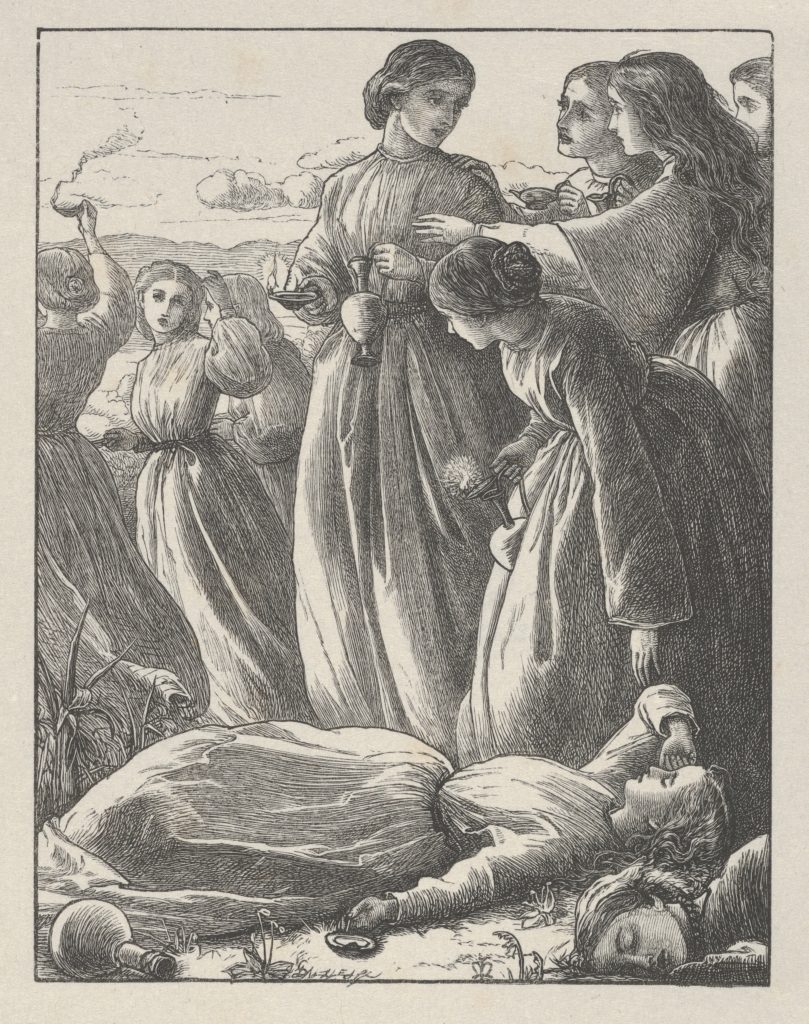
In the Gospel reading, our Lord compares His coming to a bridegroom coming in the middle of the night to gather his friends for a feast. Those who were wise were prepared and ready for his arrival and went in with him to the feast, while those who were unprepared found themselves on the wrong side of a locked door. This is how our Lord’s return will be. He will come at an hour we do not expect. Therefore, lest we be found unwise and unprepared, He encourages us to keep watch and ready to enter His wedding feast.

I.

This Sunday brings us to the close of another Church Year. For most of us, this is not our first time here. In fact, we’ve had about as many ends of the Church Year as we’ve had of the secular calendar year. But, what does it mean that we’ve reached the end of the Church Year; and, what is the Church Year, anyway? At the moment, we don’t cover this topic in depth during Confirmation class, so it kind of has to be gleaned from different sources, including sermons like this one. The secular calendar year that we use throughout our lives is based on the sun and the earth’s rotation around it. The calendar, as we know it now, dates back to 1582. The Church Year, however, is based on the life and ministry of Jesus Christ and it has its beginnings at Creation and from the giving of the Law on Mt. Sinai. Just as the secular year has ebbs and flows, high points and low points, so does the Church Year – according to the events in the life of our Lord. Just as the secular calendar repeats it course, so the Church Year.  

In keeping with St. Paul’s instruction that everything be made holy by the Word of God and prayer (2 Tim. 4), we in the Church mark our days with Scripture readings and prayer. You might otherwise know this by the name, Lectionary. The lectionary is the system of readings that we follow on Sundays and whatever day. These readings fell into place and are time-tested by the generations of the faithful who have gone before us. In many cases, particularly with the Epistle and Gospel, we hear the same texts that were read on Sundays all over the world 1,600 years ago. We continue to follow this pattern because these readings help us to hear the full counsel of God’s Word. The lectionary leads us to the most-well loved passages of all time and into some of the most difficult. Just because a portion is difficult doesn’t mean we shouldn’t hear it. Rather, for athletes, the hard workouts are what lead to the greatest improvements. Same for Christians. We have one of those hard passages today, as we have for a few weeks: speaking about our Lord’s return.

II.

At the end of the Church Year, and in the leadup to the yearly celebration of our Lord’s birth, we hear His instruction concerning His return. The Gospel text today is a part of the same conversation we’ve been hearing. The Disciples asked Jesus back in chapter 24, “When will these things be…what will be the sign of Your coming and of the end of the age?” (Mt. 24:3) Our Lord taught them that, unlike the punishment coming to Jerusalem, His return would be without a sign. There would be general signs that we are in the end times, as we have been since the Resurrection; things like earthquakes, famines, and wars. Jesus’ return, however, will be plainly visible to all, like lightning flashing across the sky. The parable today teaches us part of how it’ll look on the ground.

Jesus said, “Then the kingdom of heaven will be like ten virgins who took their lamps and went to meet the bridegroom. Five of them were foolish, and five were wise.” (Mt. 25:1-2) The wise virgins, anticipating and being prepared for the bridegroom, took extra oil with their lamps; the foolish virgins took only what was in their lamps. Jesus said that, as the bridegroom was delaying his arrival, “all became drowsy and slept.” (v. 5) Then, in the middle of the night, there was a sudden cry, “Here is the bridegroom!” (v. 6) The foolish virgins were found unprepared. They had let their lamps run out of oil and were not ready to meet and celebrate with bridegroom. While they were away seeking to buy oil, the bridegroom gathered his wise friends and brought them into the feast. When the foolish virgins came afterward, they found the door locked to them. The bridegroom said, “Truly, I say to you, I do not know you.” (v. 12) Jesus Himself gives us the point of the parable at the end of the text when He says, “Watch therefore, for you know neither the day nor the hour.” (v. 13)

III.

This is why this is one of those hard passages. We confess, in keeping with our Lord’s teaching, that He will come again. As He ascended, so will He return – to raise the dead and for judgement. As He said, it will be at a time completely unknown to everyone. The time is only known to God the Father. Therefore, Jesus encourages us to keep watch and ready to enter His feast. The feast He speaks of in the parable is the feast: the eternal wedding feast of the Lamb and His bride, the Church, in the new creation. We will feast, for we have been redeemed from death and the devil through the blood of Christ and, at His return, those will be forever put away from us. But, we don’t know when that will be, and we are to be ready. How shall we do that?

We should avoid trying to over-interpret this parable, seeking to find what the oil and lamps represent, for example. Instead, with these words, our Lord encourages us, in general, to make faithful use of His Means of Grace in the days He gives us. We confessed earlier in this service that we are sinners worthy of the Father’s temporal and eternal punishment. Yet, in His mercy, God the Father has poured out His love on us sinners by giving us His own Son. In Baptism, we were each united to Christ’s death and resurrection. Just as He was raised from the dead to new life, so shall we be. In the meantime, as we confessed, we bear in ourselves the corruption of sin. In says in the Book of Concord, though, that Christ is superabundant in His grace. Rather than leave us in our sins, He extends forgiveness to us in many ways: through Baptism, through the Absolution, and in the Sacrament of His true body and blood. Through these things, He forgives our sins, strengthens our faith, and makes us truly alive; truly awake.

To keep watch and be ready for Christ’s coming is to make faithful use of these things, to receive them with joy as our true “daily bread.” In these, God Himself dwells within us and leads us to do those things which are right and pleasing to Him. Let us pray that, as our Lord has blessed us this year with His pure Word and holy Sacraments, He would continue to do even more in the new year. May the Lord increase in each of us, and in all of us together as a congregation, a divine love for Him and each other. Let us, according to His grace, then keep watch and ready. Jesus said, “‘Surely I am coming soon.’ Amen. Come, Lord Jesus!” (Rev. 22:20)

Whoever Receives You, Receives Me

Text: Matthew 25:31-46

Earlier in the Gospel, our Lord sent His Apostles out to preach among the lost sheep of the house of Israel. They were to travel among the cities and towns of the children of Israel, healing the sick, raising the dead, cleansing the lepers, and casting out demons. They were to proclaim that the kingdom of heaven is at hand in the person and ministry of Jesus Christ. When they encountered a house that would receive their preaching of Jesus, they were to remain there as long as they stayed in the town. But, if they encountered a town where they were not received, Jesus told them to shake the dust off their feet as they left as a judgment against that town. He said, “The one who hears you hears Me, and the one who rejects you rejects Me, and the one who rejects Me rejects Him who sent Me.” (Luke 10:16, English Standard Version) In a way, we see this playing out on a world-scale in the Gospel text today.

This text is another part of the same conversation we heard last week (and which we’ll hear next week). It takes place on the Mount of Olives, maybe even in the Garden of Gethsemane, during Holy Week. The Disciples had earlier asked Jesus about His return, and He used the opportunity to teach about the destruction of Jerusalem alongside the day of His return to raise and judge the dead. This is what our Lord is teaching about in the text today. Here we learn that our Lord will indeed return to separate the sheep from the goats, those who respond to His Word in works of mercy and love from those who don’t.

I.

Our Lord’s teaching today touches upon two subjects that are called fundamental doctrines of the Christian faith. Fundamental doctrines are things that must be believed which, without belief in, one might easily find themselves outside the Christian faith. Some examples would be: the belief that all mankind are sinners, unable to merit salvation in anyway whatsoever, justified freely by God’s grace through faith in Christ’s redemption. A fundamental doctrine is something that, if you take it away, the Christian faith falls. The two in our text today are: Christ’s return for judgement and the resurrection of the dead. With the faithful Christian Church of all times and all places, we gladly confess our faith in both of these things. In fact, we do this every Sunday.

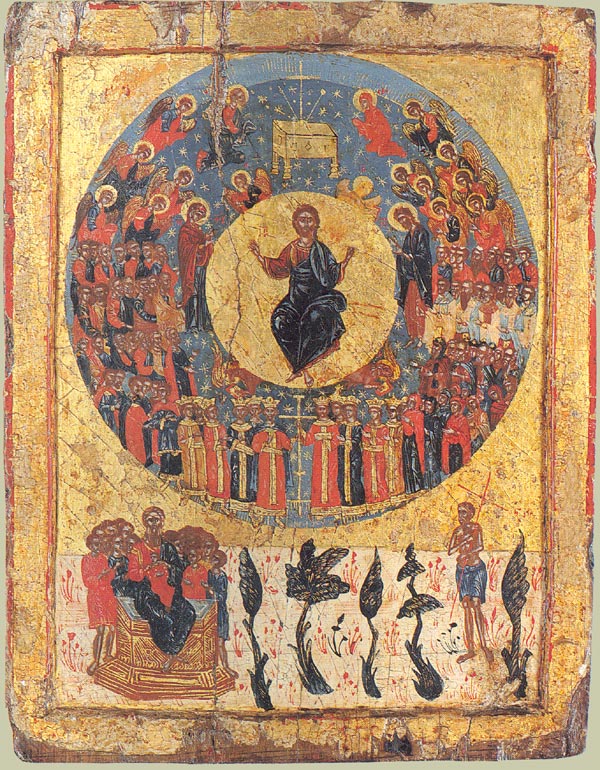
We believe that on the Last Day, our Lord will return on the clouds with the cry of an archangel and with the sound of the trumpet of God. At His return the dead bodies of all those who have ever lived in every part of the world will be raised. We heard from St. John last week, “He is coming with the clouds, and every eye will see Him.” Then, John adds, “even those who pierced Him.” (Rev. 1:7) Our Lord Himself once said, “Do not marvel at this, for an hour is coming when all who are in the tombs will hear His voice and come out, those who have done good to the resurrection of life, and those who have done evil to the resurrection of judgment.” (Jn. 5:28-29) Our Lord spoke of what is happening in the text this week. At His return, He will raise the dead of all nations and gather them before Him for judgment. Though all the dead will be raised, their ends will be quite different.

Jesus said,

When the Son of Man comes in His glory, and all the angels with Him, then He will sit on His glorious throne. Before Him will be gathered all the nations, and He will separate people one from another as a shepherd separates the sheep from the goats. And He will place the sheep on His right, but the goats on the left.

Matthew 25:31-33

Our Lord’s judgment will not be some long drawn-out procedure, but an immediate pronouncement and separation of the righteous from the wicked. And this is the judgment, Jesus said, “whoever hears My Word and believes Him who sent Me has eternal life. He does not come into judgement, but has passed from death to life.” (Jn. 5:24) However, how shall we reconcile this with what our Lord says in the text today?

II.

When we hear this text, and particularly the reasons for those on the right being on the right and those on the left, it’s easy to come away with a sense that Christ’s eternal judgment will be based on the works of each individual person – that each person will enter life or damnation based on their own merits. Well, that’s not really what the Scriptures say, is it? So, what are we to do? Maybe we should first recognize that a works-righteous reading of this passage is wrong. I’ll be the first to admit that I have, at times, read it that way; it makes sense to read it that way. However, because we are sinners, we should be suspicious when a text from Scripture inherently lines up with what we want it to say. Let’s try looking at this passage a little differently.

As Lutherans, we recognize that God works through means. God works through certain things to bring about our salvation; He doesn’t just snap His fingers. We see this first of all in the Incarnation. Our God provides salvation through the life, death, and resurrection, of the One who is both God and man – Jesus Christ. He works faith in Christ in us through certain things in creation. We call them the Means of Grace, the Word and the Sacraments. Through these, we receive the forgiveness of our sins and – dare we say – God Himself. To reject the Means of Grace is to reject God, actually. Just as God sends certain means to bring about our salvation, He also sends people. Chiefly Christ, but also the Apostles and the generations of faithful Christians who have gone before us. Our pastors, teachers, Sunday school teachers, parents, friends – all these, and more, have proclaimed Christ and the forgiveness of sins to us. Without their labors, perhaps we would not be here now.

Remember what Jesus said before, “The one who hears you hears Me.” God works through means and people in our lives, people whom He sends. How we receive and behave toward them is how we receive and behave toward Christ. The emphasis in our text is on how we behave toward other Christians. We care for other Christians because from them and in them we receive the love of Christ. How we treat those who’ve gone before us or who follow after us is, actually, how we treat Christ. If we, in faith, seek to love and serve those of the household of faith, we have the assurance that we are truly serving Christ.

III.

When we reflect on our behaviors and attitudes toward those fellow Christians whom God has placed in our lives, we see that we have not always been joyous in our concern for them. On a national level, our schools and universities suffer want. Rather than seeing it as a blessing to educate our children in the Christian faith and for faithful service to the world, we consider the cost of time and money more persuasive and let our school doors close. At times, our funding for missionaries and church planting falters as well. Consider the opportunities for works of mercy or to comfort burdened consciences with forgiveness of Christ that we have lost and avoided. Jesus said, “As you did not do it to one of the least of these, you did not do it to Me.” (25:45) 

Our failures to provide and care for those who share in the Gospel with us reflects our failures toward Christ. We don’t just fail in whole, but as individuals. Let us consider how we have behaved in our own congregations. We bite and thrust at each other. We are quick to judge and slow to forgive, and we gossip. When we so behave against those who are our own flesh and blood, we do it to Christ; for He dwells in their hearts by faith, as in ours. Jesus also said, “As you did it to one of the least of these My brothers, you did it to Me.” (25:40)

The final judgment will not be based on our works as the deciding factor, but on how we receive Christ. These two are connected, though. How we receive Christ should be reflected in how we treat our fellow Christians. We must confess today that, we should be heaped into eternal damnation with those gathered on the left. We bite and tear and judge and hate. As we have behaved toward our fellow Christians, so we have toward Christ. St. Peter said, though, that “The Lord is not slow to fulfill His promise…but is patient toward you, not wishing that any should perish, but that all should reach repentance.” (2 Peter 3:9) Let us, therefore, hear these words today in repentance. We deserve nothing but wrath and eternal damnation. If the scale were set with us and our sins on the one side, the bottom would fall out and the jaws of hell would swallow us up.

As it stands, we’re not in the scale alone. Jesus said that everyone who believes in Him has already passed from death to life. We who are baptized into Him are clothed in His righteous robes, and when the Father looks down at us, His own children is what He sees. We have the forgiveness of sins now, and we remain here awaiting the Resurrection with manifold opportunities to serve and love. St. Paul said, “So then, as we have opportunity, let us do good to everyone, and especially to those who are of the household of faith.” (Gal. 6:10) When we seek to serve those whom Christ places in our lives, we know that we are truly serving Him. Therefore, in repentance and faith, let us take confidence that our Lord – for His sake alone – will say these words to us, “Come, you who are blessed by My Father, inherit the kingdom prepared for you from the foundation of the world.” (25:34)

Don’t Be Deceived (about the Coming of Christ)

Text: Matthew 24:15-28

Today we begin our final approach toward the end of the Church Year. You might’ve noticed in the readings already that the tone has changed. Though we had a preview of this back on the Tenth Sunday after Trinity, yet this week we now begin to hear about the return of Christ and the final judgment in earnest. And, though our Lord’s words may be difficult to hear, yet His purpose is not to frighten us or make us fearful of His coming, but to prepare us for it. He gives us these words so that we might watch for His appearing, be ready for it, and eagerly await the resurrection of the dead.

Our Lord sometimes has the habit of teaching about more than one thing at a time. In St. Luke’s recollection of the conversation in our text today, he organizes our Lord’s teachings into two parts to be easier to understand. But, that’s not how St. Matthew does it. He preserves our Lord’s teaching of both the destruction of Jerusalem and His return, even if it does mean covering both topics at the same time. In the text, our Lord teaches about the final destruction of Jerusalem and about His return; one will come with a warning, the other not.

I.

The setting of our text this week is the Mount of Olives, perhaps the Garden of Gethsemane, even, somewhere in the middle of Holy Week. If you remember, the sequence of the early part of Holy Week is that Jesus would teach in the temple during the day and lodge at Bethany during the night. One day, as He was leaving the temple with His disciples, the disciples began marvelling over the great buildings of the temple complex. Jesus said to them then, “You see all these, do you not? Truly, I say to you, there will not be left here one stone upon another that will not be thrown down.” (Matthew 24:2, English Standard Version) Here, Jesus again, foretold the destruction that would come Jerusalem at the hands of the Romans a little less than 40 years later. Now, in the immediate sense, the disciples were confused by what Jesus meant. If you read just before our text in Matthew, they were thinking Jesus was speaking about His return there; but He wasn’t. Instead, He was foretelling the punishment Jerusalem would receive for her rejection of the Savior.

This is a major topic in Scripture and for the history of the Church. Judged by the amount of emotion and words dedicated to it, the destruction of Jerusalem – by both the Babylonians in the Old Testament and the Romans in the New – are about the most painful lessons in Scripture. We heard back on the 10th Sunday after Trinity how our Lord wept over Jerusalem, how He longed to gather them as a hen would her chicks – but they wouldn’t have it. All throughout the prophet Jeremiah’s ministry, God the Father bore His heart and deep sorrow over the rejection of His people. They hated His Word and each other; they lived lives of idolatry, violence, hatred, and adultery. Yet, all the while, they took pride in their city and temple. They believed that no harm could ever come to it. We also heard on Reformation Sunday how our God is just; justice demands the punishment of sin, including unbelief. And so, our Lord allowed Jerusalem to be destroyed by the Babylonians in 586 B.C. When the Babylonians became full of themselves, God allowed them to be destroyed by the Persians. 

Just as God’s people rejected Him in the Old, they did it in the New. Although many did believe in Christ and receive salvation through faith in Him, many rejected Him – as did Jerusalem as a whole. Therefore, as judgement against them, God would allow Jerusalem to be destroyed once again; though it would not be without warning. Our Lord said to the Disciples, “So when you see the abomination of desolation spoken of by the prophet Daniel, standing in the holy place…then let those who are in Judea flee to the mountains.” (vv. 15-16) This is a reference to a prophecy given in the book of Daniel, that armies would come and surround Jerusalem on every side. They would disrupt worship and pollute the temple with their idols. Our Lord teaches us here, that Daniel spoke of the Romans. But remember, our Lord’s purpose is not to frighten, but to prepare. Therefore, He encouraged the Disciples that, when they saw these things coming, to flee Jerusalem. And, actually, that’s what they did. Ancient historians tell us that when the Romans came, the Christians remembered these words of Jesus and fled to the town of Pella, and so were safe from harm.

II.

As we said, though, the Lord sometimes has a habit of speaking about more than one thing at a time. Our text today is one of those times. Up to verse 22, our Lord warns of Jerusalem’s coming destruction. There would be signs for the Christians to see and leave beforehand. However, the topic changes in verse 23. After Jesus said the temple stones would be thrown down, the disciples asked Him what the sign of His return would be. Jesus’ answer to that question begins in verse 23, but comes really in verse 26. The Holy Spirit records for us through St. Matthew, “So, if they say to you, ‘Look, he is in the wilderness,’ do not go out. If they say, ‘Look, he is in the inner rooms,’ do not believe it. For as lightning comes from the east and shines as far as the west, so will be the coming of the Son of Man. Wherever the corpse is, there the vultures will gather.” (vv. 26-27)

The destruction of Jerusalem, really both times, was long preceded by various signs and indications. We don’t have time today to speak much about them, perhaps it would be a good Bible study. But the return of Christ, Jesus Himself says, will be different. There will no sign. Sure, we have signs in general that we are in the End Times, and have been since the Resurrection and Ascension – earthquakes and famines and such – but there will be no sign before Jesus returns. Instead, it will be immediately and plainly visible to all people – just like lightning, for example. The other example Jesus gives is about the vultures. If you’re outside and you see a ring of vultures flying overhead, you know what’s going on. Same with Jesus’ return. Everybody’s going to know; but it will be without warning. St. Paul said, “The Lord Himself will descend from heaven with a cry of command, with the voice of an archangel, and with the sound of the trumpet of God.” (1 Thess. 4:16) St. John adds, “Behold, He is coming with the clouds, and every eye will see Him.” (Rev. 1:7)

Now, the purpose of hearing and speaking about these things is not to frighten ourselves or make us afraid of Christ’s coming. Rather, having been instructed by the Lord, we can be confident that He is coming. He has redeemed us by His blood and won for us eternal life. Soon, He will come to gather us to His side and put away forever all sin and malice. Since we know that the Day will come, and we are reminded this day that it will be without warning, let us then endeavor to be found faithful. The Lord has brought us into His family, He has revealed to us what is good and true, and even produces good works in our lives through the Holy Spirit. Let us pray that He would cause us to be given to them, and abound more and more. St. Paul wrote, words we’ll hear again in a few weeks, “You know the time, that the hour has come for you to wake from sleep. For salvation is nearer to us now than when we first believed. The night is far gone; the day is at hand. So then let us cast off the works of darkness and put on the armor of light.” (Rom. 13:11-12)

Children of God in Life and Death

Text: 1 John 3:1-3

St. John the Evangelist wrote in the Epistle text, “Beloved, we are God’s children now, and what we will be has not yet appeared; but we know that when He appears we shall be like Him, because we shall see Him as He is.” (1 John 3:2, English Standard Version) St. John speaks of the grace we have received in Christ; that, for His sake, we have been made children of God. In Him we have the free and full forgiveness of our sins and the joyful expectation that, at the Resurrection, we will see Jesus with our own two eyes, just as the angels and saints behold Him now in heaven. We will behold Him joyfully, as we are made pure from sin through faith in His sacrifice. Just as those who have gone before us were made pure through faith in Jesus, so we, too, are purified through the same one faith.

Today we celebrate All Saints’ Day, which falls on November 1st. This is an ancient holiday, first celebrated officially in the 4th century as All Martyrs’ Day, a day to remember and give thanks to God for those Christians who gave witness to the truth even by their deaths. In the 9th century, the date was set to November 1st and its name changed to how we know it today, All Saints’ (or, The Feast Of). Today we thank God that, out of His great love for us, He has made us to be His children. And so we are, both in this life of death and in the eternal life to come.

I.

Through the inspiration of the Holy Spirit, St. John was caused to write the words we heard already, “See what kind of love the Father has given to us, that we should be called children of God; and so we are.” (v. 1) This epistle was originally written to Christians under the spiritual care of St. John as their pastor. He wrote, in part, to remind them of the calling to which they were called, their new status before God in Christ. They are God’s children now, John said, implying that they were previously children of something or someone else. Earlier in the Church Year we heard from St. Paul to the Ephesians that we are saved by God’s grace through faith in Christ – apart from works. This is a good thing because, in the sentences before that part in Ephesians 2, St. Paul named what we all once were, children of wrath. (Eph. 2:3)

With those words, St. Paul reminds us of the consequences of the Fall. In confirmation, we recently learned about Creation and the Fall and we noted how, although Adam and Eve were created in God’s image, their children were born in their image. It says that in Genesis 5, and that’s the Holy Spirit’s way of telling us that something changed in the Fall. Now, we are born sinful. We are born at enmity with God, hating the things that He wants us to do and only desiring to please ourselves. That is what it means to be children of wrath by nature. What’s more, we have so behaved. We are more concerned with ourselves and our earthly happiness than we are devoted to God’s Word. We have made, do now, make choices that reflect that in our lives. We know what God commands, and when we desire to do something against His will, we push His Word to the back of our minds and carry on with what we were going to do, anyway. This is what we are by nature; in a word, sinful.

St. John says, though, that this has all been done away with through an incredible showing of God’s love. We heard last week that the Father saw our wretched and sinful state and chose to put forth His own Son in our place. We are wicked and corrupt sinners, yet Christ willingly died for us. God the Father put His own Son, Jesus Christ, forward as the payment for our sin and so that we, who by nature were children of wrath, might be God’s own children. By our Baptism into Christ, through faith in the Word which is revealed to us, God the Father clothes us in the robes of Christ’s righteousness which covers all our sins. And so, we are His forgiven children now, as John said. But, “what we will be has not yet appeared.”

II.

With just a short turn of words, the Apostle speaks very well to our present experience. In theological jargon, this is called the “now, but not yet.” That means, we are – as the Spirit says – God’s children by our baptism into Christ. We are united to His death and resurrection and have received (and will yet, today, receive) the forgiveness of our sins. We have this joy now, but our joy is neither yet full nor complete. We have the forgiveness of our sins now, but we are not yet where there is no sin. And, we can tell this in our lives. 

Let’s use John as an example. He was a young man when the Lord called him from mending the nets. He followed the Lord but, only a few years after the Ascension, his brother James was the first of the Apostles to be martyred. Still, John continued in the faith. One by one, all the other Apostles were either matyred or otherwise died, until John only was left. He suffered greatly under various persecutions, enduring both torture and exile, along with the persistant slander of false teachers and heretics. Nevertheless, St. John remembered and taught through it all, that he and we are God’s children now.

Time doesn’t allow for us to speak of all our afflictions. Some of them may be similar to John’s, but many not. We suffer in our health and in our personal lives. Some of us have only made it this far in the faith and remain in it with great difficulty. We are looked down upon, as Christians in whole, by the world; our own church body, in particular, is increasingly an object of derision in the world’s eyes. We should expect this, however, as St. John said, “The world does not know us [because] it did not know Him.” (v. 1) That doesn’t make it any easier, though. This does: John said, “Beloved, we are God’s children now, and what we will be has not yet appeared; but we know that when He appears we shall be like Him because we will see Him as He is.” (v. 2) St. John offers this as fact: We are God’s children now by Baptism and faith. We have the forgiveness of sins now. When Christ returns, all things will change.

III.

This is our hope, it is our confidence; and, not just ours, but also of those who have gone before us here. St. John said, “Everyone who thus hopes in Him purifies himself as He is pure.” (v. 4) He’s saying that, by our union with Christ in Baptism – God the Father calls us His children. To be His child is to have the forgiveness of sins. To have the forgiveness of sins means to be no longer beneath the shadow of sin and death. Though our bodies die as the punishment of sin, yet the souls of those who believe continue to praise God in heaven. We heard some of their song in the reading from Revelation. Those whom we have loved and lost from among our fellowship this last year, are now in that choir singing.

So, will we be. We are God’s children now. The Father has shown His great love for us, adopting us – who by nature are sinful and unclean – into His own family. He puts His own robe around us and rings on our fingers. He sacrificed the true fattened calf for us, and we feast at His own supper. Though our experience now is filled with hardship and affliction – that is only because what will be has not yet appeared. But, it will. Soon, the last trumpet will sound and our Lord will return. All evil and all death will be forever ended and we will live forever with Christ in everlasting light. Should it be the Lord’s will that we depart before that time, then we will be with Christ, too, just awaiting the Resurrection. We have this hope, and are purified by this hope, because He who promised is faithful. Today, we give thanks to God that, out of His great love, He has made us to be His children. And so we are. Amen.

The Righteousness of God

Text: Romans 3:19-28

St. Paul wrote to the Romans, “But now the righteousness of God has been manifested apart from the law, although the Law and the Prophets bear witness to it – the righteousness of God through faith in Jesus Christ for all who believe.” (Romans 3:21-22, English Standard Version) Today we celebrate the Festival of the Reformation. Though Reformation Day itself falls on Thursday, we take the opportunity today to give thanks to God and glorify Him for the grace revealed to us in His Scriptures, and for calling His Church back to the Scriptures through His servant Martin Luther. On October 31st, 1517, Martin Luther posted the 95 Theses, giving a start to the Reformation.

This year, I’d like us to look at a different portion of the text than we normally do. Normally, when Romans 3 comes up in the Lectionary, we take the opportunity – and rightly so – to be reminded that we are not saved by our works but by the grace of God through faith in Jesus Christ. That is and (must always be) evident in our preaching, our hymns, and even the Liturgy. This year, I’d like us to focus on the words the Holy Spirit gives us through St. Paul, where he says, “The Righteousness of God.” What is the righteousness of God, and how is it shown? The righteousness of God is shown in His

  • a) punishing the sins of those who break His Commandments, but also, and especially, in
  • b) the sending forth of His Son as the atonement for all sin.

A.

In order for us to understand what St. Paul means by the righteousness of God, we need to first talk about God. Who is God? How should we describe Him? Speaking for us as a group, we would probably refer to the words of Scripture to describe Him. How do the Scriptures describe Him? In addition to being a Trinity and the creator of all things, the Scriptures speak about God as being a God of love and truth and, also, of righteousness and justice. As the creator and source of all things, He is the one who determines what is right and what is wrong. For lack of a better explanation, we might say that he who invents the game also sets the rules. And, in a way, that is what God has done. He has revealed to us what is right and good and true. He has revealed to us how best to serve Him and love our neighbor. He has even written these rules on our hearts and revealed them in Scripture. We know them. The Ten Commandments.

God has revealed to us His holy will, the standard of what is right and wrong, what is good for us and for our neighbors. He has revealed these things to us, and what have we done? We have ignored His Commandments or explained them away. We have forgotten them and disregarded them. What’s worse, we who have been raised in the Church have known the Commandments since our childhood – and we break them anyway. This confession is what St. Paul is working toward when he said, “There is no distinction: for all have sinned and fall short of the glory of God.” (vv. 22-23) St. Paul worked in chapters 1-3 of Romans to demonstrate that, because God has revealed His Law in the Commandments and written it in human hearts, there is no excuse we can give. We are sinners, one and all, no matter which way you cut it.

Now, what is God to do with such a bunch? God is love, that is true; but He is also a God of justice and righteousness. He has revealed to us how to act righteously, and we have not done it. What is a righteous God to do with those who are unrighteous? Well, He’s to punish them. In fact, it would be unrighteous for God not to punish. We have already confessed this morning, that we deserve God’s punishment in both temporal and eternal fashions for own evil sins. When parents don’t discipline their children, they fail in their vocations as parents. If God did not punish those who break break the Commandments, He would make Himself to be unrighteous. The righteousness of God is shown when He punishes those who transgress His Law.

B.

In the book of Numbers, the Holy Spirit gives us an account of how the children of Israel responded to the reports of the spies they had sent into Canaan. The twelve spies came back, telling of the great land, but also of the powerful people who lived there. Joshua and Caleb encouraged the people that the Lord was on their side and had promised to give them that land. But, the nation was swayed by the report of the ten wicked spies. They even prepared to stone Moses and Aaron, Joshua and Caleb before the Lord stopped them. The Lord said to Moses, “How long will this people despise Me? And how long will they not believe in Me, in spite of all the signs that I have done among them? I will strike them with the pestilence and disinherit them, and I will make of you a nation greater and mightier than they.” (Num. 14:11-12) In other words, the righteous Lord was prepared to punish the unrighteous breakers of His Law. He was going to do it, until Moses interceeded for them. 

Moses said to God,

Now if You kill this people as one man, then the nations who have heard Your fame will say, ‘It is because the Lord was not able to bring this people into the land that he swore to give to them that he has killed them in the wilderness.’ And now, please let the power of the Lord be great as You have promised, saying, ‘The Lord is slow to anger and abounding in steadfast love, forgiving iniquity and transgression.’

Numbers 14:15-18

Moses reminded the Lord that He is not only a righteous God, but a loving and merciful one – one who forgives transgression. The Lord shows His righteousness in punishing transgression, this is true. But even more so, does He show it by forgiving the sins of those who trust in Christ.

Instead of pouring out His righteous wrath on all mankind, which would be what we deserve, the Lord took another course – one which came only at great cost to Himself. God the Father saw our sin and considered the punishment we deserved, and instead put forth His only Son in our place. He sent His Son Jesus to take own our same human flesh and to bear our sins in Himself. Jesus actively and fully obeyed the Commandments and then suffered our punishment on the cross. On the cross, the Father poured out all His wrath on Jesus, as our substitute. Jesus bore it so that, in Him, we might be forgiven. And, how do we receive this forgiveness? We heard these words already, “All have sinned and fall short of the glory of God, and are justified by His grace as a gift, through the redemption that is in Christ Jesus, whom God put forward as a propitiation by His blood, to be received by faith.”

Our God is a righteous God. He sent forth His holy will in the Ten Commandments and He wrote it in our hearts. In keeping with His righteousness, He punishes the sins of those who break His Commandments. But, He freely forgives those who believe in His Son. That is why Christ took on our flesh, so that God might both be just and our justifier through faith. This is what all the Scriptures are about, and it’s what Luther called back to our attention. Or rather, God called it back to our attention, through Luther. We are not saved by our good works. We contribute nothing to our salvation by them. Rather, we are saved by God’s grace through faith in Christ – whom He put forward as the sacrifice for sin in our place. In this way, God shows Himself to be righteous: in demanding payment for sin, but, even more so, in forgiving those who trust in His Son, even us.

The Law and the Gospel

Text: Matthew 22:34-46

In our Christian Book of Concord, the Lutheran confessors write, 

The distinction between the Law and the Gospel is a particularly brilliant light. It serves the purpose of rightly dividing God’s Word and properly explaining and understanding the Scriptures of the holy prophets and apostles. We must guard this distinction with special care, so that these two doctrines may not be mixed with each other, or a law be made out of the Gospel. (Formula of Concord, Solid Declaration Article V, paragraph 1) 

Formula of Concord, Solid Declaration. Article V, paragraph 1.
An public domain copy of the Book of Concord can be found here: http://bookofconcord.org/sd-lawandgospel.php#para1

They wrote this because, after Luther’s death in 1546, there was confusion about how God’s Word should be preached, particularly in congregational settings. Some pastors were saying that people should be taught to repent of their sins by contemplating Christ’s death and resurrection. Others maintained, correctly and with Luther, that repentance comes through the preaching of the Law, while faith and the forgiveness of sins comes through the preaching of the Gospel. In the Book of Concord, the Church confesses that there is a difference between the Law and the Gospel and, in this, we follow the pattern of our Lord.

The Gospel today gives us an opportunity to speak this way because we heard our Lord giving a masterclass in preaching the Law and the Gospel. Even yet in the temple during Holy Week, even then, He desired that His opponents would repent and believe in Him, and so receive the forgiveness of their sins. Therefore, He preached the Law to them – that God demands absolute love for Him and neighbor. Then, He preached the Gospel – that the son of David is also the Son of God, come to put the enemies of sin and death beneath His feet. Our Lord preaches both Law and Gospel so that we would rightly know and lament the depth of our sin, and so that we would also know the greatness of His love for us.

I.

The underlying question the Pharisees and lawyers had for our Lord was how to interpret the Scriptures. The setting of our Gospel text this week is the temple in Jerusalem during the last week of our Lord’s earthly ministry. During Holy Week, Jesus would lodge at Mary, Martha, and Lazarus’ place and teach in the temple during the day. The question for our Lord today is the third question posed to Him, each an attempt to trip our Lord up and cause Him to blaspheme. They should’ve known better by now. But, the question behind their question was, as we said, how to interpret the Scriptures. Should the Scriptures be interpreted simply as a rule book for us to follow and thereby merit eternal life – as some of our Lord’s opponents held – or is something else going on? In His response to their question, and in the question He gave them, our Lord shows us how to interpret the Scriptures: by first recognizing the difference between the Law and the Gospel.

But, what is the Law; and what is the Gospel? Let’s see if we can stretch our minds back to our confirmation days. When we say “The Law,” we mean those passages in Scripture where our God tells us how we are to live, what we are to do and not do. When we say, “The Gospel,” we mean those passages in Scripture that speak of Christ and His work for us, such as His keeping of the Law for us and His death on our behalf, as the payment for our breaking of the Law. St. Paul teaches us that the purpose of the Law is to make sin known and lead to repentance while, through the preaching of the Gospel, faith is created and forgiveness is received. We maintain this distinction because, if we take away the preaching of Christ’s cross and leave only the Ten Commandments, we lead people only to despair. If we preach only the death and resurrection of Christ but leave out the Law, then we remove the reason why Christ died and our need for salvation in the first place. This, in a very short time, is what we mean by the Law and the Gospel. But, what does preaching the Law and the Gospel look like in practice, in real life? Let’s turn to our Lord’s preaching in the temple.

II.

The Holy Spirit records for us through St. Matthew that, “when the Pharisees heard that He had silenced the Sadducees, they gathered together. And one of them, a lawyer, asked Him a question to test Him, ‘Teacher, which is the great commandment in the Law?’” (Matthew 22:34-36, English Standard Version) Remember, we’re in the temple during Holy Week and Jesus’ opponents are crowding around Him. They ask Him, more or less, which is the greatest commandment in the Old Testament. Apparently, historically-speaking, this was the sort of conversation people would have, and the usual response would be what our Lord did say, “You shall love the Lord your God with all your heart and with all your soul and with all your mind.” (Mt. 24:37) The greatest and first commandment is that we fear, love, and trust in God above all things. Now, here, Jesus preaches the Law. He said to them, “A second is like it, ‘You shall love your neighbor as yourself.’” (v. 39) 

We hear elsewhere that the Pharisees were lovers of money. They were also lovers of being honored and respected by the public. They were lovers of loving those who loved them, but not so much of loving everyone. And, so, Jesus rightly pointed out that God does not only demand absolute love for Him, but also absolute love for everyone whom He places in our earthly lives. In fact, the whole second table of the Commandments is directed toward that end. By doing this, Jesus preached the Law to Pharisees to point out that they were, in fact, sinners in need of salvation. However, we should also hear this preaching of the Law ourselves. The Scriptures say that the “word of our God will stand forever” (Is. 40:8), and that includes both the Gospel and the Law.

God, in His Law, demands perfection. He demands that we, truly and with our whole being, love Him alone and above all things. There is no equivocation, there is no wiggle room. He will not tolerate anything to take His place. And yet, we cast His Law aside and throw it away from us. We neither study His Word or hold it in our hearts. We consider it a burden to be well-versed in Christian doctrine and live accordingly. In our homes, our televisions and stuff feature prominently while Bibles gather dust or are absent. We trust in our retirement investments to provide for us old age more than God. Just as God commands absolute love for Him, He also demands that we love our neighbor – every neighbor. Yet, we ignore that, too, as we all have in the past or do now hold grudges in our hearts. The same Law preached to the Pharisees should also weigh heavy on our hearts. They were no deeper into sin than we are now.

III.

Do you feel that? That sinking, heavy feeling in your chest? You’re supposed to feel that; it’s evidence that the Holy Spirit is working in your heart. The Lord has just shown us through the Law, how wicked we are. We don’t love God like we’re supposed to, and we don’t love our neighbors as we’re supposed to, either. God commands and we disobey, and that often on purpose. The punishment for this is death and eternal condemnation. This is what the Law does. The preaching of the Law shows our sins. It does this so that we can then hear this: Jesus Christ died for your sins. He knows how you only half-heartedly love God and how you have gossiped and hated your neighbor. He knows you have not treasured God’s Word as pricest of all jewels and that you have grown bored of hearing sermons preached. He knows these things, and all the things you have ever done, and He died for you. He died so that you might hear these words and believe. By His death He paid for your sins, by His resurrection He restores to you eternal life. If you believe these words, you have exactly what He says.

This is all because Jesus is not just David’s son according to the flesh but, as our Lord pointed out, He is “David’s Lord.” (v. 43) Jesus pointed out for the Pharisees and us that the son promised to David would be the same offspring promised to Abraham, the same promised to Adam and Eve, the Son of God Himself. His would be no mere earthly kingship, but a heavenly one filled with truth, righteousness, and love. This what our Lord established by His death and resurrection. He brings us into His reign by Baptism and by faith. Through these things, He gives to us the forgiveness which He won for us and the eternal life He purchased for us poor sinners. This is what we mean by the Gospel. Jesus Christ knew your sin and shame, took it Himself all the same, nailed it to the cross in His own flesh and made payment for it. The forgiveness which He earned, He gives to you as a gift through faith.

These two things must always be preached in the Christian Church, the Law and the Gospel. Our Lord did it there in the temple, as we heard, and He does here, now. By His Law, He shows us which things are right and good – and which we fail to do and so deserve eternal condemnation. By His Gospel, He teaches us that there is no condemnation for those who are in Christ, because those who are in Him are rescued from sin and hell. Let us give thanks to God that He has preserved this teaching among us this far and pray that we would be granted to confess the same in our lives and conversations. Amen.