The Lord’s Passover

Text: Exodus 12:1-14

The blood shall be a sign for you, on the houses where you are. And when I see the blood, I will pass over you, and no plague will befall you to destroy you, when I strike the land of Egypt. This day shall be for you a memorial day, and you shall keep it as a feast to the Lord; throughout your generations, as a statute forever.

Exodus 12:13-14, English Standard Version

Our Lord accompanied the institution of the Passover meal with these words. The Passover is the name we give to the night of the final plague of Egypt: the death of the firstborn. With that plague, Pharaoh’s hand would be compelled to expel the children of Israel from Egypt, an event the Passover meal celebrates. The Passover meal was both a celebration and participation in that event. It also foreshadowed the feast we celebrate tonight.

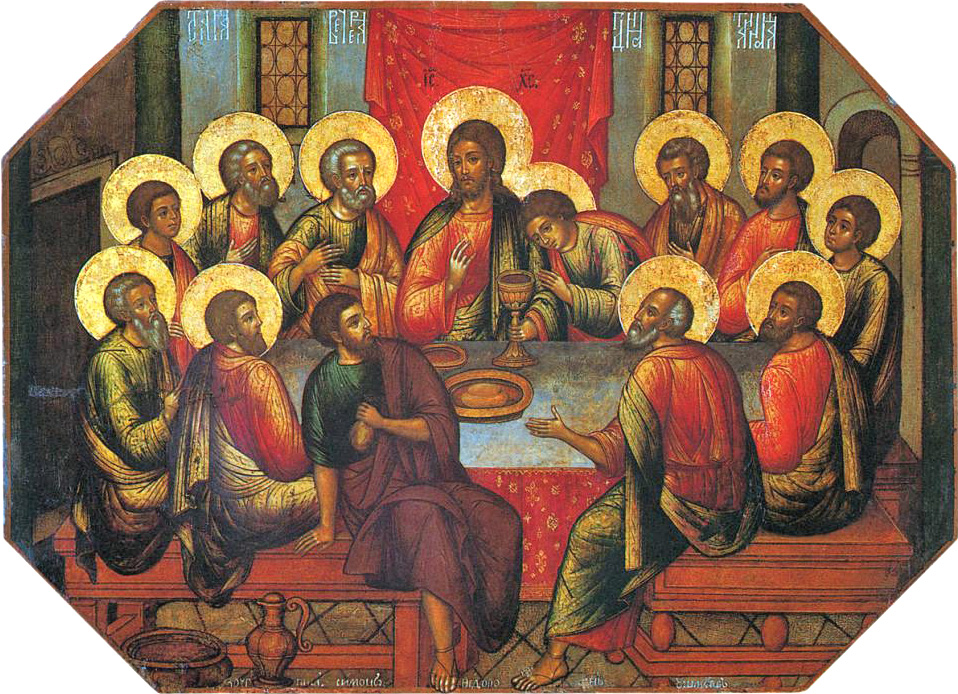
On Holy Thursday, we remember that our Lord was betrayed into the hands of sinful men for us. On Thursday night, our Lord was betrayed and given a sham trial. In the early hours of Friday morning, He was delivered up to Pontius Pilate, who had Him crucified. Today is also the day that our Lord instituted His Supper. In His final hours with His disciples, He gave them a meal whereby they (and we) would receive the fruits of His cross. In the Passover, the Lord gave His people a meal to celebrate their deliverance from slavery. In the Lord’s Supper, we receive a meal that is deliverance from the slavery of sin.

I.

The Passover meal is something we don’t talk about too much. This is partly because, outside of Exodus 12, the Bible speaks very little about it. The earliest accounts of how a Passover meal (what we now know as a seder meal) would go don’t come until well after Jesus. We know that Jesus celebrated the Passover; we don’t know what that looked like. The bigger reason, however, is that the Passover is one of those things in the Old Testament which are fulfilled in Christ. The Passover, along with the sacrifices and the observance of the Sabbath, pointed ahead to Christ and is fulfilled in His passion. The early Church recognized this and it’s why we don’t celebrate the Passover. Still, it is important for us to know what the Passover is.

The Exodus happened in about 1446 B.C. For 400 years leading up to that point, God’s people lived in slavery in Egypt. They went there, initially, because of a famine. The Lord blessed His people in Egypt and they prospered there. In time, kings of Egypt up rose up who knew neither Joseph nor the Lord, and they subjected the Hebrews to harsh slavery. God’s people cried out to Him for deliverance and He heard their cry. The Lord sent Moses and his brother Aaron to speak to Pharaoh, but when Pharaoh refused to listen and release God’s people, the Lord sent upon Egypt nine plagues. These plagues greatly afflicted the unbelieving Egyptians, but Pharaoh’s heart remained hardened against God. And so the time came for the final plague: the death of the firstborn.

As we heard, the Lord instructed His people to take a year old male lamb, one without blemish – in other words, a perfect one – and slaughter it. They were then to take its blood and mark the doorposts outside their house. That evening, they were to remain inside and eat the lamb together with their family. When the Lord came through Egypt that night, He would see the blood on the door and know that His children were inside; He would pass over them. Those who did not believe didn’t mark their doors, and God punished them with the death of their firstborn males – both man and animal. The result of this plague was that Israel was delivered from slavery in Egypt. Pharaoh’s hand was forced to release them. Every year afterwards, Israel was to commemorate that night by continuing to slaughter and eat a male lamb. In the Passover meal, the children of Israel celebrated their deliverance from slavery in Egypt.

II.

On the night our Lord celebrated His last Passover, He did something different. In the midst of the meal He took bread and gave it to His disciples saying, “This is My body.” After they had eaten supper, He gave them wine saying, “This is My blood.” With these words, Jesus instituted a new meal to be celebrated by His followers forever. He instituted the Lord’s Supper, the Sacrament of the Altar. Unlike the Passover, this meal is not just a memorial feast, but an actual deliverance itself. 

We believe from the witness of the Holy Spirit through Evangelists Sts. Matthew, Mark, and Luke and through St. Paul that in the Lord’s Supper we receive not just bread and wine, but with them the true body and blood of our Lord Christ. We take this from Christ’s clear words, “This is.” We also hear St. Paul’s encouragement to the Corinthians that the bread we break is a participation in the body of Christ and the cup we bless a communion in His blood. Paul also admonishes the congregation that those who misuse the Supper sin against the body and blood of Christ. We are not cannibals, however, as some have accused both Christians and Lutheran Christians of being. We simply believe that since Jesus is God, He is able to give us His body to eat and His blood to drink with the bread and wine in a way unknown to us. We call this the sacramental union.

III.

For what reason did Christ give us this meal? The Passover meal was a celebration of a past event – the Lord delivering His people from slavery in Egypt. The Lord’s Supper, however, is not a celebration of a past event but, in fact, is a means by which the Lord gives deliverance from the slavery of sin and death. When Jesus gave us His Supper He said, “This is My body…this is My blood which is poured out…for the forgiveness of sins.” (Mt. 26:26, 28) From these words, we believe that in the Lord’s Supper Christ, gives us His body and blood for the forgiveness of our sins. As the Catechism says, where there is forgiveness, there is also life and salvation.

The Lord’s Supper is a means by which our Lord delivers us from slavery to sin and death. As with Baptism, the Supper is a means by which the fruits of Christ’s cross are distributed to us. It is one thing for Christ to have paid for our sins on the cross, it is another to apply that payment to us. We confess this evening that we are sinners. We were born in sin, enslaved to it. Thankfully, our Lord’s grace is greater than our sinfulness, and He gives us forgiveness over and over and over again: through the Word, in our Baptism, in the Absolution, and – we confess tonight – in the Supper. The Passover meal was given to celebrate God’s deliverance of His people from slavery. The Lord’s Supper is given to be our deliverance from sin, death, and the devil. It takes the forgiveness Christ won and applies it to us. Thanks be to God.

Christ’s Mind for Us

Text: Philippians 2:5-11

Have this mind among yourselves, which is yours in Christ Jesus, who, though He was in the form of God, did not count equality with God as a thing to be grasped, but made Himself nothing, taking the form of a servant.” (Philippians 2:5-7, English Standard Version) These words serve as the text as we enter our Lord’s Holy Week. They are the words of the Holy Spirit through St. Paul to the Philippians in a time of persecution and affliction. The Philippian congregation was a small group, St. Paul’s first planting in Europe. They were dear to him; St. Luke remained among them for a time, as well. Their love for St. Paul and for their Christian brothers and sisters around the world – as St. Paul noted the Philippians’ generosity in his letters to the Corinthians – however, did not displace them from the situation they were in.

Philippi was a Roman colony, but there was no Jewish synagogue there. In all likelihood, the members of this congregation were converted to the faith from idolatry. They were poor and few in number and, as a whole, looked down upon by the world. Even in the early years of the Church, Christians were looked down-upon for their faith in Christ, sometimes harmed or killed. Put this all together – the Philippians’ poverty, their lack in numbers, the external pressures of the world – and you can understand why St. Paul wrote to them. Even for the most strong of a Christian, the struggles of this life make it very tempting to turn inward on oneself, to focus on our own needs and cares. In contrast, St. Paul directed the Philippians to the mind of Christ, which was set only on them and on us. Christ only had His mind set on us, resulting in our salvation. By faith, He sets our minds on Him and on each other.

I.

Have this mind among yourselves,” St. Paul said, “which is yours in Christ Jesus, who, though He was in the form of God, did not count equality with God as a thing to be grasped, but made Himself nothing, taking the form of a servant, being born in the likeness of men.” (vv. 5-7) We heard this passage just a few weeks ago when we were talking about the Second Article of the Creed. We believe, by the work of the Holy Spirit through the Word, that Jesus is the true and eternal Son of God. His was with the Father and the Spirit in the beginning and by Him were all things made. What St. Paul means by His being in the “form of God,” is that, not only was Jesus God, but He did God “stuff.” He created, led, and defended His people. He provided for them in the wilderness. 

Yet, Jesus did not consider His being and acting as God something to be grasped. The Spirit’s language here in the Greek echoes the actions of Adam and Eve in the Garden of Eden. When Adam and Eve saw that the forbidden tree was good for eating and making one wise, they grasped it and ate it. They grasped after being and acting like God; so, also, do we when we sin. Every sin we commit involves making ourselves the judges of right and wrong. Every sin is a small attempt to make ourselves God. But, Jesus did not grasp after being God – even though He was God. Instead, He went the opposite route. He “made Himself nothing,” He “humbled Himself” to be in human form. We confess that Jesus became in every way as we are. He became true flesh and blood and was subject to the hardships we endure, except without sin.

St. Paul writes, “And being found in human form, He humbled Himself to the point of death, even death on a cross.” (v. 8) Jesus lowered Himself to punishment of the Law in our place, He took the punishment from God we racked-up by our many sins. In the Gospels we hear how Jesus was treated along the way. Last week we heard how His own people tried to stone Him for speaking the truth. Jesus was betrayed by one of His own disciples. He was struck and spit upon and mocked. He was flogged and crucified. Properly understood, He did not have to endure all these things; Jesus willingly submitted Himself to the will of the Father as Isaac did to Abraham when he carried the wood for sacrifice. Jesus did it all because, even in suffering, He had one thing on His mind: us. Even in His affliction, Jesus had His mind set on us and secured, by His death, our salvation.

II.

Suffering was not unknown to the Philippians. When St. Paul spoke of them to the Corinthians, he recalled how “in a severe test of affliction, their abundance of joy and their extreme poverty have overflowed in a wealth of generosity.” (2 Cor. 8:2) In other words, the Philippians heard St. Paul’s encouragement – including to rejoice in the Lord always – and set their minds on Christ and each other. They realized that, because Christ did (and still does) set His mind on us, they and we have everything we need. We have air to breathe and water to drink. We have shelter, food, and clothing. We may lack according to what we would want in ideal situations, but the Lord preserved them and us thus far. The Philippians realized, especially, that even when everything falls away this one thing endures: the forgiveness of our sins and the hope of eternal life we have in Christ. This knowledge, that everything they truly needed was already provided for, freed the Philippians’ to serve and look to the needs of others. By setting their minds on Christ, they really became set on their neighbor in Christ.

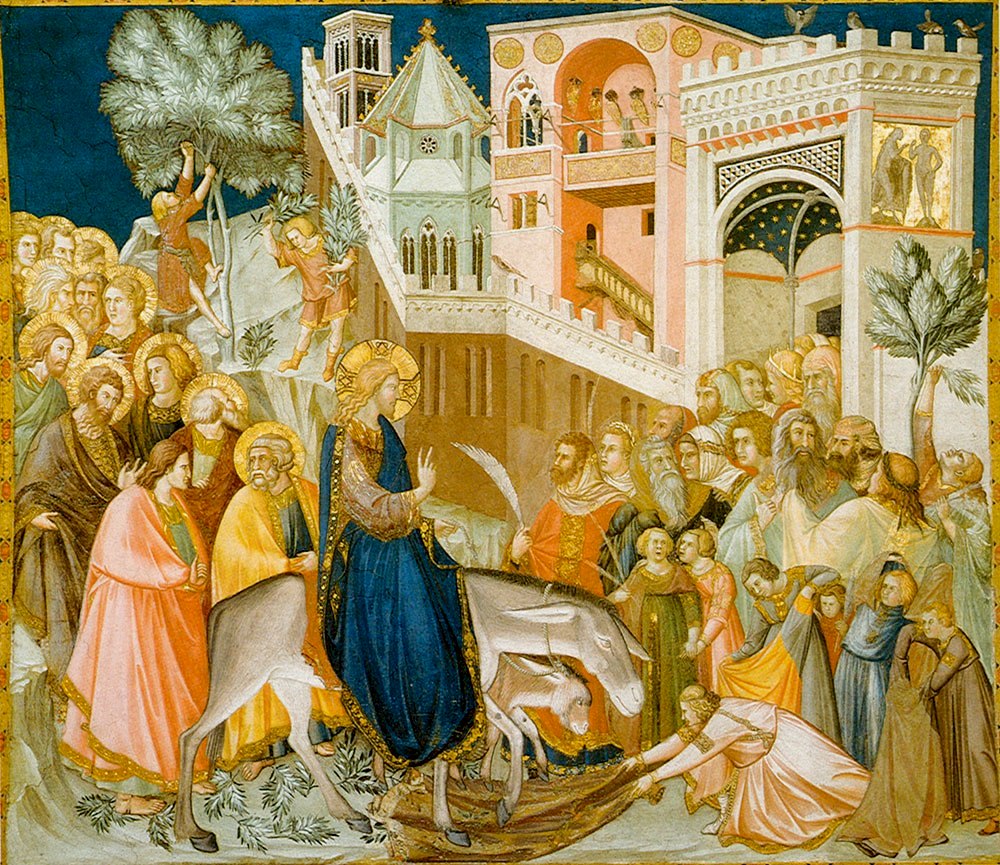
The affliction that we are enduring now is nowhere near the suffering that some of our fathers in the faith endured, but the same temptation remains for us to turn inward on ourselves. When something bad happens our nature is to circle the wagons on ourselves. We first, and usually only, look to our own wants and desires. We sin and make idols in our own images. For this, we deserve affliction. But in this time, let us remember what was on Christ’s mind – us. It was for us that He took on flesh. It was for us He rode into Jerusalem. It was for us He allowed Himself to be betrayed, and for us that He died. He had on His mind not His own need, but ours. By His death, our redemption is won.

III.

St. Paul encouraged the Philippians to set their minds on Christ, but that is something really worked in us by the Holy Spirit. We just learned this last week that the Holy Spirit is the one who brings us and points us to Christ. He’s doing that even now. We know from Scripture that we are to love and care for our neighbor, especially in times like this. We also know that we sometimes fail at this, which is sin. We become preoccupied with worry and we forget that the Lord provides what we need. Thankfully, that includes the forgiveness of our sins. Through our Baptism, the Holy Spirit daily works faith in our hearts. When we hear and sing His Word, the Spirit uses that to strengthen and increase our faith – and set our minds on Christ. Let us remember, even in these trying times, that our needs are met. The Lord grant us His Holy Spirit, that our minds would be that of Christ’s – minds set for the good of our neighbor. 

I Believe in the Holy Spirit

Text: The Third Article, Pt. I

The Latin title for today, the Fifth Sunday in Lent, is Judica. It comes from a verse in Psalm 43 that says, “Vindicate me, O God, and defend my cause against an ungodly people, from the deceitful and unjust man deliver me!” (Psalm 43:1, English Standard Version) “Judica” means, “vindicate.” This verse applies well to Christ, as we heard in the Gospel how He was opposed and threatened for preaching the true Word of God. We might also use this verse ourselves as a prayer to God, that He might rescue us from death and from the clutches of deceitful and unjust Satan. The Fifth Sunday in Lent marks the beginning of what is called Passiontide, the final two weeks before our Lord’s death for us. It is a time of somber repentance, which is why the joyful words of the Gloria Patri drop from the Liturgy until the Resurrection.

This morning we’re going to move on to the next article of the Creed, the third. In it we confess our faith in the person and work of the Holy Spirit. So far we’ve confessed the First Article, where we praise our God and Father for His work of creation and His continuing care for us. In the Second Article, we give thanks to Jesus Christ for His becoming man for us and redeeming us with His blood. In the Third Article, we confess that it is the work of the Holy Spirit to take the redemption that Christ won for us and bring it to us through the Word and Sacraments. The Holy Spirit is the One who enlightens, sanctifies, and keeps us in the true faith.

I.

Of the three persons of the Holy Trinity, the Spirit is probably the least understood. Throughout history there have been a number of controversies over the Holy Spirit, especially concerning His divinity and work. Many in the world today shortchange the Spirit and downgrade Him to some impersonal force or power. Our own church body, the LCMS, has had its own struggles in this area – not about whether the Spirit is God, but about how He does His work and what it looks like when the Spirit is at work. Rather than form our own opinions, which is where problems come from, let us strive for a faith patterned after the pure words of Scripture.

Something interesting about the Holy Spirit, though, is that He doesn’t like to talk about Himself. That has a lot to do with His job, but we’ll come back to that. Nevertheless, we learn from Scripture that the Holy Spirit is God. He is not just a power or force or energy, as some might say; The Holy Spirit is complete and true God, along with the Father and the Son. The Spirit was present at Creation, as we hear in Genesis: “The earth was formless and void, and darkness was over the face of the deep. And the Spirit of God was hovering over the face of the waters.” (Gen. 1) In the Book of Acts there was a man named Ananias who, with his wife Sapphira, made a show of giving a large sum of money to the Church in hopes of gaining prestige. Their show involved a lie. St. Peter called Ananias to repentance, saying, “Ananias, why has Satan filled your heart to lie to the Holy SpiritYou have not lied to men, but to God.” (Acts 5:3-4) There are other passages we could look at, but for the sake of time, we’ll let these words of the Athanasian Creed summarize: “Such as the Father is, such is the Son, and such is the Holy Spirit.” But what does He do?

Jesus said on the night He was betrayed, “When the Spirit of Truth comes, He will guide you into all truthHe will glorify Me, for He will take what is mine and declare it to you.” (Jn. 16:13-14) That’s what we’re building on when we say, “The Holy Spirit has called me by the Gospel, enlightened me with His gifts, sanctified and kept me in the true faith.” The work of the Spirit is to point us to Christ, to bring us into the Christian faith. He is the one who calls us out of darkness into Christ’s marvelous light. He takes the forgiveness which Christ won for us and declares it to us. In short, it is the Holy Spirit’s work to make us holy by bringing us to and sustaining us in the Christian faith. This is a necessary work, too, because without it we would without doubt perish eternally.

II.

We say in the meaning of the Third Article that we (“I”) cannot by our own reason or strength believe in Jesus Christ or come to Him. I’m repeating myself, I know, but this is what the Creed does – it takes the teachings of Scripture and puts them into a smaller chunk. Here, the teaching that is made smaller is what the Scriptures say about our fallen human nature. In Confirmation class, we spend a good amount of time talking about Original Sin. We do it in class because it’s hard, once we’re adults, to fathom this – that ever since the Fall, human nature is corrupt. We are not good by nature. Instead, we’re really bad; dead, even. This is totally different from what the world says, and what we, even, want to tell ourselves. But remember, we want our faith to be formed by Scripture and not opinion. So, what does the Scripture say? St. Paul wrote to the Ephesians, “You were dead in trespasses and sins…[living] in the passions of our flesh, carrying out the desires of the body and the mind, and were by nature children of wrath.” (Eph. 2:1-3)

Original Sin means that, though we have freedom of choice in most areas of our lives, this freedom does not extend to spiritual matters. Instead, we are born at enmity with God – in hostility toward Him. We are born without faith in God, without love for Him, and without the ability to bring those things about in our own hearts. St. Paul wrote to the Romans, “The mind that is set on the flesh is hostile to God, for it does not submit to God’s law; indeed, it cannot;” to the Corinthians, “The natural person does not accept the things of the Spirit of God, for they are folly to him, and he is not able to understand them.” (Rom. 8:7; 1 Cor. 2:14) Jesus Himself said in the Gospel that men prefer the darkness of sin to the light of God and, “No one can come to Me unless the Father who sent Me draws him.” (Jn. 5:44)

Put this all together and we’ll start to see why the work of the Holy Spirit is necessary. We were all born dead in sin and trespasses, unable to fear God, love Him, or trust in Him. We know from Scripture that salvation is by God’s grace through faith; faith that we lack by nature and are unable to create in ourselves. If left to our own, we would die and suffer eternally in hell. Thankfully, our God is merciful and kind. He sent His Son to purchase us back from death and the devil with His own blood. He sends His Holy Spirit to bring that Good News to our ears and heart. But how does that happen? How does the Holy Spirit do His work of creating faith in our hearts and sustaining us in it?

III.

In the Lutheran Church we believe the Holy Scriptures are the true, inspired, inerrant, and ineffable Word of God. We learn and use the Creeds because they are faithful explanations of the Scriptures. We also have a collection of documents called the Book of Concord. Some of you know what this is; all of us have learned from it – the Small Catechism is in the Book of Concord. Another document in the Book of Concord is the Augsburg Confession. This will be our last thought today, as we’ll finish the Creed on Wednesday. Article V of the Augsburg Confession teaches us how the Holy Spirit does His Work. It says:

That we may obtain this faith, the Ministry of Teaching the Gospel and administering the Sacraments was instituted. For through the Word and Sacraments, as through instruments, the Holy Ghost is given, who works faith; where and when it pleases God, in them that hear the Gospel, to wit, that God, not for our own merits, but for Christ’s sake, justifies those who believe that they are received into grace for Christ’s sake.

http://bookofconcord.org/augsburgconfession.php#article5

We’ll unpack all that on Wednesday. For now, let’s end by speaking the meaning of the Third Article together.

I believe that I cannot by my own reason or strength believe in Jesus Christ, my Lord, or come to Him; but the Holy Spirit has called me by the Gospel, enlightened me with His gifts, sanctified and kept me  in the true faith.

In the same way He calls, gathers, enlightens, and sanctifies the whole Christian church on earth, and keeps it with Jesus Christ in the one true faith.

In this Christian church He daily and richly forgives all my sins and the sins of all believers.

On the Last Day He will raise me and all the dead, and give eternal life to me and all believers in Christ.

This is most certainly true.

http://catechism.cph.org/en/creed.html

Fatherly, Divine Goodness and Mercy

Text: First Article, Pt. II

The Latin title for the Second Sunday in Lent is Reminiscere. It means, “Remember,” and it comes from part of Psalm 25 where it says, “Remember, O Lord, Thy tender mercies and Thy lovingkindnesses; For they have been ever of old. Remember not the sins of my youth, nor my transgressions: According to Thy mercy remember Thou me For Thy goodness’ sake, O Lord.” (Ps. 25:7-7, King James Version) This makes us especially think of the Canaanite woman in the Gospel reading. She begged Christ’s mercy for her demon-afflicted daughter, freely confessing she did not deserve it. The Lord heard her cry and had compassion on her daughter. During the season of Lent, we also cry out to God in repentance and faith; and we ask Him to remember His promise to forgive our sins by His grace. As the Catechism says, “for we daily sin much and surely deserve nothing but punishment.”

We ask God to remember us in the confidence that He will, indeed, remember and forgive us. He will do this out of His own fatherly, divine goodness and mercy without any merit or worthiness in us. It is the same divine goodness and mercy that causes our heavenly Father to provide not just for our souls but for every need of our bodies, as well. We pick up today where we left off last week. We confess in the First Article of the Creed that God our Father is the maker of all things. In addition to making us and all things, our God continues to provide for all our needs.

I.

We said last week that the division between those who are of God and those who are of the world becomes pretty clear in this first article. The world says that there is no maker of heaven and earth, but that all things came into being by happenstance. The Scriptures teach, and nature itself witnesses, that there is a Creator: the Triune God. God created all things out of nothing in six days, simply by speaking. Man, He formed from the dust of the earth as a potter would something of clay. Beyond this, we also confess in the First Article that God our Father didn’t just make everything and disappear. No, He continues to be intimately involved in His Creation, ordering and providing for all things – even us.

There are some who believe that God did create everything as Genesis teaches, but then left creation to run on its own as a watchmaker would a watch. In fact, they were Christians who came up with that idea. In school we learned about Isaac Newton; He was one of the first to suggest it. But what does the Bible have to say on the topic? “The eyes of all look to You, and You give them their food in due season. You open Your hand; You satisfy the desire of every living thing.” (Ps. 145:15-16) Elsewhere, it says, “He covers the heavens with clouds; He prepares rain for the earth; He makes grass grow on the hills. He gives to the beasts their food, and to the young ravens that cry.” (Ps. 147:8-9)

God’s gracious provision isn’t just for the birds and wild animals, but by His grace He extends it over us. This is what Jesus said in the Sermon on the Mount: “Look at the birds of the air: they neither sow nor reap nor gather into barns, and yet your heavenly Father feeds them. Are you not of more value than they?” (Mt. 6:26) The answer, of course, is yes. Our heavenly Father doesn’t just provide for the creation, He provides for us. Everything that we need for the body, He provides. In fact, let’s read the second paragraph of the meaning and see what sort of things God provides.

He also gives me clothing and shoes, food and drink, house and home, wife and children, land, animals, and all I have. He richly and daily provides me with all that I need to support this body and life.

http://catechism.cph.org/en/creed.html

Our God is even so loving that He provides for those who don’t (or do not yet) believe in Him. In short, our God supplies for our every need of body and soul.

II.

Our heavenly Father also, “defends me against all danger and guards and protects me from all evil.” We confessed this already in the Psalm. We spoke, “I lift up my eyes to the hills. From where does my help come? My help comes from the Lord, who made heaven and earth.” (121:1-2) It is true that life in this fallen creation is difficult and dangerous. Our God remembers us, however, and He works all things for our good. He defends us from danger through the Kingdom of the Left – our government, our military, our firefighters, police, and emergency medical services. They serve as hands of God in our daily lives. In confirmation class, we learn that is why we obey the Fourth Commandment. God teaches us to honor those who are above us in station, for it is really God serving us through them. This includes our parents, too.

When we confess that God guards and protects us from all evil, we also enter into the spiritual realm. St. Peter teaches us that the devil prowls around us like a roaring lion. If he could, Satan would devour us, too. Here is where our Lord enters in. By the ministry of His holy angels, we are defended from the assaults of Satan and his minions. Through their work, though hidden from our eyes, God defends us against the devil’s evil and mischief. So, also, does our God protect us from evil by sending us faithful pastors and teachers. Through their faithful preaching and teaching of the Word, God works to strengthen and nurture our faith, so that no place would be given for the devil and his crafty doctrines.

III.

These things, and many more, our God does for us. He provides for our every need of body and soul. He guards and protects us from all danger and evil. Even when, according to His will, we do suffer things that are adverse to us, He is still there working them for our benefit. We can say in confidence, with St. Paul, “We know that for those who love God all things work together for good, for those who are called according to His purpose.” (Rom. 8:28) There remain for us two questions to answer. Why does God do all this? And, How should we respond to all these things? Let’s answer them both together by reading the rest of the meaning from the Small Catechism.

All this He does only out of fatherly, divine goodness and mercy, without any merit or worthiness in me. For all this it is my duty to thank and praise, serve and obey Him. This is most certainly true.

http://catechism.cph.org/en/creed.html

God, Our Father and Maker

Text: First Article, Pt. I

The Latin title for today, the first Sunday in Lent, is Invocabit. It means, “He shall call.” It comes from a verse in Psalm 91, where it says, “He shall call upon Me, and I will answer him: I will be with him in trouble; I will deliver him, and honour him.” (Psalm 91:15, King James Version) This applies especially to Christ, whose temptation we heard in the Gospel reading; but it is also a promise for we who are in Christ. It is our Lord who teaches us to call on Him and promises to hear. Therefore, we may have confidence when we pray that God does hear us and will deliver us from every evil. 

In the Evangelical Lutheran Church, it has long been the practice to set aside the season of Lent as a time for relearning and refocusing on the teachings of the Small Catechism. We learn the Catechism not for the sake of the Catechism itself, but because the Catechism takes the essential teachings of Scripture and packages them in a digestible way. The Catechism isn’t always easy, but it is a good tool for us to learn and confess the Christian faith. We began last year by looking at our Lord’s Ten Commandments. The Commandments are God’s good and holy will. They show us what we should do, and what we fail to do. They show us our need for Christ and, after having received the forgiveness of sins by faith, they teach us how to love our neighbor. This year, our attention turns to the Apostles’ Creed. Today, we confess that God our Father is the maker of all things.

I.

Let’s pause for a moment so we can first answer this question: What’s a creed? Creed is actually taken from the Latin word credo, which means, “I believe.” A creed, essentially, is a statement of one’s beliefs. We all have many creeds. For example, if you believe one college team is better than another college team – that is a creed. In the Christian Church, we also have creeds. We have three of them: The Apostles’, the Nicene, and the Athanasian Creed. The Apostles’ Creed is the oldest, dating to at least the middle 2nd century. The Nicene Creed comes from 325. The Athanasian Creed is named after a man named Athanasius, though it probably wasn’t written by him. It comes from about the fifth century and is a defense and explanation of the faith we confess in the Nicene Creed – particularly as regards the Trinity and the divine and human natures of Jesus. These three together are called the Ecumenical Creeds because, if you are a Christian, you believe these things.

We confess these creeds not for their own sake but because, as with the Catechism, they take the true teachings of Scripture and put them in a digestible format. It takes a lifetime to learn the Scriptures, but one can learn the creeds in a shorter time. They also make it easier to confess the faith. If someone asks us what we believe, we can turn at least to the Apostles’ Creed, which we all probably have memorized. We use the Apostles’ Creed in the Catechism because it is the shortest and because, since ancient history, it was what you learned before you were baptized. Why not learn it before you get confirmed?

II.

The Apostles’ Creed is broken into three articles; one each for the Father, the Son, and the Holy Spirit. This week and next we are looking at the First Article. Let’s speak the First Article together. “I believe in God the Father Almighty, maker of heaven and earth.” Already, with only one sentence, we have set ourselves at odds with the world. In recent years, we’ve begun to notice more and more the division between those who are of God and those who are of the world. This is one area where the division is plainly visible. The world says that there is no maker of heaven and earth, but that all things came into being simply by chance and brute force. Sadly, even many Christians have fallen into this thinking. Or else, they may believe that God created – but not in the way that He Himself says He did in Genesis. In the First Article of the Creed, we mark a line in the sand and confess that God is the maker of heaven and earth.

But why do we confess this and suffer friction for it? We confess that God is the creator of heaven and earth, and that it happened in the way Genesis says, because that’s what Jesus believes. In Matthew 19, some Pharisees came to our Lord in order to test Him. They asked Him whether it was lawful for a man to divorce his wife, as Moses had allowed them. Jesus answered their question by going back to Creation. He said to them, “Have you not read that He who created them from the beginning made them male and female, and said, ‘Therefore a man shall leave his father and his mother and hold fast to his wife, and the two shall become one flesh’? So they are no longer two but one flesh. What therefore God has joined together, let not man separate.” (Matthew 19:4-6, English Standard Version

Jesus cites the Creation account, specifically the creation of man and the institution of marriage, as fact. Later in Matthew, Jesus also affirms the Flood account and how He spoke to Moses from the Burning Bush. All these are things the world calls into question, and so do some Christians; but we believe that God created the heavens and the earth because that’s what Jesus believed. It is the plain witness of the Holy Spirit in the rest of Scripture, as well; but time limits us from going further. One can learn these things from Hebrews, Romans, Colossians, 2 Peter, the Psalms, and, of course, John 1.

III.

We are breaking the First Article into two parts, so we’ll finish next week. But, before we end we should actually confess what we believe. We’ve now learned why we should believe that God created the heavens and the earth – in the way that Genesis says; but what do we believe? It’s simple, we believe what we’ve already said, “I believe in God, the Father Almighty, Maker of heaven and earth.” Martin Luther explains this well in the Catechism. So, let’s turn to the meaning of the First Article and read just the first paragraph. “I believe that God has made me and all creatures; that He has given me my body and soul, eyes, ears, and all my members, my reason and all my senses, and still takes care of them.”

We believe that, in six days, God created all that exists, both in heaven and on earth; things both visible and invisible. He created all things out of nothing, simply by speaking. He is God, after all. Not only did He create planets, plants, and animals, but He also created you and me. Of course, He created us by knitting us together in our mothers’ wombs as Scripture says elsewhere. In the beginning, He created man by forming him from the dust of the earth. The Scriptures say that God formed man as a potter would a clay vessel. He breathed into man the breath of life and we became living creatures. 

This belief does mark us as different from the world. Isn’t this what Jesus said though, “If you were of the world, the world would love you as its own; but because you are not of the world, but I chose you out of the world, therefore the world hates you.” (Jn. 15:19) The First Article doesn’t stop with creation, though. We also confess our faith in God using the word father. Just as our earthly fathers care for us throughout our lives, so does our true Father continue to be involved in His good creation. We’ll continue with the First Article next week.

The Lord Works Not as Man Works

Text: 1 Samuel 16:1-13

The Latin title for today is Quinquagesima and it means, “about fifty days” until Easter. This is the last Sunday before Lent begins. Ash Wednesday is this week; we’ve already sung the Gloria in Excelsis for the last time until we sing it joyfully at the Resurrection of our Lord. The tone of this Sunday is especially brought out in the Gospel reading, particularly in the beginning. In the first portion of the Gospel, Jesus said,

See, we are going up to Jerusalem, and everything that is written about the Son of Man by the prophets will be accomplished. For He will be delivered over to the Gentiles and will be mocked and shamefully treated and spit upon. And after flogging Him, they will kill Him, and on the third day He will rise.

Luke 18:31-33, English Standard Version

The second half of the Gospel is what pulls us into our theme for today. When Jesus drew near to Jericho, His last stop before Jerusalem, He encountered a blind man named Bartimeaus. Bartimeaus heard that it was Jesus passing by and cried out for healing to the Son of David. Jesus stopped and healed him, saying, “Recover your sight; your faith has made you well.” (Lk. 16:42) Each of the last few weeks, we’ve looked at different aspects of the Reformation solas: Grace alone and Scripture alone. Today, we confess that our God does not work the way man does; He chooses us for salvation by His grace through the faith He Himself gives us in Christ. We ponder this from our Old Testament text.

I.

This week we’re in the book of 1 Samuel. The book is named after Samuel, who was a priest, prophet, and the last judge of Israel. The book, as a whole, focuses on the reign of Saul, which went poorly at many points; but there are spots that set us up for 2 Samuel, which focuses on the reign of David. Today is one of those spots. Our text takes place after the Lord rejected King Saul. This means that there would be no kingly line of Saul; none of his children would sit on the throne. Instead, because of his unfaithfulness before the Lord, the throne would pass to someone else. Samuel spoke these words to Saul, “Because you have rejected the Word of the Lord, He has also rejected you from being king.” (1 Samuel 15:23) The throne would pass from Saul to someone else, but whom?

The Lord said to Samuel, ‘How long will you grieve over Saul, since I have rejected him from being king over Israel? Fill your horn with oil, and go. I will send you to Jesse the Bethlehemite, for I have provided for Myself a king among his sons.’” (1 Sam. 16:1) In the text, the Lord sent Samuel to Bethlehem to anoint the Lord’s chosen king. We know, of course, the True King who comes from Bethlehem – but that’s about 1,000 years after this text. Samuel met Jesse and invited him to sacrifice to the Lord. Jesse, in turn, made seven of his sons go before Samuel. But, one by one, each was rejected by the Lord. God said to Samuel, “Do not look on his appearance or on the height of his stature, because I have rejected him. For the Lord sees not as man sees: man looks on the outward appearance, but the Lord looks on the heart.” (v. 7) Finally, Samuel asked if Jesse had any more sons. Turns out, he did – the smallest and youngest, who was out shepherding the sheep.

II.

When Jesse had David go before Samuel, the Lord said to him, “Arise, anoint him, for this is he.” (v. 12) David was the one chosen by the Lord to be king over Israel. Samuel anointed him in the midst of his brothers, it says, “and the Spirit of the Lord rushed upon David from that day forward.” (v. 13) This brings us to the question of why David. Israel first received a king (Saul) because they wanted to be like all the nations around them. They grew tired of the Lord being their king and of the judges whom God sent. They wanted to be like everyone else, so the Lord allowed them a king like all the other kings, Saul; and it went very badly. Now, the Lord gets His chosen king; and He doesn’t work like man does. Even Samuel had to be told that when he thought Eliab was certainly going to be the one – perhaps because of his height. 

No, David was the one chosen by the Lord – but why? Here’s the clue, “The Lord sees not as man sees: man looks on the outward appearance, but the Lord looks on the heart.” There was something different about David. He had faith, which itself was given to him by God. Out of His own good will, the Lord revealed Himself to the world through the prophets. David had heard the Word of the Lord through said prophets and, by the work of the Spirit, held onto it in faith. Though he himself was, perhaps, nothing to write home about compared to his brothers, yet by God’s grace he was adopted into the salvation that is in Christ alone. It wasn’t because of anything in David that God chose him as king. God chose David by His grace through the faith He had already created in his heart. God doesn’t work like man does. When man wants a ruler, they look for strength or other outward characteristics; but God looks on the heart. He works by grace through faith. This is, of course, what St. Paul says. “By grace you have been saved through faith. And this is not your own doing; it is the gift of God, not a result of works, so that no one may boast.” (Ephesians 2:8-9)

III.

This is a good thing, too, that God doesn’t work the way man works. From an outward perspective, we don’t amount to too much. Not individually and not as congregations. I mean this from an outward perspective. There will always be other organizations out there that have more members, more money, more visible good works to their name, more organization, better facilities, better leaders. In fact, as far as the world is concerned, we don’t exist – except to those who wish us harm. As individuals, too, we don’t amount to much. None of us are international celebrities as far as I’m aware. None of us are particularly prestigious or decorated in the world’s eyes. In many other organizations, the longer you’re in the group the more you climb the ladder. Many of us have been members of the Church for decades, but every day we go back to the beginning when we die and rise with Christ in our Baptism.

But, you see, God doesn’t work the way the world works or the way man works. He looks on the heart. When He looks at us, He chooses to not to see the evil and sin that lurks in our hearts by nature, but the faith He has planted in there Himself. Our God is such a loving Father that He spared no expense to bring us back into His own good favor, not even His own Son. It is for our sake that, as He said, Jesus went up to Jerusalem to suffer, die and rise. He did this because deep in our hearts, according to our nature, there is not one good thing. There is only sin, evil, and death. But, by His death, Jesus made the payment for our evil sins. Then, by His grace, He sent out to us His Holy Word. He sent the Apostles out to preach and teach in all the world (like we heard last week), and through their writings we have been brought to faith. God the Holy Spirit has worked through the Word, to plant and grow the seed of faith in our hearts. This faith is what saves us.

That’s what Jesus really said to Bartimaeus in Jericho, by the way. English translations of the Bible commonly miss that. Jesus really said, “Recover your sight; your faith has saved you.” God doesn’t work the way man does. He doesn’t forgive, save, or choose based on anything that is in us. He didn’t choose David based on appearances, but because of the faith which He (God) created in David’s heart. Not even having faith is something we can do. It is the work of God the Holy Spirit in us. When we hear these words, that Jesus went to Jerusalem to suffer, die, and rise for us, and believe it, we can take comfort that God has chosen us for salvation in Christ. This is not because of anything in us; it is only by His grace through faith in Christ, who is revealed to us in Scripture alone. In Jesus’ name. Amen.

Baptism Saves You

Texts: Matthew 28:19; 1 Peter 3:21

The Latin title for this Sunday is Sexagesima, and it means “about sixty days.” We are now only about sixty days away from celebrating our Lord’s Resurrection. By His rising from the grave, Jesus defeated death and the devil for us, and His resurrection becomes our own through faith. Last week we spoke about the grace of God, particularly His giving water to the grumbling children of Israel in the wilderness. Though they grumbled and complained against Him, He had mercy and provided for them. So, also, does He look upon us in grace. The Lord will not punish us for our sins eternally but instead, by His own good favor, He put Christ forward to bear the punishment of our sins on the cross. The Gospel readings in the season of Pre-Lent each teach on the solas of the Reformation. Last week was grace alone, next week will be faith alone; this week is Scripture alone.

The Scriptures are the instrument of the Holy Spirit to create and sustain faith. This is brought out especially in the Old Testament and Gospel readings. I want to do something different this week, although it is related. We’ve had the privilege and joy this week to witness a Baptism among us, something which is becoming less frequent in these latter days than when we were younger. We’ve witnessed this washing of water and the Word, by which a little child became God’s own. Let’s take some time today to be reminded about Baptism. Baptism is a precious gift of God, whereby we receive the gift of salvation and new life in Christ.

I.

If you want, you can open to the Small Catechism at the front of our hymnal. It’s not necessary, but you may browse and listen at the same time. We are all Lutherans here and most of us have been fully catechized; that is, we’ve heard all these things before. Still, it’s good to be reminded; especially on days like today. Let all the world fall away around us; we’ll hold on to these things. Let’s start at the beginning, then. What is Baptism? The Catechism says, as we’ve memorized, “Baptism is not just plain water, but it is the water included in God’s command and combined with God’s Word.” (Catechism citations are from http://catechism.cph.org/en/sacrament-of-holy-baptism.html) This is good and true, but it does jump a step or two. What, literally speaking, is Baptism, what does it involve, what action is done?

The word, “baptize,” comes from the Greek New Testament and means, literally, “to apply water.” Take water, put it on something. At one point in the Gospel, the Pharisees took issue with our Lord’s disciples because they (the disciples) ate with unwashed hands. St. Mark tells us that, on the other hand, the Pharisees wouldn’t eat until they’ve washed their hands, their cups, their pots, and even their seats. (Mark  7:4) The word through all of this is baptize. They don’t eat unless they baptize everything, apply water to it. Baptism involves applying water to something: by sprinkling, pouring, dipping, immersing. But there’s more to it, isn’t there? Baptism involves applying water while speaking.

This is what Jesus says, “All authority in heaven and on earth has been given to Me. Go therefore and make disciples of all nations, baptizing them in the name of the Father and of the Son and of the Holy Spirit, teaching them to observe all that I have commanded you.” (Matthew 28:18-20, English Standard Version) Although Baptism is hinted at in other parts of Scripture, yet we find its beginning in the words of our Lord. Having won for the whole world the forgiveness of sins, He sends out His disciples to apply water – to baptize people of all nations in His name. Christian baptism is not just applying water to people, but applying water by God’s command and in His name saying, “In the name of the Father and of the Son and of the Holy Spirit.”

II.

Holy Baptism is a washing of water combined with God’s Word, but what is it for? Why did our Lord Christ give us this washing? In the Catechism we learn that Baptism, “works forgiveness of sins, rescues from death and the devil, and gives eternal salvation to all who believe this.” This is keeping with what St. Peter taught in his Pentecost sermon. When the people heard his preaching of Christ, how they had crucified and killed the Lord of life, they were convicted deep in their hearts. They asked Peter what they must do. This is what Peter said, “Repent and be baptized every one of you in the name of Jesus Christ for the forgiveness of your sins, and you will receive the gift of the Holy Spirit.” (Acts 2:38) When St. Paul was making his defense before those in Jerusalem who sought his life, he recalled how Ananias preached the Gospel to him in Damascus saying, “Rise and be baptized and wash away your sins.” (Acts 22:16)

These passages, and more, teach us what Baptism is for; it’s for the forgiveness of sins. We’ve confessed already today, as we always do, that we are sinners. We have sinned in our thoughts, words, and deeds. We also confess that we aren’t just sinners because of what we’ve done but also because of how we were born. We were born in this sinful condition, as we are descended from the flesh of Adam and Eve. This condition is called original sin, and we all have it. It means that we are born turned away from God. We are born not believing in Him, not loving Him, and not wanting to do His will. Instead, what we all want to do by nature is our own will, and only our own will. Hear what St. Paul has to say about this, “[God] saved us, not because of works done by us in righteousness, but according to His own mercy, by the washing of regeneration and renewal of the Holy Spirit.” (Titus 3:5)

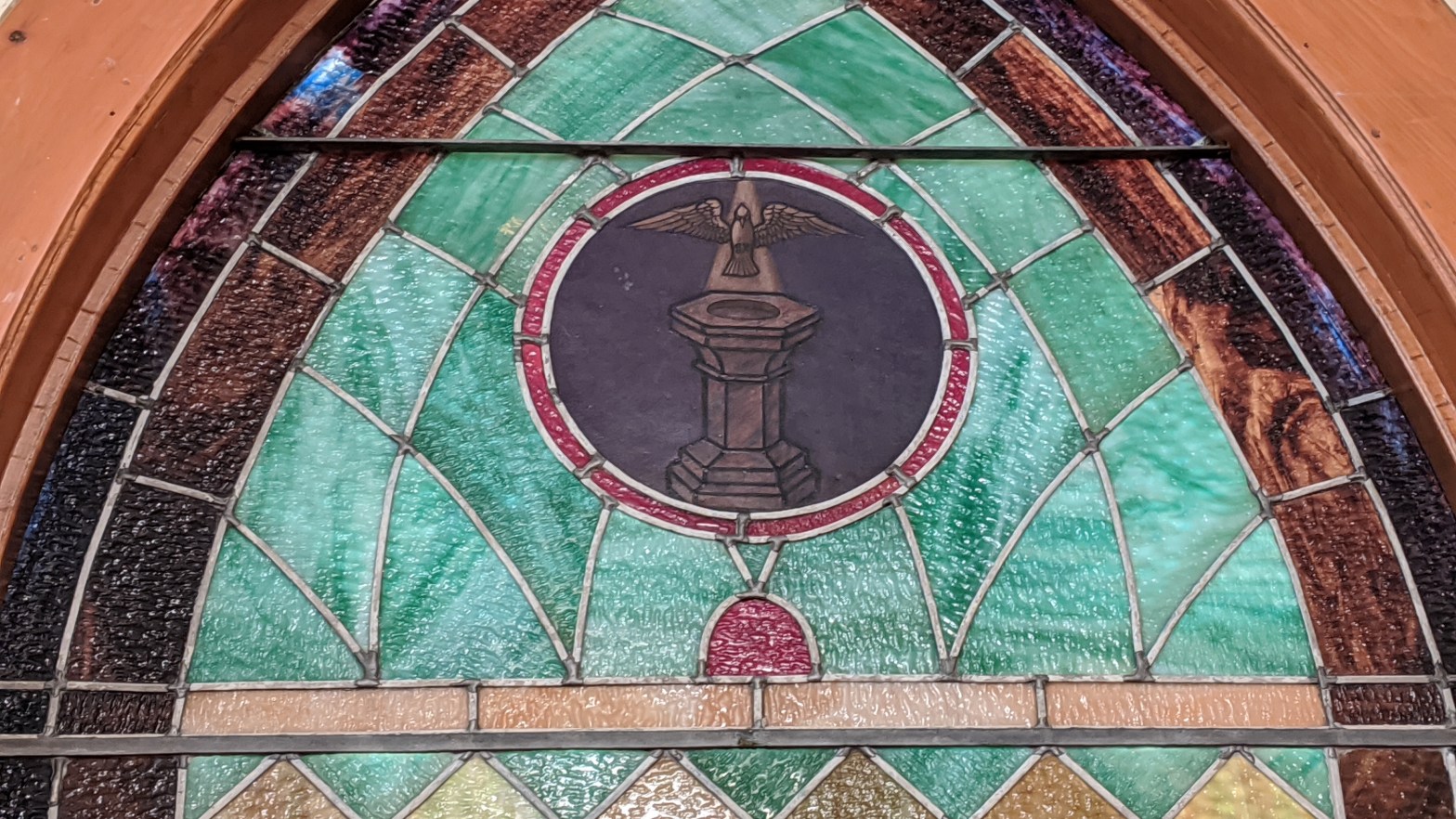
God saved us when He sent His Son Jesus to die and rise for our sins. He applies that salvation to us – each and all – through the washing of Holy Baptism. In Holy Baptism, our sins were washed away. Our old evil nature, called the Old Adam, was drowned and died, and we received the gift of the Holy Spirit. In Baptism, the Holy Spirit makes His home in our hearts and does this work in us – He creates faith. In Holy Baptism, we receive the forgiveness of our sins and the gift of faith, which takes hold of that forgiveness. Where there is forgiveness of sins, there the devil no longer holds sway. Baptism rescues from the devil and his handiwork, death. By our Baptism into Christ, we were united to Christ. Just as He rose from the dead by the glory of the Father, so will we at His return.

III.

This brings us back to today. Today, we’ve had the joy of witnessing a Baptism among us. We have seen with our eyes this gracious work of God taking place. Though it seems to the world such a small thing, a sprinkling of water and a few spoken words, yet this is a wonderful work of God. The Lord has taken a little child and made her His child. She has received the forgiveness of her sins. They were washed away, those sins which were inherited from Adam and which she has committed. Through the Word, the Holy Spirit has worked to create faith in her heart and unite her to the body of Christ. According to the Lord’s will, she will grow and be nurtured in the Christian faith and will await with joy our Lord’s glorious return.

Let us not forget, though, that these promises have been given to us. We, too, have been baptized. Most of us were baptized as children, some were saved by God’s grace as adults. In our baptisms, all of our sins were washed away. We received the gift of faith and, by faith, we take hold of these promises. When our sins give us pause, let us remember that we are baptized. When the world rages and tears, let us remember whose children we really are. Let us remember, also, that in our Baptism each day we die and rise with Christ. When we rose from the font, we came up as new creations in Him. We are those in whom the Holy Spirit dwells, so that we might love and serve our neighbors. 

“Baptism,” the Catechism says, “works forgiveness of sins, rescues from death and the devil, and gives eternal salvation to those that believe this.” Such a small thing in the world’s eyes but, by God’s work, a big thing in ours. Let us bless the Lord. Thanks be to God.

I Will Raise Him Up – Velda Haldeman

Text: John 6:35-40

Grace to you and peace from God our Father and our savior Jesus Christ. May the resurrection of Jesus and the promise of our own in Him be of special comfort to you, family and friends of our dear Velda gathered here today. Jesus said, “This is the will of My Father, that everyone who looks on the Son and believes in Him should have eternal life, and I will raise him up on the last day.” (John 6:40, English Standard Version). This promise of our Lord serves as our text.

I.

The teaching we hear from the mouth of our Lord comes as part of the discussion the day after the Feeding of the Five Thousand. As our Lord was teaching His disciples near the Sea of Galilee, a large crowd came to Him because they had seen the miracles He was performing. Our Lord had compassion on the crowd, and with only five loaves of bread and two fish, Jesus fed a crowd that would’ve taken 200 days’ salary to feed. This miracle was a sign that Jesus truly is God, and also the abundance of blessings He gives. Some of the crowd did not understand this and came again the next day, seeking to be fed again. Jesus taught them not to long only for food that perishes, but also for the food that endures to eternal life – Jesus Himself. Those who come to Him in faith, Jesus said, “shall not hunger, and whoever believes in Me shall never thirst…and I will raise him up on the last day.” (vv. 35, 40)

With these words, our Lord touches upon a central teaching of the Christian faith: the Resurrection of the Dead. This is what Velda, by the work of the Holy Spirit, believed from her childhood and what we, also, believe. We believe, according to Jesus’ Word, that He will return on the Last Day. As He ascended on the clouds, so will He come; and every eye will see Him. By His glorious power, He will raise the dead out of their graves. St. Paul said that we who have believed in Him will have our mortal bodies changed to be like His immortal body, and we will live forever with Him and all who have gone before us in the Christian faith.

II.

We are reminded today why the Resurrection is necessary; we are gathered because our sister Velda has died. Though it is something that she welcomed, especially since the passing of her husband and our brother in the faith Harry, death is still something bad. Death was not a part of God’s good creation. In six days, God created all that exists in both heaven and on earth, things both visible and invisible. Death was not among those things. Death, rather, was introduced to the world through the temptation of the devil and the sin of our parents Adam and Eve. As we are descended from them according to the flesh, the corruption of sin has passed to us all. St. Paul wrote to the Romans, “Sin came into the world through one man, and death through sin, and so death spread to all men because all sinned.” (5:12) These words are also familiar to us, “The wages of sin is death.” (6:23)

We confess, as Velda freely would as well, that we are sinners. In the words of the Liturgy, we confess that we are sinners in thought, word, and deed, both by what we have done and left undone. For this reason, pending the quick arrival of the Last Day, we, also, will die. This is a just punishment, for with each sin we have disobeyed the Lord God Almighty and have, in fact, hated Him. Though, by His mercy, we may not perish directly because of a sinful act, we will die from the condition of sin. We must not stop with this thought, though. Hear, again, the promise of Christ: “This is the will of Him who sent Me, that I should lose nothing of all that He has given Me, but raise it up on the Last Day…everyone who looks on the Son and believes in Him [has] eternal life, and I will raise him up on the Last Day.” (vv. 39-40) These words are true, and they are true of Velda.

III.

Rather than leave His creation to die in sin eternally, our Lord Jesus entered into His fallen creation. He was conceived by the Holy Spirit and born of the Virgin Mary. He grew and lived just as we all have, yet without sin. He fully obeyed the will of God the Father and, for our sake, bore our sins on the cross. Jesus bore the weight of all human sin – yours, mine, and Velda’s – and made payment for it in His death. By His resurrection, He restored eternal life to all who trust Him, including Velda. It was into this faith that she was baptized on May 24th, 1925. Through that sacred washing, Velda was united to Christ’s resurrection by the gift of faith. She was clothed in His righteousness. Velda publicly confessed the same May 12th, 1940. By God’s grace, Velda was kept in the Christian faith her entire life, thanks in no small part to her faithfully receiving the Lord’s Supper for almost 80 years. In fact, my last conversation with her was in the context of a communion service. Some of the final words I ever heard from her were the Apostles’ Creed and the Lord’s Prayer; she even took the time, with her lost voice, to encourage me in the faith as her pastor. 

The Lord granted many blessings to Velda, including a truly and dearly loved husband. Through Velda, we all have been blessed and, at one time or another, encouraged by her witness. The chief blessing which she received from the Lord, she now enjoys: eternal life in heaven with Christ, with Harry, and all the Christians who have gone before. This same blessing, this same promise, Jesus gives to us. All who believe in Him, He will not cast out, but raise on the Last Day. Today, we give thanks to God – even in our sadness – for all the blessings He bestowed on Velda, and we ask that He would keep us in the same faith, that she and we would be reunited and together raised on the Last Day. In Jesus’ name.

Now Your Servant Can Depart in Peace – Mary Bellis

Text: Luke 2:25-32

Grace to you and peace from God our Father and the Lord of Life, Jesus Christ. Amen. May the peace of Christ’s resurrection and the hope of our own in Him be of special comfort to you: Bob and Jean, (Carolyn); and to all of Mary’s family and friends gathered here today. Though we grieve the loss of our beloved Mary, we do not grieve as those who have no hope, as St. Paul says, for we know that Mary has been received into the loving arms of her savior. She is alive now with Him, with Earl, and with all the saints who’ve gone before us, including Simeon, of whom we heard in the Gospel text.

I.

Our text today is from the Gospel of Luke, chapter 2. This passage relates to us the events that took place 40 days after our Lord’s birth. In the Church, we celebrate these events with a holiday called the Purification of Mary and the Presentation of Our Lord. This falls every year on February 2nd, this past Sunday. Under the old covenant of the Law, the Lord God gave various commands concerning childbirth. One was that, 40 days after giving birth, a mother would travel to the Jerusalem temple and offer a sacrifice of thanksgiving for the gift of a child. Another command of God was that every firstborn male was to be dedicated to the Lord. Therefore, trusting in the Lord’s Word and obeying His commands, the holy parents brought our Lord up into the temple.

Now, in the temple there was a man named Simeon. Simeon, as tradition holds, was a well-aged man. And yet, he had received this promise from the Lord, St. Luke relates, “it [was] revealed to him by the Holy Spirit that he would not see death before he had seen the Lord’s Christ.” (Luke 2:26, English Standard Version) Simeon was a righteous man by faith, and was waiting for the consolation of Israel. What that means, is that Simeon was awaiting the promised Messiah. The Messiah is the one promised by God to come and destroy sin, death, and the devil; to bring forgiveness of sins, eternal life, and peace to those who trust in Him. When the holy parents brought Jesus into the temple, Simeon took the baby up in his arms and sang, “Lord, now You are letting Your servant depart in peace…for my eyes have seen Your salvation.” (vv. 29-30) Simeon knew that, in Jesus Christ, the salvation of the world had come. He saw in Christ, with his own eyes, the peace of forgiveness and eternal life and, thus, Simeon knew he could die in peace.

II.

When I was visiting with Bob and Jean the other day, they shared with me a conversation they had with Mary. I won’t try to give the whole of it, because I’d butcher it, but the gist is: when the topic of Mary’s age came up, she was likely to say she felt more 1,096 than the actual 96 she was. When Mary and I had similar conversations, I would remind that she was “only” 96; she would reply, “if you say so.” Certainly, using Mary’s own feelings, she would qualify as well-aged, just like Simeon. And, also, like Simeon, Mary received many blessings from the Lord. She was united by Him in holy matrimony to her beloved Earl on February 12th, 1943. From their union came the blessings of children: Bob and Carolyn. The Lord blessed Mary with grandchildren, and with a long and fulfilling career. The Lord also blessed many others in the community, including ourselves, through Mary. 

The chief blessing which Mary received, though, is what she now enjoys: eternal life with Christ and those who have gone before in the Christian faith. Mary was born May 16th, 1923 and was baptized in Fairbank as a young child. In her baptism, Mary was united to Christ and became a member of His body, the Church. Through the witness and encouragement of a friend, Mary began attending here at St. John’s while still a child and was confirmed in this sanctuary in 1937. She publicly confessed her faith in Christ and her hope in life everlasting. For 83 years, Mary received the body and blood of Jesus Christ for the forgiveness of her sins and the strengthening of her faith. Through her baptism, in the Word, and in Christ’s Supper, Mary saw the Lord’s Christ, and in Him, she has departed in peace. She has passed from this earthly life, to eternal life. She awaits with Earl the day of Christ’s coming and the resurrection of the dead.

III.

In the reading from Isaiah, we heard the words of Christ – that He has come to bring good news to the poor, to bind up the brokenhearted, and to lift out of sadness those who mourn. We confess today, that these words describe us. We are poor before God because of our many sins. We are brokenhearted at the loss of our sister, and we mourn her passing. Yet, it is for these reasons that Christ came. These reasons are why He was conceived by the Holy Spirit and born of the virgin Mary. These are the reasons why He was brought into the temple while still a child. Jesus came to fulfill the will of God for us and to die on our behalf. He was “pierced for our transgressions; He was crushed for our iniquities,” St. Isaiah says. (53:5) Jesus did not just die for us; He also rose for us. This is why Simeon sang he could depart in peace, and why Mary could as well. They both saw Christ and knew He died and rose for them.

Simeon and Mary both saw Jesus and departed in peace. Simeon held Him Him in the temple; Mary saw the Lord through His Word and Sacraments. The same peace which Christ became for them, He is for you and me. It was not just for the world, and not just for them that He died and rose, but for you and me, too. The forgiveness and eternal life which He secured for Simeon and Mary, He won for you. He sets no condition on it, but gives it freely to those who trust in Him. Those who believe in Him, will live, even though they die. Such is true for Mary. We give thanks to God for the blessings bestowed on Mary, for the blessings we received through her. We know that, though she has departed from this life, she departed in peace and is alive with Christ. 

The Shining Face

Text: Exodus 34:29-35

Today we celebrate the Feast of our Lord’s Transfiguration. Transfiguration, which means “changing,” is the word we use to describe how our Lord’s appearance changed to shine like the sun. In the presence of Peter, James, and John, our Lord spoke with Moses and Elijah concerning His own death and resurrection for our salvation. A bright cloud also overshadowed the group, and God the Father Himself told us that Jesus is His Son and the one to whom we should listen. We should also note that today, February 2nd, is also the 40th day after Christmas. This is the day our Lord’s parents brought Him up to the temple to be dedicated, when St. Simeon sung the words of the Nunc Dimittis

The change in our Lord’s appearance at the Transfiguration was for our benefit, that we might see just a bit of the glory to be revealed to us at the Resurrection and in the new creation. The shining face of Jesus also reminds us that He is the one who speaks God’s Word to us. This is why Moses’ face also shone in our Old Testament text. As Moses’ face shone, demonstrating that he spoke for God, so did Jesus’.

I.

We were last in the book of Exodus about two weeks ago. We heard then from chapter 33, and what we heard happened right after the incident with the golden calf. While Moses was up on Mt. Sinai speaking with God, his brother Aaron fashioned for the people an idol made of gold, which they then worshiped. As punishment, the Lord told Moses that he and the people must leave the mountain and head toward the Promised Land. Whereas before, the Lord’s presence went with them directly, now they would be led by an angel – lest the anger of the Lord consume them. Moses pleaded with the Lord on behalf of the people, that He should have mercy on them and remember His promise to be with them. The Lord did have mercy and, as a sign of His presence, would make Himself pass before Moses and be seen by him. That does happen in Exodus 34.

After the calf incident, Moses went back up the mountain. The original copy of the Ten Commandments God made Himself, but now Moses had to cut the rock and engrave it on his own. The Lord made His glory pass before Moses and proclaimed His Name before him. Moses and the Lord spoke on Mt. Sinai, again, for 40 days. Then, our text begins, 

When Moses came down from Mount Sinai, with the two tablets of the testimony in his hand as he came down from the mountain, Moses did not know that the skin of his face shone because he had been talking with God. Aaron and all the people of Israel saw Moses, and behold, the skin of his face shone, and they were afraid to come near him. But Moses called to them, and Aaron and all the leaders of the congregation returned to him, and Moses talked with them.

Exodus 34:29-31, English Standard Version.

Apparently, Moses’ face did shine for a while. He would speak with God and then bring His Word to the people. When he finished speaking, Moses would put a veil over his face until he spoke with God again.

II.

So, Moses had a shining face; this we have heard. Now, let’s ask the Lutheran question: What does this mean? The Holy Spirit answers that question for us right in the text. He tells both why Moses’ face shone and what it means. Verse 29, “Moses did not know that the skin of his face shone because he had been talking with God.” Moses’ face also shone when he spoke God’s Word to the people. Moses’ face was made to shine from the glory of God’s presence and the wonders of His Word. His face shone as a sign to the people that, when Moses came to speak to them, it was not his word but God’s. In some ways this was necessary because even Moses’ own siblings, Aaron and Miriam, played the role of false prophets at some points and tried to lead the people in a different direction. Their faces didn’t shine, though. Moses’ face shined because he had been speaking with God and was the one to speak His Word to the people.

There are a couple other spots in the Bible where someone’s face shines. You might remember St. Stephen from the book of Acts. He, as you know, was the first Christian martyr in the New Testament (if we count The Baptist as part of the Old Testament). Stephen was an eloquent and wise preacher of Christ. Some enemies of our Lord dragged him before the Jewish council, where he, unafraid, offered a beautiful sermon demonstrating that God keeps His promises; and he called the people to repent. Unfortunately, the people did not listen to Stephen but, instead, stoned him. St. Paul, before he was a Christian, held the coats of the people doing the stoning. St. Luke tells us, though, that the people who sat in the council and heard St. Stephen saw that, “his face was like the face of an angel;” that is, shining. (Acts 6:15) Stephen’s face shone because he was speaking God’s Word to the people. Somebody else’s face shines in the Bible, too. It’s what we celebrate today. At the Transfiguration, Jesus’ face shined like the sun.

III.

Let’s carry the same thought. The Holy Spirit tells us that Moses’ face shined because he had been speaking with God. Moses was God’s representative, bringing His Word to the people. Jesus’ face shined for the same reason. The Father Himself said, as we heard in the Gospel, “This is My beloved Son, with whom I am well pleased; listen to Him.” (Mt. 17:5) Jesus’ appearance changed so that we might receive a glimpse of His eternal glory, and so that we might recognize that He brings us the true Word from the Father. Now, when the Father says that we should listen to Jesus, that is a reference to something that Jesus has said. Just before the Transfiguration, St. Matthew wrote that, “Jesus began to show His disciples that He must go to Jerusalem and suffer many things from the elders and chief priests and scribes, and be killed, and on the third day be raised.” (Mt. 16:21) Just after the Transfiguration, Jesus said, “The Son of Man is about to be delivered into the hands of sinful men, and they will kill Him, and He will be raised on the third day.” (17:22-23)

Moses’ face shone because He spoke God’s Word to the people. Jesus’ face shone because He was speaking the Word to us. More specifically, it is God’s Word to us that Jesus is our Passover lamb. He is the one upon whom our sins have been laid. Though we were dead in our sins, God the Father turned toward us a loving heart. He sent His Son into the flesh to die and rise for us. St. Simeon knew this, it’s why he took the baby Jesus into his arms and sang. He knew that, in Christ, God’s salvation has come and we can be at peace. Let this be our confidence, then. The Transfiguration marks the beginning of our Lord’s walk to the cross on Good Friday. The change in Moses’ appearance benefited God’s people by showing them Moses was His true representative. Our Lord’s appearance changed so that we might be assured that He truly speaks God’s Word to us, particularly that we, by His death and resurrection, have the free and full forgiveness of our sins. In Jesus’ name. Amen.