It’s What’s on the Inside that Counts

Text: Mark 7:14-23

“It’s what’s on the inside that counts.” You may have heard these words before or had them pass through your own mouth. With these words we express that the measure of a person is what’s inside them. The measure of a man is not his clothes, job, possessions or income; it’s not the color of his skin. It’s what’s on the inside that counts. Sometimes this idea is helpful, especially this time near the start of the school year, where children are beginning to make or re-make friends. Sometimes, though, this phrase isn’t so helpful. Because, if it’s what’s inside that is the measure of a man, then – according to our text – we’re all in trouble. 

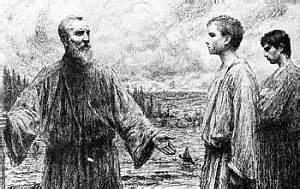
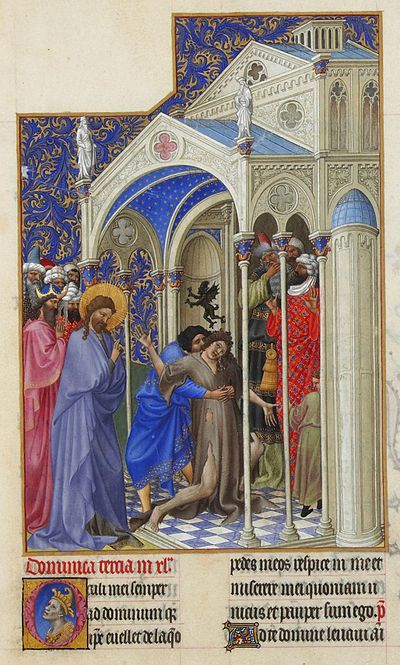
Our Lord taught in the text, “There is nothing outside a person that by going into him can defile him, but the things that come out of a person are what defile him.” This is Jesus continuing the discussion from last week’s Gospel. The Pharisees were overly concerned with outward purity and set aside God’s Word for their traditions. In contrast, Jesus said, what makes a man pure or not is not what’s outside, but what’s inside. What comes from inside a person is what makes him unclean, unfit to be in God’s presence. It’s what’s on the inside that counts, and what’s inside us by nature is not good. Jesus teaches that our hearts are evil and separate us from God, therefore He gives us new ones in Baptism.

I.

As we said, the Gospel text this week is connected to the appointed Gospel for last week. Last week we heard about the Pharisees and scribes who had come up from Jerusalem to test Jesus. Their test for Him was a question: why did His disciples eat with unwashed hands? By eating without washing their hands, the Pharisees believed that the Disciples were distancing themselves from God. They held that a person’s standing before God could be measured externally, by one’s actions. In order to insulate themselves from breaking a Commandment, rabbinical Judaism set up all sorts of additional laws as safeguards around the Commandments. The problem was, those safeguards – those manmade laws – became more important than God’s Law. The Pharisees should’ve known that God was not chiefly concerned without outward purity, but inward. It’s what’s on the inside that counts.

This is what Jesus taught the crowd after He dismissed the Pharisees and scribes. He said, “Hear me, all of you, and understand: There is nothing outside a person that by going into him can defile him, but the things that come out of a person are what defile him.” To be defiled means to be unclean. To be unclean is to be unfit for being in God’s presence or to receive His blessing. According to Jesus, what makes a man unclean is not whether he washes his hands or what he eats or wears but what comes out of him, out of his heart. And what comes out of man’s heart? Jesus lists some things. He says, “What comes out of a person is what defiles him. For from within, out of the heart of man, come evil thoughts, sexual immorality, theft, murder, adultery, coveting, wickedness, deceit, sensuality, envy, slander, pride, foolishness. All these evil things come from within, and they defile a person.” 

Lest we think that these come from some peoples’ hearts but not my heart, let’s hear from other portions of Scripture. In Genesis 6, before the Flood it says, “The Lord saw that the wickedness of man was great in the earth, and that every intention of the thoughts of his heart was only evil continually.” Man’s evil heart continued even after the Flood. King David sang in the words we know so well (Psalm 51), “I was brought forth in iniquity, and in sin did my mother conceive me.” St. Paul wrote to the Ephesians that, apart from faith, they were “dead in trespasses and sins,” and by nature, “werechildren of wrath.” These words are true of us. Deep down in our hearts, there is nothing but corruption and evil. All who have been born of flesh and blood have inherited the corruption of original sin and are, by nature, unclean and unfit to be near God. In different ways and combinations, out of all human hearts – and our hearts – comes sexual immorality, theft, murder, adultery, coveting, envy, pride, and so on. Our standing before God isn’t based on who we are or how we look, whether we feel like good people or not. It’s what’s on the inside that counts. And what’s inside all mankind by nature is bad.

II. 

Last week we sang, “Lord Help Us Ever to Retain.” The second stanza said, “Help us Your holy law to learn, to mourn our sin and from it turn in faith toward You and to Your Son and Holy Spirit, three in one.” We are reminded by those words that God’s Law (His Ten Commandments) shows us what’s in our hearts. Even if Jesus didn’t teach in our text what comes out of man’s heart, we’ve all learned it from our failures to keep the Commandments. It says in the Gospel that Jesus knows what’s in man’s heart. He knows what’s in our hearts. He knows what evil and darkness is in there, what jealousy and pride and laziness. He knows the human heart is so corrupt and evil, that there’s nothing to be done to fix it. It must be gotten rid of and a new heart take its place.

That’s why Jesus took on our flesh. He knew that the thoughts and mind of human beings is continually sinful, therefore He took on our flesh to fulfill God’s Law in our place. He became like us in every respect, He suffered every temptation we do – yet without sin. From His heart came nothing but peace, mercy, and love for God and man. Though there was no evil coming out of His heart, He gave Himself up to death to pay the price for our evil deeds. Though He had a clean heart and clean hands, they were pierced for our transgressions. And by His wounds, by faith in His stripes, we are healed.

The Lord once spoke through the prophet Ezekiel,

I will take you from the nations and gather you from all the countries and bring you into your own land. I will sprinkle clean water on you, and you shall be clean from all your uncleannesses, and from all your idols I will cleanse you. And I will give you a new heart, and a new spirit I will put within you. And I will remove the heart of stone from your flesh and give you a heart of flesh.

Here the Lord speaks prophetically about what happens in Baptism. In Baptism, God puts to death the old sinful nature we inherit from our first parents. Like the Flood washed away sinful man, the Baptismal flood washes away the guilt of our sin. Though we were born subject to sin and wrath and under the influence of the devil, in Baptism he is chased out to make way for the Holy Spirit. And, the Holy Spirit makes our hard hearts, hearts of flesh.

Though by nature nothing good dwells within us, in Baptism we receive a new heart and spirit. In Baptism we are united to Christ’s death and resurrection, and by faith in the same our sins are forgiven. In Baptism, our will is renewed to do God’s will. Then, and only by the work of the Holy Spirit, what pours out of our hearts is love and forgiveness for our neighbor in Christ. What comes out of our hearts by nature is all the stuff Jesus listed in our text, and probably more, and that is what makes us unclean. In Baptism, Christ gives us a new heart. It’s what’s on the inside that counts.

It’s what’s on the inside that counts. That’s what Jesus teaches us today. Normally, we mean by the phrase that people are valuable because, what’s on the inside is good. But, from our Lord’s mouth, we hear that what’s inside of all of us is not good. It’s evil, sinful. Therefore, Jesus atoned for our sin by His perfect life and sacrificial death, and, by Baptism, gives us a new and clean heart to do His will. The Lord grant that we, who have been cleansed by the washing of Holy Baptism, would continue to be kept in the true faith, that our words and actions would come not from our sinful hearts, but the new hearts we receive from Him. Amen.

Sweet-Smelling Children of Light

Text: Ephesians 5:1-9

This week we take a special time out of the year to celebrate and thank the Lutheran Women’s Missionary League for their many years of service as one of the two official auxiliaries of the Missouri Synod. The LWML has been active for over 65 years, sharing the love and Good News of Jesus Christ, the world’s redeemer. The theme for this year’s LWML Sunday, which this sermon is loosely based off of, is “Fragrant Sacrifices and Offerings,” Now, as I was researching some ideas this week I learned a couple new words. The first is Dysosmia. Dysosmia is a disorder that involves any alteration in quality or distortion in the sense of smell. This usually manifests in one of two ways: either something smells different than you remember, or you start smelling something that isn’t there.

Now, with the disorder of the sense of smell that leads you to smell something differently than how you remember, to be quite frank, it usually means that you are going to smell something rotten or decaying instead of the good smell. But, there are rare occasions where one might smell something good instead of bad. This is called Euosmia; instead of smelling correctly that something is dead or rotten, one would smell the dead thing as a pleasant smell. In the Epistle text we read how Christ offered Himself as something εὐωδίας, literally – a good odor, a fragrant offering. By offering Himself as the sacrifice and offering in our place, Jesus became a fragrant offering unto God. Through faith in Him we have become sweet-smelling children of the Light.

I.

The text begins, “Therefore be imitators of God, as beloved children. And walk in love, as Christ loved us and gave Himself up for us, a fragrant offering and sacrifice to God.” (vv. 1-2) St. Paul is calling to mind the long history of sacrifices among the people of Israel. We have record of sacrifices pleasing to God as far back as Genesis 4, where Abel offered up the firstborn of his flock to God. After Noah and his family got off the ark, he built an altar to God and sacrificed. God smelled the pleasing aroma and vowed to never again curse the ground because of man or strike down every living creature. The sacrifices continue so on and so forth throughout Old Testament history, even up to the time of Christ.

These sacrifices were instituted by God because of the hardness of human hearts. The Apostle Paul says, “Let no one deceive you with empty words…for at one time you were darkness.” (vv. 6, 8) Earlier in Ephesians we hear that we were dead in our trespasses and sins in which we once walked, following the course of this world. (Eph. 2:1-2) As those dead to Christ, we were darkened in our understanding. In our natural selves, we do not understand the things of God. We were alienated from God because of our ignorance and hardness.

The word that the Lutheran confessors use to describe our natural sinful condition is concupiscence. This means that not only are we born with original sin, but it is evidenced in that fact that we have a natural inclination to sin and are by nature turned away from the things of God. And finally, in our sin we were callous towards God. I hate to pick on a specific group of people, but being in sin is kind of like being a teenager. What are 3 of the most common words out of their mouths, “I don’t care.” (Cf. paragraph w/Eph. 4:18-19)

In our sin we neither cared about our neighbor in need nor did we want to do anything about it. We didn’t care about God; instead we fashioned gods of our own making and desires. Therefore, Jesus Christ became the fulfillment of all sacrifices, the ultimate fragrant offering unto God. Hebrews 9 says, “He [Jesus] entered once for all into the holy places, not by means of the blood of goats and calves but by means of His own blood, thus securing an eternal redemption.” (9:12) Because we by ourselves are dead in our trespasses, we smell rotten. We smell dead; in our sin, we walk around with a gagging smell of decay – we might not smell it, but God does. Therefore, “Christ [also] suffered once for sins, the righteous for the unrighteous, that He might bring us to God.” (1 Pet. 3:18) Jesus Christ offered Himself up in our place, as payment for our sins – a fragrant offering and sacrifice to God.

II.

Therefore be imitators of God, as beloved children…for at one time you were darkness, but now you are light in the Lord.” (vv. 1, 8a) I don’t mean to ascribe things to God our Heavenly Father, who is formless, beyond what Scripture does; but it’s like God the Father has Euosmia. Because of the sacrifice of Christ on our behalf, we are made a fragrant offering unto God. The “good odor” that is Jesus, has spread to us through the gift of faith. Paul writes, “We are the aroma of Christ among those who are being saved and among those who are perishing.” (2 Cor. 2:15) In Ezekiel 20 God says, “As a pleasing aroma I will accept you, when I bring you out from the peoples and gather you out of the countries where you have been scattered. And I will manifest my holiness among you in the sight of the nations.” (Ezek. 20:41) God says that He will accept us as a pleasing aroma when He brings us out and gathers us. This is what Jesus did on the cross. He suffered and died to separate us from our sin. Through His grace and the gift of faith we are brought out of the dying masses in the world and made holy and righteous. This is because God has dealt with us for His name’s sake, and not according to our evil deeds.

John Chrysostom, whose name means “golden mouth,” was archbishop of Constantinople in the very early 5th century. He wrote, “We are then, as it were, a Royal censer, breathing withersoever we go of the heavenly ointment and the spiritual sweet savor.” Because of Christ’s offering of Himself as a fragrant offering, that sweet smell extends to us. We are the sweet-smelling children of the Light. As Christians, like Chrysostom says, we walk around like bowls of Royal incense, breathing heavenly ointment to those around us. Paul urges us to, “Walk as children of light (for the fruit of light is found in all that is good and right and true).” (v. 9) This means fleeing from all sin, from sexual immorality and impurity, from covetousness and filthy or crude joking. These are the sorts of things that our sinful nature wants us to do. Our sinful bodies want to covet and be crude.

But thanks be to God,” Paul writes, “who in Christ always leads us in triumphal procession, and through us spreads the fragrance of the knowledge of Him everywhere.” (2 Cor. 2:14) Thanks be to God, who despite the temptations of our flesh, continues to come to us through His Word. He continues to give us the free forgiveness of sins won for us by Jesus on the cross. Through faith in Him we smell sweet to God. Therefore He leads us in the triumphal procession. We live in the world spreading the fragrance of Jesus Christ, the good news that through Him sins are forgiven and all things are made new. In His love we no longer live with the decaying stench of death and decay, but the sweet smell of grace and healing forgiveness. This is not of ourselves, but it is the free gift of God in Christ Jesus.

Euosmia is a condition where, instead of smelling something nasty, one smells something pleasant in its place. Through the fragrant offering of Himself, Jesus has, in effect, given our heavenly Father Euosmia. He no longer smells us as dead and rotten in our sin, but as His own sweet-smelling Son. Today we give thanks for the Lutheran Women Missionary League and for the work they do. They stand as an example for us to follow. Made fragrant through the death of Jesus, we walk as children of the light, as beloved children of God, covered in the sweet smell of the blood of the Lamb, even Jesus Christ, our Lord. Amen.

Romans 4, The Promise is Realized through Faith

For the promise to Abraham and his offspring that he would be heir of the world did not come through the law but through the righteousness of faith. For if it is the adherents of the law who are to be the heirs, faith is null and the promise is void. For the law brings wrath, but where there is no law there is no transgression.

That is why it depends on faith, in order that the promise may rest on grace and be guaranteed to all his offspring—not only to the adherent of the law but also to the one who shares the faith of Abraham, who is the father of us all.” (Romans 4:13-16)
The Holy Bible: English Standard Version (Wheaton: Standard Bible Society, 2001), Ro 4:13–16.


Romans 4 is an important chapter in the book. Beginning in chapter 1, the Apostle Paul has been talking about how the righteousness of God is revealed in the Gospel of Jesus Christ and it is received by faith. The promise of God, the promise of the forgiveness of sins, salvation, and eternal life, has always been that – a promise. It is never based upon our own works or performance, for we all fall short of the glory of God, both Jew and Gentile alike. Now, in chapter 4, Paul is going to back up a little bit to the patriarch Abraham to show that God’s relationship towards us has always been based upon the promise of Jesus Christ.

Searching the Scriptures

  1. Read vv. 4-5. How do these verses underscore the free and undeserved nature of God’s grace?


  1. Read v. 11. What was the significance of Abraham’s circumcision?


  1. How does Abraham’s story as recounted in chapter 4 make the same point as earlier chapters about the extent of God’s mercy and about the means by which human beings are saved?


  1. Verses 3-4 and 22-23 use a form of the expression “counted…as righteousness” (from Genesis 15). How does this relate to the meaning of “justification” as that term was used in connection with chapter 3?


  1. Romans 4:25 is both a summary of what has gone before and a thematic verse for the entire book. In fact, some scholars believe that Paul is here quoting from an early Christian confession. How does this verse use Jesus’ crucifixion and His resurrection both to highlight the futility of human efforts to attain righteousness and the certainty of God’s saving act in Jesus Christ?


The Word for Us

  1. How is a life by faith and a life lived by the Law a contradiction? How are they mutually exclusive?


  1. On the basis of the material in this chapter, how might we respond to those who despair of their attempts to “live a Christian life” and as a result wonder how God could possibly be favorably disposed to them?

Unexpected Missionaries

Text: Matthew 21:23-32

Don’t you hate it when people say one thing and do another? We all know people, who for any other reason are probably great people, but for whatever reason sometimes say they’ll do something but then never wind up doing it. I myself am a shining example of this, but I can probably speak for most men – and wives, you can tell me if this is right or not. There’s a joke that goes like this: If a man says he’s going to do something, he’s going to do it; there’s no need to remind him every six months. So we hate this trait in other people, and it can really set you off. But what happens when it turns out that we are the ones saying we’re going to do something, but then don’t actually do it? In the text the Jewish leaders question Jesus by what authority He is working. He responds in part by telling them the Parable of the Two Sons. Today we pray that like in the first son, the living and active word of God would work in us to lead us to repentance and a faith that reaches out.

I.

            Jesus begins the parable, “’What do you think? A man had two sons. And he went to the first and said, ‘Son, go and work in the vineyard today.’ And he answered, ‘I will not,’ but afterward he changed his mind and went. And he went to the other son and said the same. And he answered, ‘I go, sir,’ but did not go. Which of the two did the will of his father?’ They said, ‘The first.’” (vv. 28-31a) In the text today we’ve moved into Holy Week. Almost all of our Gospel readings for the rest of the church year will fall into this time period. The events in today’s text would be on Monday. The day before was the day of the Triumphal Entry. Crowds of people gathered to spread their cloaks and palm branches on the road before Him. Then Jesus headed to the temple where He drove out all who were buying and selling the temple. He said, “It is written, ‘My house shall be called a house of prayer,’ but you make it a den of robbers.” (v. 13)

The next day as Jesus entered the temple, the chief priests and the elders of the people came to Him with a question as He was teaching. These are the folks who were in charge of keeping the temple and worship in order. Jesus overturned their apple cart the day before, so they are probably hot under the collar. We begin to see here and in the next few chapters a more concentrated push between the Jewish leaders and Jesus. He didn’t quite fit into their paradigm of the Messiah, and yet they couldn’t deny that He was doing some miraculous things. They ask Him by what authority that He is doing all of these things. But when He asked them in return where John’s baptism was from, those who were so in the know were suddenly out of the loop.

Jesus illustrates their refusal to accept the preaching of John, the preaching of repentance and faith in Jesus as the Messiah, with this parable of two sons. There’s a man who has two sons. He goes to the first and tells him to go and work the vineyard. He at first refuses, but later is brought to repentance and goes to work. The second son was told the same. He assured his father he would go and work, but he did not go. Jesus identifies the second son with the Jewish authorities. These are the ones who were more concerned with image, outward praise without inward renewal. Jesus spoke rightly of them, “This people draw near with their mouth and honor me with their lips, while their hearts are far from me, and their fear of me is a commandment taught by men.” (Isa. 29:13) How many times do God’s people in the Old Testament promise to follow God’s Word and then don’t?

Jesus shows in the parable, “The sacrifices of God are a broken spirit; a broken and contrite heart, O God, you will not despise.” (Ps. 51:17) The leaders admit this by saying it was the first son that did the will of the father, not the second; though they did not realize until later that Jesus was speaking about them. (v. 45) It was not the one who paid lip service, who said he was going to work that was the true son, but it turned out that it was the one who had fully intended not to work but then repented that was the true son. He heard the word of his father, repented of his unwillingness to work, and took up the task his father gave him.

Today we are observing our annual mission festival. In just a little while we are having a communal meal and donating the money to benefit those around us in need. But still, there’s yet a lesson to be learned. We hate those who say one thing and do another; it’s so irritating. But what happens when we are the ones? We gather here to worship every Sunday, to abundantly receive God’s free gift of the forgiveness of sins in Jesus Christ. In the words of Holy Absolution you receive the forgiveness of sins from Jesus Himself. Here we are strengthened in the promise of eternal life. And yet so often we let our offerings on Sunday be the extent of our work. Don’t get me wrong, giving offering regularly is fantastic. Scripture even says that God loves a cheerful giver. (2 Cor. 9:7) But a lot of the time we are tempted to take the back seat, to let others lead the way. We convince ourselves that others are better at everything than we are, and we don’t realize that each of us has gifts from God. They may be different gifts, but they should all be used to the glory of God.

II.

           Jesus continues, “Truly, I say to you, the tax collectors and the prostitutes go into the kingdom of God before you. For John came to you in the way of righteousness, and you did not believe him, but the tax collectors and the prostitutes believed him. And even when you saw it, you did not afterward change your minds and believe him.” (vv. 31b-32) Jesus said that the tax collectors and prostitutes, the worst of the worst sinners, go ahead of the Jewish authorities in the kingdom of God. This is because they heard the Word of God, they were convicted by His Law, and repented of their sins. Instead of focusing on outward appearance and maintaining the status quo, they realized that they are sinners. They knew that there is no way they could’ve lived up to God’s demands. And they knew that they were among those for whom Christ took upon human flesh, lived the perfect life and fulfilled God’s Law, suffered and died for.

In the same way we are sinners. We come to church and say we are going to do one thing, but then often don’t do it. We usually mean it honestly and with the best intentions, but our sinfulness gets hold of us and we don’t follow through. We break God’s Law and deserve to be punished like rest. St. Paul writes, “While we were still weak, at the right time Christ died for the ungodlywhile we were still sinners, Christ died for us.” (Rom. 5:6, 8) While we are sinners, and would much rather sit back and not do anything, Jesus Christ died for us. He took our sin, our complacency, and nailed it to the cross, and He left it there. When Jesus rose He left the grave empty, and so has our slate been made completely clean. When we hear the Word of God and repent of our sins, we truly are made clean, washed white in the blood of the Lamb.

Romans 7 says that we are now, “released from the law, having died to that which held us captive, so that we serve in the new way of the Spirit.” (7:6) This morning we gathered here as sinners. But soon we will leave as saints. You received in Holy Absolution the forgiveness of Jesus Christ Himself. And in just a few moments you will come to the altar to receive the very body and blood of Jesus to strengthen and preserve you in the true faith and the forgiveness of sins. By this precious meal, you are strengthened and led by the Holy Spirit to share the Gospel of Jesus Christ in word and deed. Be strong and courageous, for God is with you. We pray that He would continue to convict us of our reluctance to live according to His Word, that He would strengthen us with His forgiveness, and lead us to serve those around us with His love.

More Than Victorious – The Funeral of Ina Schlichtmann

Text: Romans 8:31-39

Dearly beloved in Christ Jesus our Lord, especially you – family and friends of Ina: Grace to you, and peace, from God our heavenly Father and from Jesus Christ, the Good Shepherd of the sheep and the Redeemer of our souls.

St. Paul writes, “I am sure that neither death nor life, nor angels nor rulers, nor things present nor things to come, nor powers, nor height nor depth, nor anything else in all creation, will be able to separate us from the love of God in Christ Jesus our Lord.” (vv. 38-39) Neither death nor life, nor anything in all creation can separate us or divide us from the love of God in Jesus Christ. In all things we are more than conquerors, we have a surpassing final victory through Jesus Christ, who loved us and gave Himself for us, to redeem us from eternal death, the due penalty of our sins.

I.

The text begins, “What then shall we say to these things? If God is for us, who can be against us?” (v. 31) Paul is speaking a rhetorical question. He has just finished expounding upon the life that the Christian has in Jesus; that in Christ there is no condemnation. That is, in Christ and through faith in Him, we have been set free from the law of sin and death. Those redeemed in Christ are forever free from the guilt and shame of their sins because Christ took their sin upon Himself and died on the cross in their place. Death no more has any dominion over them, and it no longer has any hold over our sister Ina.

You see, it was on February 22nd, 1925 that Ina was set free from the guilt of her sin and given the gift of eternal life. Ina Ione Tonn, the daughter of John and Bertha, was brought to the baptismal font here in Hillsboro. She was baptized with the water and the Word; she was washed and made clean in the blood of Jesus Christ for the forgiveness of sins. Though in the flesh she remained a sinner, a confession she freely made all her life, yet through Baptism she was given the gift of faith and brought to eternal life in God through Christ Jesus her Lord. How fitting; the word “Ione,” can mean “flower,” but it is also the word that means “eternity” in Greek. Daily she awoke in the remembrance of her Baptism, knowing that though her sins were as red as scarlet, they had been made as white as snow.

If God is for us, who can be against us?” Nothing. “He who did not spare His own Son but gave Him up for us all, how will He not also with Him graciously give us all things?” (vv. 31-32) If God is for us, nothing can stand against us; though it often doesn’t appear that way. Though we were yet sinners, at the right time the eternal Son of God took upon flesh to bear our sin and be our Savior. No longer could our heavenly Father stand to see His children perish eternally, and so He sacrificed His only Son to make payment for our sin. How will He not then give us all things and bring us to eternal life? After all, there is no one left to condemn us. The devil lost all power and hold over us when Jesus Christ burst forth from the ground and left the grave empty. Now He sits at the right hand of God interceding for us until He should come again to take all who believe in Him to eternal life.

II.

Who shall separate us from this love? “Shall tribulation, or distress, or persecution, or famine, or nakedness, or danger, or sword?” “No, in all these things we are more than conquerors through him who loved us.” (vv. 35, 37) The life of a Christian is not a bed of roses. It is not an easy life, as Ina herself could testify. Instead, life is filled with suffering. It is filled with trials and tribulations, distress and hardships, danger and eventually, death. A Christian experiences all of these things and more. We live in a broken world. We are beset on all sides by terrible situations. Death and destruction, the due consequences of sin, confront us at every corner. We are even weighed down by the guilt and shame of our own sins, and our fear of death. Sometimes it feels like the water is almost above our chin, and we’re tempted to just let keep rising and take away our sorrows.

But shall any of these things, shall tribulation, strife, fear, guilt, lies, destruction, death; shall any of these things separate us from the love of Christ? ABSOLUTELY NOT! The Apostle writes, “I am sure that neither death nor life, nor angels nor rulers, nor things present nor things to come, nor powers, nor height or depth, nor anything else in all creation, will be able to separate us from the love of God in Christ Jesus our Lord.” (vv. 38-39) This was Ina’s good confession. There was nothing in all creation that could separate her from Christ her savior. No troubles of life, no fears, not guilt, not even death separated her from the love of Christ Jesus. The life that she lived, she lived through faith in the Son of God, who loved her, who loves you, and gave His own life on the cross, to redeem us all from eternal death.

Through the preaching of God’s Word and through the washing of Holy Baptism Ina was given the gift of faith. She was given the forgiveness of all her sins and welcomed into eternal life. This was not because she was a perfect person. She knew that if salvation were left up to her own powers she would get nowhere. Instead, she rested comfortably in the hope that we have in Jesus Christ. She was strengthened in faith and love by often receiving Christ’s body and blood in His Holy Sacrament. And now, she is before the throne in heaven with all the saints who have gone before her in the faith, including her beloved Walter.

Today we do not mourn as those who have no hope. No, we give thanks to God for the eternal life He bestowed upon Ina through faith in Christ Jesus, her Lord. We give thanks that the Good Shepherd of the sheep has taken His little lamb upon His shoulders and brought her to the green pastures beside still waters. And we know, that for those who have faith in Him, nothing can separate us from the love of God in Christ Jesus. No, we are more than victorious over the powers of sin, death, and the devil through Jesus Christ, who loved us and gave Himself for us, that we might not die, but live eternally. “For God so loved the world, that He gave His only Son, that whoever believes in Him should not perish but have eternal life.” (John 3:16)

The Gospel Advances

Text: Philippians 1:12-14, 19-30

The Apostle Paul writes, “I want you to know, brothers, that what has happened to me has really served to advance the gospel.” (v. 12) What’s happened to him has served to advance the Gospel. Now Paul, he didn’t have such a good life. He was hated, beaten, thrown out of cities, screamed at, stoned and left for dead – not once, but twice, imprisoned unjustly, and, eventually, beheaded for his faith in Jesus Christ. But still he writes to his beloved in Philippi, “What has happened to me has really served to advance the Gospel, so that it has become known throughout the whole imperial guard and to all the rest that my imprisonment is for Christ.” (vv. 12-13)

In the Old Testament reading last week Joseph told his brothers – the ones who out of jealously stripped him, threw him into a pit, and sold him into slavery – “You meant evil against me, but God meant it for good.” (Gen. 50:20) The Christian life is one of paradoxes. We are in the world, but not of the world. We have rejoicing, but we also have suffering. We are saints, and yet at the same time we are so often proven to be sinners as well. We are saved by grace through faith in the Son of God, Jesus Christ, we have the gift of eternal life; and yet, each of us still going to die someday. Have you ever stopped to wonder why? Well today we have the answer as to why we are here as Christians, as the Church. In Christ, and through the salvation we have in Him, we stand firm in faith so that others may know His love.

I.

We don’t know where Paul wrote this letter to the Philippians from, but it’s clear that he is imprisoned. Tradition states the Paul wrote this letter from prison in Rome in about 59 A.D., but it could have also been from Corinth or even Philippi. Whatever the case, it is clear that Paul is imprisoned for the faith that he has in Jesus Christ. And he’s okay with it. He’s okay with it because the more that he is persecuted, the more he is beaten, the more he is treated harshly, it’s actually that much more that the Gospel goes out. The more the world tries to diminish the faith of Jesus Christ, the more it actually spreads and is talked about. In Paul’s case, it’s such that all who are guarding him, even all those who are connected with him, know that it’s because of Jesus, and nothing else, that he is in chains.

Paul says that’s okay because, “For me to live is Christ, and to die is gain.” (v. 21) To live is Christ. To live for Paul is to belong to, and be in, the life of Christ. He says in Galatians 2 that, “I have been crucified with Christ. It is no longer I who live, but Christ who lives in me. And the life that I now live in the flesh I live by faith in the Son of God, who loved me and gave himself for me.” (v. 20) To live for Paul, and for us, is Christ. Jesus, our Great High Priest, has sacrificed His own body in our place on the cross. He loved us by taking our sin and shame upon Himself, and carrying it to the grave to separate us from the guilt of our sin forever. He did this to bring us out of darkness and into His marvelous light. For us to live is Christ, for through Him we are dead to sin and alive to righteousness.

For me to live is Christ, and to die is gain.” The life we now live in the flesh we live through faith in the Son of God, who took our sin and shame upon Himself. To live is to live in Him, and to die is gain. Jesus promised the thief on the cross that he would be with Jesus in paradise. I think we can all agree that the world we live in right now is not paradise. I used to work at a Lutheran summer camp in northern Wisconsin. There was this one counselor who was from Minnesota. Whenever the topic of Minnesota came up in any sort of way, he always made sure that everyone knew that Minnesota is “God’s country.” It was all in fun, and I’m now being tempted to call North Dakota “God’s country;” but none of us can really deny that we live in broken world. We long for the place where God will wipe away every tear from our eyes, where there will be no more death or mourning or crying or pain, where all things are made new. But we’re not there yet. Why?

 II.

Paul says, “If I am to live in the flesh, that means fruitful labor for memy desire is to depart and be with Christbut to remain in the flesh is more necessary on your accountfor your progress and joy in the faith.” (vv. 22-26) This is the answer to why we are still here. It’s why we, having received the forgiveness of sins freely through Jesus Christ, are still here. We remain so that others may learn of the saving work of Jesus Christ on their behalf and come to share the same hope that we do. St. Peter writes, “The Lord is not slow to fulfill His promise as some count slowness, but is patient toward you, not wishing that any should perish, but that all should reach repentance.” (2 Pet. 3:9) God our heavenly Father desires that all be saved by hearing the Word of Jesus Christ and being given the gift of faith in Him. It is to this end that we gather as a church.

It says in Ephesians 3 that we are, “God’s workmanship, created in Christ Jesus for good works, which God prepared beforehand.” (Eph. 2:10) Though apart from Christ we can do nothing, in Him we can do all things. Without Christ all that we do and are is filthy rags, but by Him we are built like a city on a rock, a light for those who struggle in the darkness of this world. And because we are in Christ, and live in His life, good works proceed naturally without our even thinking about it. The Holy Spirit works within us the boldness and confidence that we need to speak the Good News of Jesus Christ to those around us, to share God’s love with those in need, and to live in that same love, both towards God and our brothers and sisters in Christ.

III.

As new creatures in Christ, “Let your manner of life be worthy of the gospel of Christ.” (v. 27) Paul knows that we are sinners. The only way we can do that is to stand firm in the one spirit and mind – the confession that though we were nothing but sin, Christ died for us. He died for you to make you a perfect, blameless, child of God. Our worthiness is not found within ourselves, but in Christ. In Christ, in the salvation that we receive from Him alone, we are made to stand firm in the faith. And standing firm, we are led by the Holy Spirit to reach out.

The text says to not be “frightened in anything by your opponents. This is a clear sign to them of their destruction, but of your salvationIt has been granted to you that for the sake of Christ you should not only believe in Him but also suffer for His sake.” (vv. 28-29) Know this, that being a Christian means that not only is a cross placed upon your back, but a crosshair as well. Satan will try day and night to rip your faith from you. He will bite and tear and pull to get your mind off of things of God – the forgiveness of sins – and onto yourself and the things of man.

But do not fear, and do not lose heart. God knows how to use bad things for good. As Christians we have been called not only to believe in Jesus and receive the free forgiveness of sins in Him, but also to suffer as He suffered. The funny thing is, and Paul knew this, the more the world persecutes us and hates us, the more that Jesus is actually talked about. God’s Word is living and active, and even in the mouths of those who hate us, it still runs its course.

Sometimes I wonder why Jesus doesn’t just take us to heaven now. The answer is that He doesn’t want anyone to die but that all receive life through faith in Him. This faith comes through hearing the Word of God. This is why we are here: to share the Gospel of Jesus Christ with a world in desperate need. It will be hard. Jesus says, “I have said these things to you, that in Me you may have peace. In the world you will have tribulation. But take heart; I have overcome the world.” (Jn. 16:33)

The Evangelical Character of the Office

 “So that we may obtain this faith, the ministry of teaching the Gospel and administering the Sacraments was instituted.”[1] These few words confess clearly what we believe about the preaching office. It was established so that we may obtain this faith: that men are freely justified for Christ’s sake, through faith, when they believe that their sins are forgiven through Christ’s death on the cross. It is only through the cross of Christ that God counts this faith for righteousness. In order that we may believe this the ministry was instituted so that through the preaching and teaching of the Gospel and the administration of Sacraments faith may be bestowed upon us and strengthened through the Means of Grace. We read in the Treatise “The Gospel assigns those who preside over Churches the command to teach the Gospel [Matthew 28:19], to forgive sins [John 20:23], to administer the Sacraments, and also to exercise jurisdiction.”[2] By looking at Martin Luther’s various sermons on John 20:19-31 we can glimpse at the evangelical understanding of the preaching office.

One of the questions that Luther answers in his sermons is why the office of preaching even exists. To be simple, what is the purpose of preaching the Gospel of Jesus Christ? According to Luther it exists to set free and release from sin, from the devil, and from all the powers of hell. In his April 27, 1522 sermon Luther writes, “Of all services, this is the greatest: that I set free and release from sin, from the devil, from hell. How does that happen? Through the Gospel, when I preach Christ to him, and tell him how he should receive the work of Christ for himself and believe with certainty that Christ’s righteousness is his own and his sins are Christ’s.”[3] In speaking this way Luther also shows that the preaching office is one of service and not one of ruling. The office does not consist in having many empty good works but preaching the resurrection of Jesus Christ. “For what does ‘those whose sins you forgive’ mean? It is removing all evil things and granting in their place all things good, and you have it in your power to distribute this to human beings.”[4]

Jesus proclaimed in the synagogue in Nazareth, “He has anointed me to proclaim good news to the poor. He has sent me to proclaim liberty to the captives and recovering of sight to the blind, to set at liberty those who are oppressed, to proclaim the year of the Lord’s favor.”[5] This is also what pastors are called to do. They are called to preach the evangelical Word of Jesus. “The preaching of Christ is the preaching through which the wretched are comforted.”[6] In John 20 Jesus breathed on the Disciples and sent them to preach His Word of comfort. They were and pastors are to preach in no other way. As Luther says, “You are not to preach in any other way, because just as I was sent, [I now send you], that is, in accordance with this Word, Gospel, doctrine that I have preached, as this clearest of passages in Isaiah has it: to comfort the prisoners.”[7]

The pastoral office is evangelical in that it exists to preach the comfort of Christ. The pastor preaches the Gospel of Christ and administers the Sacraments that faith may be created and sins forgiven. Christ gives the Office of the Keys to the Church so that the sins of those who repent be loosed while those who are unrepentant have their sins bound to them. Luther writes, “The proper definition of the office of preaching is this: that one should preach the Gospel of Christ and forgive the sins of the crushed, fearful consciences, but retain those of the impenitent and secure, and bind them.”[8] Though the sins of the impenitent are retained, the office was instituted by Christ so that all sins in the world should be forgiven and driven out.

What does this mean for the parishioner; if the role of the pastor is to preach the forgiveness of sins, how do we get that? Luther writes, “It depends on this alone, that you can lay hold of it by faith and hang on to it, and even though it is indeed a man who speaks, nonetheless, because it is God who has committed [it to him] and you believe it, you are saved.”[9] Pastors have been given the power to deliver people from sin, death, and the devil and bring them to eternal life through Christ Himself and the preaching of the resurrection. All that need be done by the hearer is believe. Believe that Jesus died as payment for your sins and now comes to you through the mouth of the pastor and in the Sacraments. That is all.

“Grace to you and peace from God our Father and the Lord Jesus Christ.” “Now the peace of God which passes all understanding will keep your hearts and minds through faith in Christ Jesus.” These words or ones quite like them bookend most pastors’ sermons. It reminds us of a second evangelical characteristic of the preaching office – it exists to bring the peace of the resurrected Christ to souls shaken by fear and doubt. All of the Luther sermons looked at for this paper are based upon John 20. The Disciples had locked themselves in an upper room for fear of the Jews. They had just witnessed the death of their Teacher and gripped by unbelief, they hide fearing their own deaths. Jesus appears in their midst and says, “Peace be with you. As the Father has sent me, even so I am sending you.”[10] He sends the Disciples out to preach His saving Gospel to souls in despair. They are to stand in their midst as Jesus stood among them to proclaim the peace won for us by His resurrection.

Martin Luther writes, “Here He mandates the office, which is preaching and the Gospel. That is where Christ’s Passion and resurrection are applied.”[11] Jesus mandates the preaching office when He sends out the Disciples to apply the peace of the resurrection in a world where death is encroaching on every side. In some ways it is the same today. In this country we do not yet face beheading for being Christian, but there are many parts of the world where that is a present possibility. If that were not enough, we have diseases that kill loved ones a little bit at a time, natural disasters, and abusive relationships. In all of this men ask, “Where is this promised peace?”

This application of peace takes place through preaching. “Amid this fear, Christ comes and greets the heart and fills it with joy, and the heart is strengthened so that it needs not fear what it feared before…Christian peace embraces external discord.”[12] Through preaching and through the Sacraments, the visible Word, Christ comes in the midst of all discord to bring peace and still all fears. This is so unique to Christianity, that the peace we have embraces external strife. It does not embrace it as in affirming it, rather it is peace that persists the assaults of the world and the devil. Pastors preach the peace of the resurrection. The eternal salvation that exists in Christ extends far beyond the grave until there will no longer be time. But that does not leave us alone here on earth.

“Out of fear comes peace, out of mourning, joy; and this takes place in an extraordinary way…When we hear the Gospel, we hear Christ Himself, and it is His own voice and His Word that is spoken…He stands in the ‘midst’…so that we believe and receive His help when He is preached thus.”[13] When we here the Gospel preached, Christ is there among us. The suffering servant, the Lamb who was slain, the One able to be with us in all our infirmities, is truly with us. He comes to us in His Word and in His Sacrament. That is where we receive the balm for our wounds. The peace we seek, the haven from the destruction of the world, and the only answer to it all is our Savior Jesus. He comes to us through His Word. The evangelical character of the office is found in that it was founded so that we may have faith in Jesus. He Himself speaks through the mouth of the man we see in front of us to bring us into communion with Himself.

It is the responsibility of the pastor to take his office seriously. It is his job to proclaim God’s Word and to administer the Sacraments. Through these things, as through instruments, the Holy Spirit works to create and sustain faith. This faith is the only lasting source of peace. Amidst the strife of the world, Christ is present for the salvation of souls. Thus the evangelical character of the preaching office is found in that it exists to set free and release souls from the powers of sin, the devil, and hell. It does this by bringing the peace of the resurrected Christ in the preached Word and in the Sacraments. Apart from these things there is no pastoral office as Christ instituted. All praise and thanks be to our glorious Savior who died for our transgressions and rose to proclaim to us His salvation and peace!


Works Cited

Concordia: The Lutheran Confessions. Edited by Paul Timothy McCain. St. Louis: Concordia Publishing House. 2005.

Holy Bible: English Standard Version. Wheaton: Standard Bible Society.2001.

Luther, Martin. Luther’s Works Vol. 69: Sermons on the Gospel of St. John. Edited by Christopher Boyd Brown. St. Louis: Concordia Publishing House. 2009.


[1] Paul Timothy McCain, ed., Concordia: The Lutheran Confessions, St. Louis, MO: Concordia Publishing House, 2005. 33. AC V, I.

[2] Treatise, 60.

[3] Martin Luther, Luther’s Works Vol. 69: Sermons on the Gospel of St. John, ed. Christopher Boyd Brown, St. Louis: Concordia Publishing House, 2009. 309.

[4] Ibid., 347.

[5] The Holy Bible: English Standard Version (Wheaton: Standard Bible Society, 2001), Lk 4:18–19.

[6] Luther, pg. 381.

[7] Ibid., 380.

[8] Ibid., 383.

[9] Ibid., 413.

[10] The Holy Bible: English Standard Version (Wheaton: Standard Bible Society, 2001), Jn 20:21.

[11] Luther, 378.

[12] Ibid., 335.

[13] Ibid., 341, 343.

2013-12-18 Advent Midweek III – “Kings Change,” 2 Samuel 7:8-17

Clothed in hats, snow pants, mittens, and coats, a group of young warriors stand prepared for battle. Before them stands the battlefield – a twelve-foot high pile of snow, pushed to the end of the parking lot by the plows. Each kid has the same objective: get to the top by any means necessary and stay there – also by any means necessary. Pushing, shoving, sweating and laughing. Snow and bodies fly everywhere. I sometimes wonder why our teachers ever let us play King of the Hill. The goal is to stay atop the hill. But when you have ten people all trying to do the same thing at the same time, you end up with a new king every 15 seconds or so while the previous king topples down the side of the mountain. In the game, and in real life, things change. Presidents, borders, situations; everything changes. Kings change. Except in our text tonight, there’s something that doesn’t. We just heard God say to David that after he dies and lies with his fathers, a new king will come after him whose kingdom will be established forever. He will be a son to God, and His people will live in peace. As we celebrate His birth and await His second coming, we know that Jesus comes to us as the king whose throne has been established forever.

I.

As we just saw in the game King of the Hill, things can change quickly. This is especially true with kings. To see an example of that we need look no further than King David. We often put him on such a high pedestal, and perhaps rightly so, but he is quite an exquisite example of “flippy-floppiness.” For the man who wrote so many songs and psalms, who danced before the Ark of the Covenant and was a man after God’s own heart, all it took was one single look at Bathsheba on the rooftop. It was an expensive look that led the anointed king of Israel into a downward spiral of lies, adultery, murder, and idolatry. Suddenly a holy king changed into a lying, adulterous king. His son, who was hoped to be better, who was the wisest man to ever live, faired not so different. Solomon, the man famous for building the temple, the house of God, spent twice as much time building his own palace. His sacrificed 22k oxen and 120k sheep only to marry 700 wives and 300 concubines, the majority of whom were from people the Israelites were explicitly told not to intermarry with. His wives led him astray and he built two high palaces to two separate false gods on the mountain just east of Jerusalem.

Things change, kings change, and we change. By our own power, it’s almost never for the better. But sometimes, through the hand of God, things change for good. God says to David, “I took you from the pasture, from following the sheep, that you should be prince over my people Israel. And I have been with you wherever you went and have cut off all your enemies from before you.” (vv. 8-9) All these things – good changes. God saw something that was bad, in this case the reign of King Saul, and He stepped in. He took David from being just a shepherd tending sheep, placed Him as king of Israel while delivering enemies into his hands. Good stuff, and David had to mess it up with things like murdering Uriah and an evil census. Still, God had more good changes planned. “I will appoint a place for my people Israel and plant them, so that they may dwell in their own place and be disturbed no more…I will give you rest from all your enemies.” (vv. 10-11) That sounds pretty good. Despite the changes for bad that David made, Solomon made, and that we make every single day, God’s going to make a good one out of it. He’s done this by introducing that one thing that doesn’t change: His Son, Jesus Christ.

II.

In the last couple weeks we’ve looked at Jesus as the Prophet who came to reveal to us His own Word, the good news of His death and resurrection for our justification, the remission of our sins. His death was the once for-all-time perfect sacrifice for sin. And now, as our great High Priest, Jesus stands before the Father in heaven to plead on our behalf. This week we learn that Jesus is not only our Prophet and Priest, but He is also our King. He is the king who the covenant with David looks forward to. He is the offspring who comes after David whose throne is established forever. God says to David, “He shall build a house for my name, and I will establish the throne of His kingdom forever. I will be to him a father, and he shall be a son.” (vv. 13-14) We have confirmation that this applies to Jesus when at His baptism the sky is torn open and these words are heard from heaven: “This is my son.” Again, at the Transfiguration in Luke 9, as Jesus was conversing with Moses and Elijah about His coming death and resurrection, the voice from the cloud again proclaims: “This is my son.”

Not only is Jesus God’s Son and the eternal King of All, but He suffered the discipline of the rod of men and the stripes of the sons of men, as our text from 2 Samuel says. The Eternal King, the king of all that ever was, is, and ever will be, suffered the condemnation that we deserve. The King who never changes, took the punishment of our changes, our backsliding. Our lies, the times when we confess with our mouths but inwardly curse, the pain of soured relationships and divorce, all of our sin, He took. The entire weight of sinful change, beginning even back in the Garden when Adam and Eve made a change of their own, was paid for by our King, Jesus Christ.

Why is it important that Jesus is the eternal King prophesied in 2 Samuel? It means that He is in charge of all things, and His promises are true. His love never changes or fades, and the blood that He shed for our sin never goes away. Jesus promised that He would be with us always, even until the end of the age. He is able and does keep that Word. In all times and in all situations, the Eternal King is never far. He hears your prayers, even the ones you whisper in your mind, and is even present here, now. He forever comes to us through His Word and in His Sacraments. That will never change.

Time comes and goes. Things change. Kings change. We’ve seen that in the reigns David, Solomon, and all the kings of the divided kingdom. We change, and not always for the better. But, there is One that doesn’t change: Jesus Christ, our King. He is the promised king who has built a house for the name of God and whose throne is established for all time. He Himself has made payment for the guilt of our sin with His precious blood. Now we await the time to celebrate His birth and His Second Coming, where He will gather all His saints together in heaven. Jesus promised, “Surely I am coming soon.” (Rev. 22:20) Amen. Come, Lord Jesus.

Christology and the Care of Souls

As Lutheran pastors we do not preach signs or wisdom, we preach Christ (1 Cor. 1:23). We proclaim to the world the saving word of Him who took on flesh to bear our sin and be our savior. Justification by faith alone may be the central doctrine of our teaching, but without Christ we can neither understand nor believe that truth. Thus the doctrine of Christology should permeate pastoral care even as justification by faith alone does. Though this topic is mostly explored systematically, as we look at it we soon realize that it comes up in almost every area of pastoral care. Everything the pastor does and everything we do as Christians relates back to Christ and how He reveals Himself to us in Word and Sacrament.

To begin dogmatically, the word “christology” means “the study of Christ.” Dr. David Scaer writes that, “on that account [it] is the topic which more than any other gives the Christian religion its most distinctive character.”[1] Essential for the care of souls is teaching about the office and work of Christ. In order to facilitate this teaching Christian tradition has been to define the office of Christ in a threefold manner: Prophet, Priest, and King. We shall explore in this paper what this has to do with the pastoral care of souls. How do the office and work of Christ pertain to pastoral care and how can they be understood for their proper purpose: the comfort of our souls and the assurance of salvation? We begin with Christ as Prophet.

“The Spirit of the Lord God is upon me, because the Lord has anointed me to bring good news to the poor;he has sent me to bind up the brokenhearted, to proclaim liberty to the captives, and the opening of the prison to those who are bound;to proclaim the year of the Lord’s favor, and the day of vengeance of our God; to comfort all who mourn.” (Isa. 61:1-2) These words from the prophet Isaiah Jesus applies to Himself. By taking flesh upon Himself and being born of the Virgin Mary our Lord set out on the task to proclaim God’s Word to the world. The very Word of God has been anointed by the Father to announce the good news to the poor and to comfort those who mourn. The word “Christ” is the Greek translation of the Hebrew “Messiah,” meaning the Anointed One. The Word and Lord we proclaim is Jesus the Christ, the truly anointed prophet of our God.

The Church sings, “Lord Jesus, who art come a teacher sent from heaven and both word and deed God’s truth to us hast given, thou wisely hast ordained the holy ministry that we, thy flock, may know the way to God thro’ thee” (TLH 485).[2] Our Lord Jesus has been sent from heaven to teach us God’s truth. God spoke to His people of old through the prophets, but now He has spoken to us through His Son. (Heb. 1) This should be of supreme comfort to souls in doubt. We have a God who has spoken to us Himself. No other religion has that – there is always a human intermediary. But for us has come a mighty savior to speak His own Word to us.

This is the source of our assurance and truth. God Himself has spoken to us in the flesh. In the past He spoke by way of angels or the glory cloud, but now the Son of God has proclaimed to us in person of His free salvation. When Christians are in doubt of what truth is, whether we are truly saved, or when the words of men fail them, pastors remind their flock that we have the Word of God. Jesus has spoken to us His eternal Word as our Prophet. In that office He also established that men should proclaim His Word to us in His stead. Lowell Green writes that this is the proof that “God wants to save all sinners…He comes ‘vested and clothed in His Word and promises.’”[3]

The second part of our Lord’s threefold office is that of Priest. The writer to the Hebrews states, “So also Christ did not exalt himself to be made a high priest, but was appointed by him who said to him, ‘You are my Son, today I have begotten you’; as he says also in another place, ‘You are a priest forever, after the order of Melchizedek.’” (Heb. 5:5-6) Jesus Christ is our great High Priest who has been appointed by God the Father to offer the perfect sacrifice. That sacrifice is His own body and blood. Christ’s work as Priest consists not only of offering the sacrifice for sin, but also being Himself the sacrifice and continually interceding on our behalf before the throne above. This we sing, “Jesus, my great high priest, offered His blood and died; My guilty conscience seeks no sacrifice beside. His pow’rful blood did once atone, and now it pleads before the throne.” (TLH 220)

What does this mean? How can Jesus be our priest who offered the eternal sacrifice for sin and now pleads on our behalf? The Formula answers that, “it was not a mere man who suffered, died, was buried, descended to hell, rose from the dead, ascended into heaven, and was raised to God’s majesty and almighty power for us…God’s Son truly suffered for all.”[4] The work of Christ as Priest is the chief article of our faith. Our God and Lord died for our sins and was raised for our justification and is the only Lamb of God who takes away the sin of the world. Because of the shedding of His blood all are justified freely by His grace through the redemption that is in Him.

To souls wondering whether they are good enough or whether they have done enough to redeem themselves, we speak that we have an advocate with the Father. Jesus Christ Himself has made the once for all time sacrifice for sin. It no longer rests on the shoulders of mankind. We are no longer sinking beneath the mire of sin trying to swim our way out, but our Priest has sacrificed on our behalf and now stands before the throne to plead our case on high. Because of His work as Priest, we know that we will never be cast away from the love of God. “My Advocate appears for my defense on high; the Father bows His ears and lays His thunder by. Not all that hell or sin can say shall turn His heart, His love, away.” This comfort Christians will always have, that where Christ is we will be too. He has gone to prepare a place for us, including petitioning the Father in our place, and will take us to be by His side eternally.

The final part of the threefold office of Christ and the last part of our discussion is that of King. This is perhaps the office most talked about since the Reformation. Reformed Christians, those who follow after John Calvin and Ulrich Zwingli, hold this statement to be true, “Finitum non capax infinitum.” This means that the finite is not capable of containing the infinite. Some have used this to cast doubt on our Lord’s presence in the Holy Supper and the Spirit in Baptism. If we understand Christ to be removed from there, then Christians are robbed of their Savior and all comfort is lost. For if Christ cannot be present in the Sacraments, neither can He be present in our struggles.

Against this the Lutheran reformers write, “Christ is and remains to all eternity God and man in one undivided person. Next to the Holy Trinity, this is the highest mystery, upon which our only consolation, life, and salvation depends, as the apostle testifies in 1 Timothy 3:16.”[5] This is our comfort – that our Prophet and Priest took human nature upon Himself and suffered all things willingly, even death on a cross. He truly died according to His human nature and rose from the dead to receive from the Father the mantle of the King. Now as King He rules over all things for our good. He is with us in all situations, in all trials and in all temptations. He has suffered all things and is able to be with us in all our distress. He does not do this only in spirit, but in body. We read, “The human nature [of Christ], after the resurrection from the dead, is exalted above all creatures…He did not lay aside His human nature, but retains it to eternity. He has the full possession and use of the divine majesty according to His received human nature.”[6]

What does this mean for the care of souls? This means that the Lord and Savior Jesus Christ is also King over all. He is able to do all things and be in all places. The right hand of God is not only located in heaven, but extends over all creation. That includes you. That means He can be truly present in the Word preached and read. He can truly be in the absolution spoken to you through the mouth of the pastor. It is also means that He truly is present in the Lord’s Supper. “Christ may give His true body and blood in the Holy Supper, as one who is present – and it is very easy for Him to do so. He does [this] according to the mode and ability of God’s right hand.”[7] Also, “according to His received human nature and with the same, He can be, and also is, present where He wants to be. He is present especially in His Church and congregation on earth as Mediator, Head, King, and High Priest. This presence is not a part, or only one half of Him. Christ’s entire person is present”[8] We can believe and know confidently that because Jesus is King, He can be with us always, just as He says. He has spoken to us as the true Prophet of God. He has made the eternal sacrifice for sin on our behalf and now intercedes before the throne. He now rules all things for our good and is with us at all times and in all places.

We asked earlier how the office and work of Christ (Christology) pertains to pastoral care. Perhaps the answer may be best stated: how does it not? In this we learn that Christ is our perfect Prophet, Priest, and King who neither slumber nor sleeps, who watches over all things and is with us in all situations. He daily and richly comes to us in His Word and Sacrament. That is such sweet comfort for our souls and the true balm of Gilead.

Works Cited

Green, Lowell C. “Martin Luther on Coming to God from ‘Below’ and its Implications for the

Church Today.” In A Reader in Pastoral Theology: Articles from Logia, a Journal of Lutheran Theology, 42-45. Fort Wayne, Ind.: CTS Press, 2001.

McCain, Paul Timothy, W. H. T. Dau, and F. Bente. Concordia: the Lutheran Confessions: A Reader’s Edition of the Book of Concord. 2nd ed. St. Louis, MO: Concordia Pub. House, 2006.

Scaer, David P. Confessional Lutheran Dogmatics, Vol. VI: Christology. Ed. by Robert Preus. Fort Wayne, Ind.: The International Foundation for Lutheran Confessional Research, Inc. 1989.

The Lutheran Hymnal. St. Louis: Concordia Publishing House, 1941.


[1] Scaer, David P. Confessional Lutheran Dogmatics, Vol. VI: Christology, Ed. Robert Preus, Fort Wayne, Ind.: The International Foundation for Lutheran Confessional Research, INC., 1989. Pg. 10.

[2] The Lutheran Hymnal. St. Louis: Concordia Publishing House, 1941.

[3] Green, Lowell C., “Martin Luther on Coming to God from ‘Below’ in Its Implications for the Church Today” in A Reader in Pastoral Theology, Fort Wayne: CTS Press, 2001. 42.

[4] FC Ep. VIII:13-14 – All Confessions citations are from McCain, Paul Timothy, W. H. T. Dau, and F. Bente. Concordia: The Lutheran Confessions : a Reader’s Edition of the Book of Concord. St. Louis, MO: Concordia Pub. House, 2006.

[5] FC Ep VIII:18

[6] FC SD VIII:26.

[7] FC Ep VIII:17

[8] FC SD VIII:78

Sermon for the 20th Sunday after Pentecost – “So You’re Telling Me There’s a Plan,” Habakkuk 1:1-4; 2:1-4

Habakkuk

​I was thinking this morning as I was considering what the coming day would hold and I decided that I like wearing a watch. I think I’ve worn a watch every single day since I was a senior in high school. By a show of hands – how many of you like to wear a watch in some shape or form? I had bet I would have some like-minded watch-wearers here. I like wearing a watch but I sometimes wonder if it is a product of my sinful condition. Let’s think about it for a second. Sure, wearing a watch can be innocent. I use it to keep track of time; I use it to be aware of the passage of time so I know what’s coming next on the schedule, what’s next in this plan of mine. That’s perfectly fine, but I’ll tell you what else I do. If I’m sitting in class and the professor starts to drone or goes over the allotted time period I definitely start looking at that watch. See, by then things are not going according to my plan. Sometimes at the store they don’t have enough cashiers and I start looking at my watch. Think about it – when you are waiting at the doctor’s office and the time for your appointment comes and passes by without your name being called, how do you feel?

​I know these are fairly benign situations, but I think they show our tendency as humans to plan. We want things to happen according to our schedule. Well, what happens when things don’t? What happens when the world continues as it has been for all time? We question. We question just what exactly God’s hand is in all this. In Romans 8 it says that for those who love Him, God works all things together for good. So what’s the deal, what is God’s plan? This is the question that Habakkuk deals with. Where exactly is God and what is He up to in everything? In our texts today we see that THE MYSTERY OF GOD’S PLAN IS REVEALED TO US IN CHRIST.

(I. As evil goes seemingly unchecked we ask, “How long?”)
(II. God’s plan for us is in Christ.)

I.

“How long, O Lord?” Those are some of the opening words of Habakkuk. Habakkuk writes during the time where the Assyrians are in control of the northern kingdom of Israel and Babylon is brewing in the East. You’d think that with Israel under foreign control because of their trespasses and Babylon rising that the inhabitants of Jerusalem and the surrounding areas would be repentant and return to the Lord their God. But in fact, they do the exact opposite. By and large, the inhabitant of Judah repeat to themselves, “We are the children of God, we worship at the temple of the Lord,” while they wrong their neighbor. Habakkuk writes, “Destruction and violence are before me; strife and contention arise. So the law is paralyzed, and justice never goes forth. For the wicked surround the righteous; so justice goes forth perverted.” (Hab. 1:3-4)

​Habakkuk sees that each man is out to get his own way. Each person has their own plan to get what they want when they want it. If that comes at the cost of someone else – so be it. The wicked surround the righteous to do want they want. They take advantage and persecute the faithful children of God. Those who are strong take from those who are not. “The Law is paralyzed and justice never goes forth.” Part of the problem was that there were many who thought that as long as they outwardly only worshipped the Lord, everything else was excusable. Their “faith” became a safety blanket they threw over their heads as they did all sorts of unspeakable things beneath it. Habakkuk writes that justice goes forth perverted. He had in mind those who championed justice, but with their hands behind their backs. They sought to help the downcast, but only on a surface level and only to help themselves. “How long, O Lord?”

Habakkuk wrote these words telling of the situation of his time, but also to remind us that the world we live in is no different. Just as selfishness was the name of the game then, so is it now. Just as people wanted the world to work according to plan then, so do they want it now. In fact, we live in a world that seeks increasingly to fit everything according to its plan. To see this you have to look no further than the local pharmacy. The world asks, “Does having a baby not fit in your plan? Here, we can help you fix that.” It’s even called Plan B. If plan A is to have the baby according to God’s plan, what does that make Plan B? If the emergency contraceptive doesn’t work, the world offers plenty other options to get your life back to the way it was. This is just one example; there are others. Seeing the world the way it is makes us want to ask, “How long?”

Sometimes though, don’t you get tired of waiting and wondering when it’s all going to end? Wouldn’t it be great if we could just end all the evil in the world ourselves? We could take over society and remake it in our image and according to our Christian plan. Sometimes we get tired of God’s plan and start thinking about our own. How many of us have told ourselves, in thought if not in word, that we are ready for Jesus to come back, but it would be great if He would come back before this…But seeing as how we are here, now we ask, “How long, Lord? What is Your plan?” What does Scripture say God’s plan is?

II.

​“How long is this going to keep going on, Lord? When will your plan come to fruition?” Habakkuk asks as he takes his post as watchman. He does not ask in unbelief as the English could sometimes seem, but he asks when God is going to do just as He has promised to our fathers from of old. The Lord responds, “Write the vision; make it plain on tablets, so he may run who reads it. For still the vision awaits its appointed time; it hastens to the end – it will not lie. If it seems slow, wait for it; it will surely come; it will not delay.” (2:2-3) God has Habakkuk write down the vision that he has seen. It’s the same vision that all the prophets before him had seen – The Messiah. The Anointed One of God who would come to die and rise to remove the great chasm of sin between God and man. God has Habakkuk write His plan down so that everyone could see it.

The Apostle Paul writes these words to Timothy in our Epistle reading, “[God] saved us and called us to a holy calling, not because of our works but because of His own purpose (plan) and grace, which He gave us in Christ Jesus before the ages began.” (2 Tim. 1:9) This means that God has had a plan us, for you and for me, since even before time began. Those times when we think that the world is out of control and that things just happen according to no plan is just our old sinful nature trying to exert itself over God’s Word. Well then, if God has a plan, what is it? Paul continues, “[His own purpose] now has been manifested through the appearing of our Savior Christ Jesus, who abolished death and brought life and immortality to light through the Gospel.” (1:10) God’s divine plan, His eternal purpose has been realized in Christ Jesus our Lord. His plan for you, His plan for me, and His plan for the entire world is that it be brought to faith in Jesus Christ for the forgiveness of sins by the preaching of the Holy Gospel.

This is why God had Habakkuk write down the vision on tablets, why He inspired men to pick up the pen and write of His salvation, and why He continues to call men today to shepherd His flock by preaching and administering the Sacrament. This is all according to His plan of salvation for all creation, and not according to anything that we do. Sometimes we pull out our watches and wonder if God is ever going to really get around to finishing His plan. St. Peter writes, however, that, “The Lord is not slow to fulfill His promise as some count slowness, but is patient toward you, not wishing that any should perish, but that all should reach repentance.” (2 Pet. 3:9) Thus, today we give thanks for God’s gracious plan for us in Christ Jesus. Through baptism we are made the righteous who live by faith and no longer those whose souls are puffed up. We wait for the return of our Lord and the resurrection of all the saints more than watchmen for the morning.

Fellow redeemed in Christ, when things start to go long I start to look at my watch and wonder when I will get to move on with my life. When things go wrong in the world I am tempted to wonder just what exactly is the plan in all this. Then I remember that I live not according to my plan but according to His. He who called us through the Gospel to faith in Christ Jesus is faithful. He has revealed His plan to us in the Son of God who took on flesh. Through Him we proclaim with King David, “For God alone my soul waits in silence; from Him comes my salvation. He alone is my rock and my salvation, my fortress.” (Ps. 62:1-2) And though time passes and life in this world continues on against my planning, I will stick with His and, “I shall not be greatly shaken.”