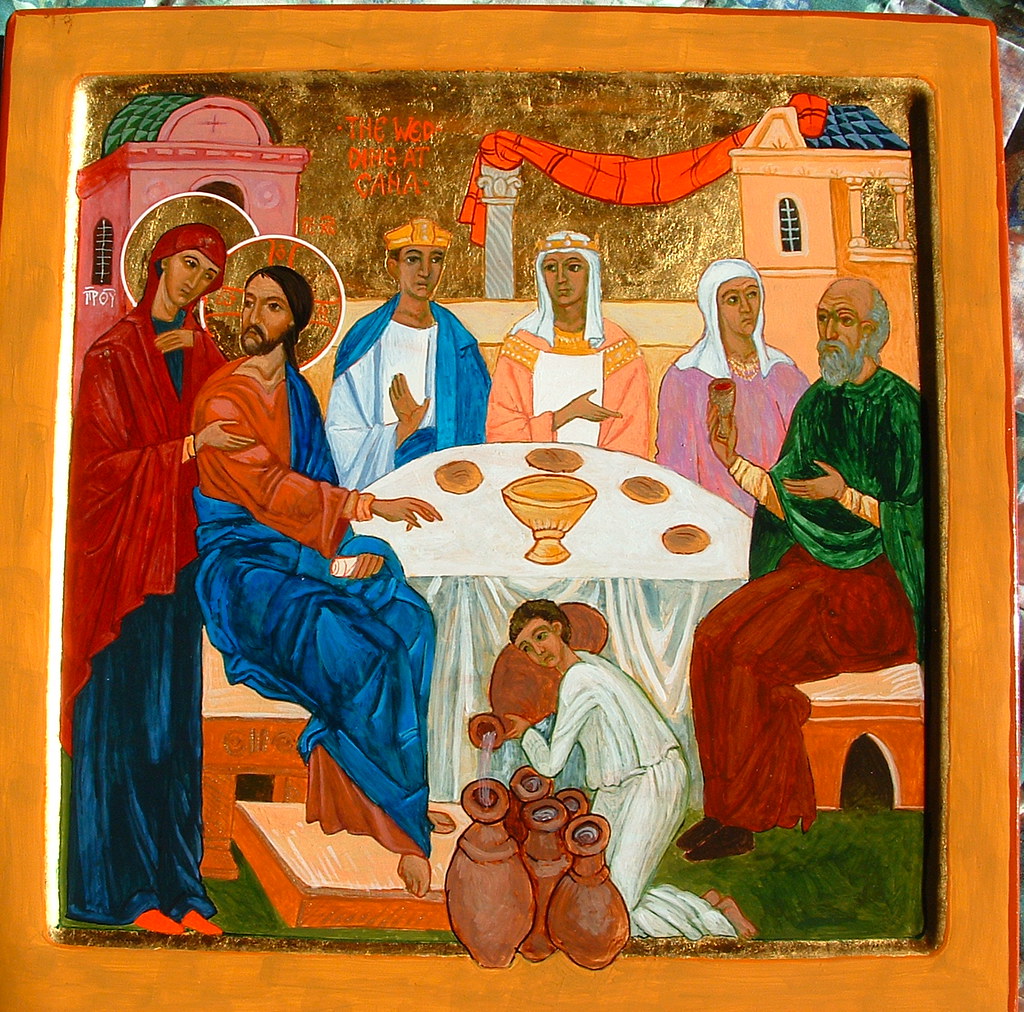
2024.01.14 Epiphany II – Manuscript
Text: Ephesians 5.22-33
In the Fourth Commandment, the Lord our God commands us to honor our father and mother. We all learned in the Catechism that we should take from these words that it is our duty not to despise or anger our parents, or others in authority above us, but, to “honor them, serve and obey them, love and cherish them.” We understand from these words, and other words of Scripture, that God has built an order into creation. Of course, He is at the top, but beneath Him – as far as Scriptures are concerned – come parents. The family is an original institution of God in the Garden of Eden. God brought Adam and Eve together, giving us the gift of marriage. He blessed their union so that it might bear fruit in the birth of children. According to His will, God places each person in their station, and He calls us to live within the authority entrusted to us. Parents honor God by bringing up children faithfully (and in the faith). Children honor God by serving their parents. We all honor God by being obedient to the authorities He places above us for our good.
Our text today concerns the oldest institution there is in creation, the relationship between husband and wife, marriage. Unfortunately, if we didn’t have the lectionary to bring it up each year, this text would have long fallen out of use in the Church for the sake of one word: submit. The people of our time hear this word, in connection with the relationship between a wife and her husband, and they dismiss it as demeaning and patriarchal. A better translation is “be in submission to,” and St. Paul doesn’t primarily have earthly marriage in mind here but the relationship between Christ and His bride, the Church. Jesus Christ, being the Lord of all things, made Himself a servant and gave Himself up for His bride. She, in turn, willingly serves Him in thanksgiving for the redemption she has received. God the Holy Spirit produces this will in her heart. By the gift of the Holy Spirit, the Lord leads us all to live faithfully where He has placed us.
I.
It’s too bad that this text is not read and taught more often, as St. Paul so beautifully describes for us what Jesus has done for us. We sometimes are told that this text is primarily about husbands and wives but, really, it’s about Jesus first. St. Paul wrote, “Husbands, love your wives, as Christ loved the church and gave Himself up for her.” (Ephesians 5.25 ESV) This letter to the Ephesians is very well known to us Lutherans because this is one of the books that teaches us explicitly that we are saved by God’s grace through faith in Christ. But, before saying this, Paul lays out what we needed to be saved from. Paul called us, by nature, children of wrath. We were enslaved to the devil, carrying out at all times the desires of our corrupt bodies and minds. If left to our own devices, we would have perished eternally. But God had mercy on us and He came into the flesh for us. Then, He gave Himself into death for us.
We remember that when Judas came with soldiers and officers of the temple to arrest Jesus, St. Peter drew his sword and cut off the ear of the high priest’s servant. Jesus told him to put the sword away. If He wanted, Jesus could’ve asked the Father and He would’ve sent twelve legions of angels; but He didn’t. Jesus gave Himself into death. He willingly bore our sins and the pains of the nails and thorns so that we might be “sanctified,” that is, made holy “through the washing of the water with the word.” (26) Although He is the Lord and creator of all things, Jesus made Himself a servant on our behalf, sacrificing Himself for our good. Through His death, He atoned for our sins. In Baptism, He applied that forgiveness to us. Through our Baptism, we are made righteous and holy in His eyes. By the benefit of His love for us, He views us as having no “spot or wrinkle or any such thing.” This means, Christ looks at us and cares for us as if we had no sin at all. He nourishes us now, and feeds us, through His Word and Sacrament because, through these things, we are His same flesh and blood. In return, we, as the Church, place ourselves at His feet. We listen to what He says and strive to do what He teaches. We do this, not out of compulsion, but by the guidance of the Holy Spirit.
II.
St. Paul wrote,
‘Therefore a man shall leave his father and mother and hold fast to his wife, and the two shall become one flesh.’ This mystery is profound, and I am saying that it refers to Christ and the church. However, let each one of you love his wife as himself, and let the wife see that she respects her husband.
Ephesians 5.31-33
This relationship of Christ and the Church is the model for our earthly marriages. Ours is a God of order. Although, equal to the Father with respect to His divinity, God the Son places Himself beneath the Father. The Church lives in submission to Christ. God places children beneath their parents. All these things serve for our benefit, including the order in marriage. God calls husbands to be the head of their wives just as Christ is the head of the church. When we consider it this way, how Christ serves His bride, we can understand that husbands are not called the lords of their wives, but heads. This is a position of service. The husband’s call from God is to care for his wife as his own body, to love her, and to forgive her. He is to sacrifice of himself for her good.
“Now as the church submits to Christ, so also wives should submit in everything to their husbands.” (24) There, again, is that word submit. For the sake of this word, this reading is often passed over. This word does not mean to be subservient to, but to willingly make yourself of service and be obedient. Just as there is order within the Trinity and the created world, so in marriage, God calls husbands to love and sacrifice for their wives and He calls wives to place themselves under the authority of their husbands. Their role is to pray for them, be a helper to them, and be cared for by them.
III.
When the Holy Spirit caused St. Paul to put these words into writing, He wasn’t just repeating the cultural norms of the time. Rather, he was speaking counter-culturally, first, by calling upon husbands to love their wives. In the ancient world, there were as many customs surrounding marriage as there were societies. These customs ranged from wives being (nearly) slaves to their husbands, to being their legal equals. However, none of them stressed the importance of love in this relationship. Among the Romans, marriage was a civic duty. One owed it to the state to be married and have children. Here, St. Paul bucks the culture and explicitly calls upon husbands to truly love their wives: to view them as sanctified and pure, and to be prepared to sacrifice everything for their good.
The second way St. Paul speaks counter-culturally is the why and the how of this order within marriage. When St. Paul calls upon husbands to love their wives and wives to respect their husbands, he does not speak to their human nature – the old sinful Adam in each us of – but to the new creations we are in Christ. Through the redemption of Christ, applied to us in Baptism, we received the Holy Spirit. He creates new desires in our hearts and a willingness to serve as God has called us. It is the Holy Spirit that leads us, husbands, to love our wives as our own bodies and to sacrifice of ourselves freely and joyfully. It is the Holy Spirit that leads wives to respect and be submissive to their husbands, not resentfully but purposely, knowing that their submission is truly to Christ.
We can learn all of this just as easily from the Fourth Commandment. In it, God teaches us that there is an order to all things. At the top is God the Father. Since His ascension, Christ is at His right hand ruling over all things for our benefit. As far as the Commandment is concerned, next comes parents and then children. At each level, God gives authority and responsibility. Parents are to care for their children, children are to honor their parents. Marriage was instituted by God as an earthly picture of the care our Lord has for His bride, the Church. In a way, it is also a living enactment of the Gospel: the husband gives himself in love for his bride, and the wife receives this love and reflects it in service. To this end, may God grant us His Holy Spirit, bless all who are married among us, and grant faithfulness and contentment to those who are not. Amen.
 St. John's and Grace Evangelical Lutheran Parish
Wonder lesson on one of the more difficult passages of the Bible
LikeLike