Sermon for the 11th Sunday after Pentecost – “We are His,” Psalm 100

“We are His”

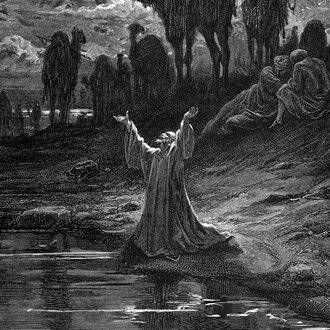
My dear brothers and sisters in Christ, it appears that our time together has come to close. Wait, let me rephrase that. I mean to say that, while West Portal Lutheran Church will continue strong as a place where our gracious God continues to gather His people to receive His gifts of Word and Sacrament, my time of sojourning among the saints here has come to an end. I was politely advised that it is the practice for the outgoing vicar to make his final sermon a farewell sermon. And so, I set out to make that my goal – not realizing how difficult that would be. It has certainly been an incredible year. I could have never guessed in August 2012 what the next 12 months would hold for me. I am reminded today of our Psalm, Psalm 100. This is actually the same as the one used on Easter evening. It reminds us of the salvation accomplished for us on the cross as it exhorts us to make a joyful noise to the Lord. We rejoice and offer our thanksgiving today because it is God who had made us, who supports us; and we are His.

(I.            Sing to the Lord with praise!)

(II.           He is our God and His steadfast love endures forever.)

I.               

This psalm of praise begins, “Make a joyful noise to the Lord, all the earth! Serve the Lord with gladness! Come into His presence with singing…enter His gates with thanksgiving and His courts with praise! Give thanks to Him; bless His name!” (vv. 1-2, 4) What incredible words! Would that I had such exuberance and were given by the Holy Spirit to write that. Although we do not know exactly by whose pen that was written or when, its placement in our worship on Easter Sunday points us in the right direction. This is not just a psalm of praise, but it is prophetically so. “Make a joyful noise to the Lord,” it exclaims. “Your salvation has drawn near and now is come,” it means to say. That joyful Easter all that needed to be had been accomplished. Our Lord Jesus Christ has forever crushed the head of that ancient serpent and lives in His eternal glory. The psalmist also offers this prophetic vision – all the earth sings joyfully to the Lord for He Himself has redeemed it. On the Last Day, on the Day of His triumphant return, all creation will witness the glory of our Savior and be made new. And those who are among His people will be there. We will be there.

We sing triumphantly and with joy. For our salvation we continually give thanks and bless His name. Every week we gather to sing hymns of praise to our God and Savior. We receive His precious Sacrament and His Words are put into our mouths. Empowered by Him and guided by the Holy Spirit, with the psalmist we proclaim to those around us that our savior is here, the One who rescues us from sin, death, and eternal damnation. Every day we are given the opportunity to share this joy with our neighbor, and especially the youngest among us who attend our school, naught but parking lot away.

Today I would like to offer my own thanksgiving and praise to our God above who has seen fit to lead me here to worship among His saints at West Portal Lutheran Church and School. I could not have comprehended the grace and mercy He has shown towards me through each and every one of you. Scripture tells us that the Word of God is living and active and I have certainly seen that in real life. I’ve seen the Spirit active in praise for a job well done, in admonishment for situations that call for correction, and in encouragement when spirits are low. In all these I have seen that we have a living God and savior, Jesus Christ, whose has triumphed over sin and death forever and feeds and strengthens His people here with His love and forgiveness.

II.               

As the Apostle Paul was in Athens some of the people took him to the Areopagus, to hear this allegedly new teaching that he was speaking. As he looked around and observed all the objects they had around, he notices that there is an altar to an unknown god. Paul says to them that what they previously worshipped as “unknown” is in fact the God who made the world and everything in it – our God. He has made everything and continues to give breath and life to all mankind. Paul even quotes these words from two of their philosophers: “In him we live and move and have our being…for we are indeed his offspring.” (Acts 17:28) Paul shows here not only his knowledge of Greek philosophy, but of Scripture. Verse 3 of Psalm 100 says, “Know that the Lord, He is God! It is He who made us, and we are His; we are His people, and the sheep of His pasture.” (v. 3)

This is why we gather today, why we sing joyfully to the Lord and give Him thanks. It is what I myself have continually kept and will keep in mind through the twists and turns of college, the first two years at seminary, this year on vicarage, and now my final year before becoming a pastor in an entirely new place. Our God, your God and my God, is the Lord. It is He who has made us. He formed us in the womb and brought us to new life in Holy Baptism. It is by His Spirit that we are called through Holy Scripture. Against the will of the Old Adam in us, it is He who brings us here to worship now. In English the text says that we are His, but both the Hebrew and the Greek say something different. They read, “It is He who made us and we are not our own.” This means that everything we are and everything we have is not our own, but it is all from God. We acknowledge this in the Lord’s Prayer when we pray for our daily bread which certainly includes not only food, but everything that has to do with the support of the body and life. For everything, for the clothes on our backs, for the padding in our pews, and for the opportunity to worship here, where receive holy absolution and partake of our Lord’s Body and Blood we are to pray, praise, and give thanks.

For the Lord is good; His steadfast love endures forever, and His faithfulness to all generations.” (v. 5) This is verse that every one of us should know, or at least have said it at some point in the liturgy here. Today we are singing songs of praise and being thankful for all that we have and all that we are, but sometimes we don’t do any of that. We forget, we purposely don’t go to church, we begin to live our lives as if we are our own. But, dearly beloved in Christ, we are not our own. We are His. We have been bought not with gold or silver, but with His blood. By His suffering and death Jesus Christ has paid the cost of our sin and now we are His. And since we are His, He will always take care of us. Even when we are unfaithful, He remains. He continues to call us to hear His Word and sing songs of praise, for His love endures forever and in all situations. In all our comings and goings, in those days at work where the hands on the clock go backwards, in fights at home and in the sleepless nights that follow, He remains faithful. His love is not for moment but for a lifetime and even more. His love goes even beyond the grave. We deserve none of it. We deserve death, but the Lord is good and His steadfast love endures forever. He is faithful through all generations.

It is with these words that I leave you, “It is He who made us, and we are His.” Because we are His, “The Lord is good; His steadfast love endures forever.”  In all situations we give thanks to the Lord for His love and faithfulness towards us. It has been such a joy and a pleasure for me to be here this last year. The Lord has truly been good to me, and I know that He will continue to bless His saints here for years to come. Through all the changes of the world, we know that He remains constant and His love for us through Jesus Christ will remain eternally. In His Name. Amen.

Bible Study – Formula of Concord II: Free Will

This is for another Bible study. I’ve borrowed this from Formula of Concord II from Concordia: The Lutheran Confessions. There are a couple paraphrases and edits on my part for clarity.

II. FREE WILL

1. THE ISSUE

After the fall and before receiving the Holy Spirit, what powers in spiritual matters does a person have? Can a person by his own powers—prior to and before his regeneration by God’s Spirit—get ready and prepare himself for God’s grace? Can a person accept or reject the grace offered through the Holy Spirit in the Word and holy Sacraments?

2. WHAT WE BELIEVE

This is our teaching, faith, and confession on this subject: in spiritual matters the understanding and reason of mankind are completely blind and by their own powers understand nothing.

  • The natural person does not accept the things of the Spirit of God, for they are folly to him, and he is not able to understand them because they are spiritually discerned.” (1 Cor. 2:14)

Likewise, we believe, teach, and confess that the natural will of mankind is not only turned away from God, but also has become God’s enemy. So it only has an inclination and desire for that which is evil and contrary to God.

  • The intention of man’s heart is evil from his youth.” (Gen. 8:21)
  • The mind that is set on the flesh is hostile to God, for it does not submit to God’s law; indeed, it cannot.” (Rom. 8:7)

Just as a dead body cannot raise itself to bodily, earthly life, so a person who by sin is spiritually dead cannot raise himself to spiritual life.

  • Even when we were dead in our trespasses, [He] made us alive together with Christ.” (Eph. 2:5)
  • Not that we are sufficient in ourselves to claim anything as coming from us, but our sufficiency is from God.” (2 Cor. 3:5)

God the Holy Spirit, however, does not bring about conversion without means. For this purpose He uses the preaching and hearing of God’s Word.

  • The Gospel is the power of God for salvation to everyone who believes.” (Rom. 1:16)
  • Faith comes from hearing, and hearing through the word of Christ.” (Rom. 10:17)

It is God’s will that His Word should be heard and that a person’s ears should not be closed (Psalm 95:8). With this Word the Holy Spirit is present and opens hearts, so that people (like Lydia in Acts 16:14) pay attention to it and are converted only through the Holy Spirit’s grace and power, who alone does the work of converting a person. For without His grace, and if He does not grant the increase, our willing and running, our planting, sowing, and watering (1 Corinthians 3:5–7)—are all nothing. As Christ says ‹in John 15:5›, “apart from Me you can do nothing.” With these brief words the Spirit denies free will its powers and ascribes everything to God’s grace, in order that no one may boast before God (1 Corinthians 1:29; [2 Corinthians 12:5; Jeremiah 9:23]).

3. WHAT WE DON’T BELIEVE

The idea that everything that happens must so happen and cannot happen otherwise; everything that a person does, even in outward things, he does by compulsion; he is forced to do evil works and deeds, such as inchastity, robbery, murder, theft, etc.

That a person by his own powers, without the Holy Spirit’s grace, can turn himself to God, believe the Gospel, be obedient from the heart to God’s Law, and so merit the forgiveness of sins and eternal life. We also reject that a person can begin his conversion even if he can’t complete it without the Holy Spirit’s grace.

There are some that agree that a person is too weak to begin his conversion and that he cannot turn himself to God by his own powers. But, they still say that, if the Holy Spirit starts it through preaching and has offered His grace, then a person’s will can add something. Though weak and feeble, man’s will can still cooperate with God in salvation.

Some have taught that a person—after he has been born again—can perfectly observe and completely fulfill God’s Law, and that this fulfilling is our righteousness before God, by which we merit eternal life.

We also reject those who imagine that God without means, without the hearing of God’s Word, and also without the use of the holy Sacraments, draws people to Himself and enlightens, justifies, and saves them.

Some teach that in conversion and regeneration God entirely exterminates the Old Adam totally and in baptism creates a new soul.

4. Summary

Martin Luther has written that a person’s will in his conversion is purely passive, that is, that it does nothing at all. This is to be understood with respect to divine grace in the kindling of the new movements, that is, when God’s Spirit, through the heard Word or the use of the holy Sacraments, lays hold of a person’s will and works in him the new birth and conversion. When ‹after› the Holy Spirit has worked and accomplished this, and a person’s will has been changed and renewed by His divine power and working alone, then the new will of that person is an instrument and organ of God the Holy Spirit. So that person not only accepts grace, but he also cooperates with the Holy Spirit in the works that follow.

There are only two efficient causes for a person’s conversion: (1) the Holy Spirit and (2) God’s Word, as the instrument of the Holy Spirit, by which He works conversion. A person must hear this Word. However, it is not by that person’s own powers, but only through the grace and working of the Holy Spirit that he trusts the Word and receives it.

Sermon for the 9th Sunday after Pentecost – “One Thing’s Needful,” Luke 10:38-42

“One Thing’s Needful”

Brothers and sisters in Christ, this week we certainly have an interesting text to learn from. Many, including myself, have read over this passage from Luke’s Gospel and have been left scratching our heads. I think the teaching to take away from the text is fairly clear, but at the same time it just feels weird. Martha was just asking for some help. Jesus comes to visit their house with His disciples. Like any good host Martha would have offered them a meal which, for 12 people, is not a simple task. There maybe was a bowl for the guests to wash their feet, which would mean dirty water splashed everywhere and someone’s got to clean that up. Why does Martha have to do it all by herself? Mary is just sitting there. Why doesn’t Jesus just ask Mary to pitch in a little bit too? Most of us would just tell Mary to stop being such a Lazy Susan, if for no reason other than to quiet Martha’s whining. It’s a good thing we didn’t write the Bible, because we wouldn’t learn anything from this passage then. Jesus uses the opportunity to teach us today about the one thing that is needful. Though the cares of the world make demands of us on all sides, yet there is only one thing that we really need.

(I. One thing is needful.)

(II. There is nothing that we have to offer.)

(III. One thing is needful and we pray Christ keeps us in it.)

I.

Continuing on from last week’s text where Jesus turned the question of what one must do to inherit eternal life back around on the lawyer, Jesus is going to do it again in Bethany. Martha, expecting that it was totally reasonable to ask Jesus to make Mary help her, is rebuffed by Jesus. He responds to her request, “Martha, Martha, you are anxious and troubled about many things, but one thing is necessary. Mary has chosen the good portion, which will not be taken away from her.” (vv. 41-42) So there we have it, Jesus tells Martha that amidst all the cares and worries of the world, all the daily tasks that are done or that we have to do, there is one thing that remains needful – the Word of Jesus Christ. There is one hymn that really goes along with this reading. I think it does a very good job of explaining this text; and so, if we could, I would like to invite you to open up hymn 536, “One Thing’s Needful.”

From the first lines of stanzas 1 and 3 we read, “One thing’s needful; Lord, this treasure teach me highly to regard…Wisdom’s highest, noblest treasure, Jesus, is revealed in You.” The hymn at first basically takes its words straight from Jesus’ mouth – that there is one thing that is needful in life, one thing in which the highest, most noble thing is found – Jesus’ Word. Does that mean that food preparation and cleaning that Martha was doing was bad? No. But at that time, when Jesus was in the next room speaking the Word of eternal life to His disciples and Mary, Martha stuck to her own tasks, insisting they were just as important.

In the same way, we often pull a Martha when it comes to hearing God’s Word. Imagine that you’ve just worked your 40+ hours and you are looking for some rest this weekend. Like any adult with a life, you stay up late Friday night, or your kids keep you up – which leads to sleeping in on Saturday. Then on Saturday you have a full day of activity with your family and before you know it, Sunday morning sneaks up. Wouldn’t it be so much easier to not get up? Besides, you’re being a good steward by making sure your body gets enough rest for the coming week, and you’re being a good parent by letting your children sleep. Later, you’ll reward yourself by taking the family out for breakfast. All this during the time when you could’ve been hearing the very Word of eternal life. Or, substitute sports on Sunday morning and see the same result. Abandoning the Word of God for our own pleasures, all of which turn out to be a yoke around our neck, presses us down into the muck of sin and eternal damnation.

II.

Martha must have thought that she was being the good one. Here she was serving Jesus, doing her best, she might add. She welcomed Him into her home, she prepared a meal for Him and continued to serve Him and His disciples. But, it turns out, Mary had chosen the better option. Mary knew, as the hymn states in stanza 4, that “nothing have I, Christ, to offer, You alone, my highest good. Nothing have I, Lord, to proffer but Your crimson colored blood.” Martha sought to offer her best service to Jesus, but Mary knew what the best is that one can offer Him: nothing other than receiving His gifts. We can offer nothing to Jesus, save His own blood and righteousness. This is the true worship of God – to hear His Word and receive all the gifts He has to give.

There is nothing we need except to hear the Word of God. There is nothing that we can offer Him. Our service, our best intentions, our hearts all mean nothing. We have nothing to offer because Jesus’ “death on the cross has death wholly defeated and thereby my righteousness fully completed.” Everything we like to do will eventually turn out to be in vain. There is nothing on earth that lasts, everything will fade away. Every time we try to satisfy ourselves and put something worldly at the center of our lives, it only becomes a millstone around our necks and we plunge ourselves into the sea. If everything we have or loves turns out to be in vain, how much less can we offer it to Jesus? No, there is only one source of righteousness, one source of salvation’s white robes. Jesus Christ is the one who, once for all time, has offered a single sacrifice for sins. And by that single sacrifice of His body on the cross, Jesus “has perfected for all time those who are being sanctified,” as we read in Hebrews. (10:14)

It is only by the life, death, and resurrection of Jesus Christ that we have life, and that comes through hearing His Word. It is His work that has completed all righteousness. Through the grace of our God and under the guidance of the Holy Spirit words were written down in order that we might hear them, be given the gift of faith, and receive eternal life though Jesus Christ. These are all done for and to us. Like Martha, our natural inclination is to try and do. We look for ways to give to God, whether it is our time, our thoughts or actions. But, there is nothing that we can give that isn’t already His. And so, He invites to sit at His feet and hear His Word of eternal life.

III.

The end of the hymn “One Thing’s Needful” goes like this, “through all my life’s pilgrimage, guard and uphold me, in loving kindness, O Jesus, enfold me. This one thing is needful; all others are vain – I count all but loss that I Christ may obtain.” Like Martha, we often get caught up in life’s details. We get busy doing what we want, and we fail to recognize that there is only one thing that matters: the Word of God. Jesus called Mary to sit at His feet and hear His Word of peace and salvation. We pray today that throughout the pilgrimage of our earthly life Jesus would guide us through this valley of shadows to the green pastures beside His feet.

We pray this, and we know that He who promised is faithful. Amidst all the cares of this world, we have a savior who continually reaches out to us, who comes to us and invites to learn at His feet. Through Baptism we were washed and made clean and placed at the feet of Jesus to listen to Him. He has given us His holy Word, which has been written down for our learning. He comes to us with His forgiveness through the mouth of Pastor. We know that the absolution we receive is from Christ Himself. When the sermon is preached, we do not just hear empty words, but we hear the voice of Jesus through the mouth of His humble servant. Then, in the Holy Supper He feeds us with His own body and blood for the forgiveness of sins and the strengthening of our faith.

This has been a tough reading this week. If it were up to any one of us, we would’ve probably made Mary go to the kitchen and help Martha. I’m sure many of you have used that approach with your children. Like Martha, we sometimes get caught up in life too. Even though Martha was doing good things, she put those in place of the only needful thing in life: Jesus’ Word. And so today we pray that, along with Mary and the Disciples, Jesus would keep us at His feet where we hear the Words of eternal life and forgive us when we go our own way.

O Lord, grant us the Spirit to hear Your Word and know the one thing needful that by Your Word and Spirit we may live according to Your will; through Jesus Christ, Your Son, our Lord, who lives and reigns with You and the Holy Spirit, one God, now and forever.

Bible Study – Formula of Concord I: Original Sin

This is a Bible study for Sunday morning on original sin. It is taken from the Formula of Concord, Article I as translated in Concordia: The Lutheran Confessions. There is additional editing and a few paraphrases of my own.

I. ORIGINAL SIN

Is sin part of mankind’s very essence? No, for if it were, God could be accused of creating sin.

  1. THE BIG QUESTION
  • Is original sin really, without any distinction, a person’s corrupt nature, substance, and essence? Or even after the fall, is there a distinction between original sin and a person’s substance, nature, essence, body, and soul, so that the nature itself is one thing and original sin is another, which belongs to the corrupt nature and corrupts the nature?
  • One side argued this: through Adam’s fall, mankind’s nature, substance, and essence are corrupt. Since the fall, the nature, substance, and essence of a human being is original sin itself.
  • The other side taught that original sin is not truly the nature, substance, or essence of mankind is something in mankind’s nature, body, and soul, and in all a person’s powers. It is a horrible, deep, inexpressible corruption of mankind’s nature and powers.

2. WHAT WE BELIEVE

We believe, teach, and confess that there is a distinction between man’s nature and original sin. This applied not only when he was originally created by God pure and holy and without sin [Genesis 1:31], but it also applies to the way we have that nature now after the fall.

  • And God saw everything that he had made, and behold, it was very good.”
  • There are two ways of looking at sin: the actual transgression of God’s commandments and also the horrible, dreadful hereditary sickness by which the entire human nature is corrupted. Martin Luther called that “nature sin” or “person sin,” meaning that even if a person would not think, speak, or do anything evil, his nature and person are nevertheless evil.
  • God does not create, make, or cause sin. By the temptation of the devil through one man, sin (which is the devil’s work) has entered the world (Romans 5:12; 1 John 3:7).Even after the Fall, God does not create and make sin in us. Original sin is multiplied from sinful seed, through fleshly conception and birth from father and mother [Psalm 51:5]. God at the present day still creates and makes the human nature in people.
  • Original sin is not only the loss of the image of God in mankind, it is also a total corruption of man’s nature and powers – both physical and spiritual.
  • This distinction is as great as the distinction between God’s work and the devil’s work.

If we make no distinction between our corrupt human nature and original sin, it conflicts with the chief articles of our Christian faith about creation, redemption, sanctification, and the resurrection of our body.

God created the body and soul of Adam and Eve before the fall. But He also created our bodies and souls after the fall. Even though they are corrupt, God still acknowledges them as His work, as it is written in Job 10:8, “Your hands fashioned and made me.”

  • You were unmindful of the Rock that bore you, and you forgot the God who gave you birth.” (Deut. 32:18)
  • But now, O Lord, you are our Father; we are the clay, and you are our potter; we are all the work of your hand.” (Is. 64:8)
  • It is he who made us, and we are his;” (Ps. 100:3)

Jesus took our same nature [John 1:14], but without sin. He did not receive some separate nature, but our own. Hebrews 2:14 says, “Since therefore the children share in flesh and blood, He Himself likewise partook of the same things.” Again, “For surely it is not angels that He helps, but He helps the offspring of Abraham. Therefore He had to be made like His brothers in every respect… yet without sin” [2:16; 4:15]. In the same way, Christ redeemed human nature as His work, sanctifies it, raises it from the dead, and gloriously adorns it as His work. In the ‹blessed› resurrection original sin will be entirely destroyed [1 Corinthians 15:51–57].

  • Original sin is so great and horrible that, only for the sake of the Lord Christ, can it be covered and forgiven before God in those baptized and believing. Furthermore, human nature, which is perverted and corrupted by original sin, must and can be healed only by the regeneration and renewal of the Holy Spirit [Titus 3:5]. However, this healing is only begun in this life. It will not be perfect until the life to come [Ephesians 4:12–13].

Original sin is not a minor corruption. It is so deep a corruption of human nature that nothing healthy or uncorrupt remains in man’s body or soul, in his inward or outward powers [Romans 3:10–12]. As the Church sings:

Through Adam’s fall is all corrupt, Nature and essence human.

This damage cannot be fully described [Psalm 19:12]. It cannot be understood by reason, but only from God’s Word.

 3. WHAT WE DON’T BELIEVE

We do not believe that original sin is just a debt charged by another person and put on us without any corruption on our part. We also do not believe that original sin is just a spot on the outside, some blemish on human nature, leaving nature good on the inside.

  • We do not believe that original sin is something mixed into human nature by Satan – like mixing poison into wine.
  • We reject the teaching that the natural man does not sin, but something else sins apart from man and, on account of this, human nature is not accused but only original sin in the nature.

We do not believe that evil lusts are not sin, but are created, essential properties of human nature.

Thus, we also deny that human nature after the fall is not corrupt, most especially in spiritual powers. We reject the teaching that original sin is only an outward obstacle to the good spiritual powers and not a spoiling or lack of the powers.

  • These and similar contrary doctrines are condemned and rejected because God’s Word teaches that the corrupt human nature, of and by itself, has no power for anything good in spiritual, divine things, not even for the smallest things, such as good thoughts. Not only is this true, but the corrupt nature can do nothing in God’s sight of and by itself. It can only sin (Genesis 6:5; 8:21).

4. SOME CLOSING ARGUMENTS

If there was no difference at all between the nature or essence of our body and soul and original sin, one of the following would be true: because God is the creator of our nature, He also created and made original sin, which would also be His work and creature. Or, because sin is the devil’s work, Satan would be the creator of our nature, of our body and soul. Both of these teachings are contrary to the article of our Christian faith.

Therefore, in order that God’s creation and work in mankind may be distinguished from the devil’s work, we say that it is God’s creation that a person has body and soul. Also, it is God’s work that a person can think, speak, do, and work anything. For “in Him we live and move and have our being” (Acts 17:28). But human nature is corrupt. Its thoughts, words, and works are wicked. This is originally Satan’s work, who has corrupted God’s work in Adam through sin. From Adam, sin is passed down to us by inheritance [Romans 5:12].

In the article of Redemption the Scriptures testify forcefully that God’s Son received our human nature without sin. So He was in all ways—sin excluded—made like us, His brethren (Hebrews 2:14–17). Therefore, all the old orthodox teachers have maintained that Christ, according to His received humanity, is of one essence with us, His brothers. For He has received His human nature, which in all respects (sin alone excluded) is like our human nature in its essence and all essential attributes.

If there were no distinction between the nature or essence of corrupt mankind and original sin, one of the following must be true: Christ did not receive our nature, because He did not receive sin. Or because Christ received our nature, He also received sin. God’s Son received our nature, and not original sin. Therefore, it is clear from this fact that human nature (even since the fall) and original sin are not one and the same thing. They must be distinguished.

In the article of Sanctification Scripture testifies that God cleanses, washes, and sanctifies mankind from sin [1 Corinthians 6:11; 1 John 1:7] and that Christ saves His people from their sins [Matthew 1:21]. Sin, therefore, cannot be a person himself. God receives a person into grace for Christ’s sake, but remains hostile to sin eternally. Therefore, it is unchristian and horrible to hear that original sin is baptized in the name of the Holy Trinity, sanctified and saved.

In the article of the Resurrection Scripture testifies that precisely the substance of our flesh, but without sin, will rise again [1 Corinthians 15:42, 54–57]. In eternal life we shall have and keep precisely this soul, but without sin.

If there was no difference at all between our corrupt body and soul and original sin, one of the following would be true: our flesh will not rise again at the Last Day, and in eternal life we shall not have the present essence of our body and soul, but another substance (or another soul), because then we shall be without sin. Or ‹at the Last Day› sin will also rise again and will be and remain in the elect in eternal life.

Sermon for the 8th Sunday after Pentecost – “Christ, the Samaritan,” Luke 10:25-37

“Christ, the Good Samaritan”

Dear brothers and sisters in Christ, have you ever asked a question in such a way that you were guaranteed to get the answer you were looking for? Questions like, “Should we have ice cream of ice cream sandwiches for dessert” or “Does this dress make me look fat,” are often on our lips. I suppose with that second one, most men would know what I’m getting at. Loaded questions. That’s where you set up the other party to answer a question according to your own predetermined conclusion. In the text today a certain lawyer stands to do just that. In fact, he actually gets two questions in. We will see how Jesus answers him in kind, giving to him both the answer he expected and the answer he didn’t want at the same time. Jesus shows him who his neighbor is, but His main goal is to show him what God has already done for both the lawyer and for us.

(I.            A loaded question)

(II.           A loaded answer?)

I.                  

The Gospel reading opens, “And behold, a lawyer stood up to put him to the test, saying, ‘Teacher, what shall I do to inherit eternal life?’” (v. 25) I had wished to go a little further before we got to a loaded question, but sometimes in life you don’t get what you want. Sometimes we look to Scripture to reinforce something we already believe and we come back (or should come back) empty-handed for trying to read our interpretations into the Bible. This is what we are about to see with the lawyer. Though unnamed in the text, we do know at least two things about this man. First, he was a teacher of the Law – a student of the Torah, who sided more with the Pharisees. He did believe in eternal life. Second, he most likely had already rejected Jesus as Lord. In Luke 7 John the Baptist sent messengers to ask Jesus if He was the one they were looking for. Jesus tells them to go tell John what they had seen: blind men seeing, the lame walking, disease-free lepers, and the dead raised. After the messengers leave, He tells the crowd that John was the one written about who would come before the Messiah. At this, the Pharisees and lawyers scoff, it says, because they “rejected the purpose of God for themselves.” (Lk. 7:30)

He still recognized Jesus as a teacher of the Law, though, and addresses Him as such. “Teacher, what shall I do,” he asks, expecting this teacher of the Law to answer in kind. I.E. responding to him with the answer to what man must do, assuming that he does bear responsibility in gaining eternal life. It’s worth noting that the Greek work for “put to the test” is only used one other time in Luke – to describe the Devil tempting Jesus. Jesus answers the same way He answered Satan – with Scripture. “He said to him, ‘What is written in the Law? How do you read it?’” (v. 26) That is, He asks the lawyer what the Law says. Rather than his interpretation, the question of how he reads it refers to the recitation of the Shema in the Synagogue. The lawyer answers, “You shall love the Lord your God with all your heart and with all your soul and with all your strength,” and adds, “and with all your mind.” That covers the first 3 Commandments, then he covers 4-6, “and [love] your neighbor as yourself.” (v. 27) Jesus confirms that the man has answered correctly, “You have answered correctly,” He says. “Do this, and you will live.” (v. 28)

Perhaps now would be a good time to pause for a second and reflect. When reading this passage, this is unfortunately where some people stop. They read, “Do this and you will live,” and interpret The Good Samaritan to be all about morality and chiefly concerning our love for our neighbors. It is often then turned from Gospel into Law. This is the mindset the lawyer has – that the way of the Torah is the way of life. Life does come from following the Law completely, but it does not come from the Law itself, but through God’s gracious actions toward us despite our sin. It is because of God’s choosing of His people and bringing them into communion with Himself that we have eternal life. Then, out of love for Him and in response to His grace, we are led to love Him above all things and to love our neighbors as ourselves. It is not because of our works that we inherit life because, “Christ is the end of the law for righteousness to everyone who believes.” (Rom. 10:4)

The lawyer asked Jesus a loaded question that he was sure would bring a satisfactory, but instead he felt convicted by Jesus’ response. Looking to save face and regain stature he poses Jesus another question, “And who is my neighbor?” (v. 29) The very question assumes that there are some people who are not his neighbor. Out of his own mouth had just come the admission that in order to live eternally he must love his neighbor as himself. Well, that is a problem isn’t it? Aren’t there just some people that, no matter what, you just cannot get along with? There are some people that we just really don’t want to love. What more proof do we need to show that we have transgressed God’s Law and therefore are not worthy of inheriting eternal life? Thankfully, Jesus has some more to say.

II.                 

The Apostle Paul writes, “Love does no wrong to a neighbor; therefore love is the fulfilling of the Law.” (Rom. 13:10) The lawyer knows that he can’t do that, he can’t love everyone. But, he also can’t call the Law into question, and so he asks Jesus for some clarification on what “neighbor” means. Jesus answers with what loving your neighbor looks like by demonstrating those who try to inherit life through following the Law. He tells the story of the Good Samaritan. It happened that there was a certain man going down from Jerusalem to Jericho. The man is not named nor is his ethnicity given. As he travels the steep and curvy downhill road, robbers pop out from behind the numerous rocks and strip the man of his clothes, beat him and leave him for dead.

Now, by coincidence a priest happened to be coming down the same road, probably having just completed his duties in the temple. This priest, who should’ve known that love is the fulfillment of the Law, sees the half-dead, naked man and walks on by on the opposite side of the road. Likewise a Levite, whose job was to assist the priest, is also coming down the road. He actually comes up the place where the man lay but then crosses to the other side. Perhaps he was copying the priest. The priest was his superior, the one who knew the rules. Finally, here comes a Samaritan – the sworn enemy of the priest and Levite. He goes to where the beat man is and has compassion on him. He bandages his wounds and pours oil and wine on him. Then he puts the man on his own animal and cares for him at an inn.

At the end of the story Jesus did not ask the lawyer, “Now tell me, lawman, who is your neighbor?” So, I will not ask you that. We know who our neighbor is. Everyone around us who is in need. I’m not going to demand that you go out and love your neighbor. To do that from here would be to turn the sweetest Gospel into the sternest Law. We know that we are called through the love of God to show love to those around us, and yet we do not. We do not love our neighbors as ourselves and we justly deserve God’s present and eternal punishment. We are the priests; we are the Levites. We are the man beaten, left half-dead by the roadside. Jesus is the Good Samaritan.

Jesus is the Good Samaritan. As we traverse the rocky road from birth to death we fall among robbers. We fall prey to our own attempts to keep the Law. We fall prey to our own sinfulness until we are stripped, bruised, and mostly dead. As others pass by, only One can save us. Our Lord Jesus Christ, the most despised of all men, has had compassion on us. Through His death and resurrection He has bandaged our wounds. He has covered us in both the oil of gladness and much fine wine. He is the one who has loved the unlovable, who has shown perfect love to His neighbor in our place so that we might receive eternal life through Him. The lawyer asked Jesus expecting an answer about what he might do to inherit eternal life. Jesus answered that, in fact, all has been done. Jesus is the Good Samaritan that has come to rescue us from our sin.

Sermon for the 7th Sunday after Pentecost – “The Real Reason for Rejoicing,” Luke 10:17-20

Pentecost 7 (Proper 9) – Manuscript

Text: Luke 10:1-20 (17-20)

“The Real Reason for Rejoicing”

Brothers and sisters in Christ – most of you don’t know this, but I hail from Minnesota. It is a land flowing with water and covered in trees. Most associate it with long harsh winters, but there is in fact a short, hot summer. And in that short, hot summer there is something most glorious – the Minnesota State Fair, perhaps best known as the place where you can get anything deep fried and on a stick. One year a young couple brought their son to his first fair. Brimming with joy he declared the Twinkie on a stick to be the best thing ever. Then, the bacon on a stick was his reason for rejoicing. That is, until his father showed him the real reason. Sure, those other things were great – but the real reason for rejoicing at the Minnesota State Fair is the Pronto-Pup. Not just a regular corn dog, it alone is the real reason to rejoice. In the text today the 72 disciples return to Jesus rejoicing over the authority given to them and the miraculous things they saw because of it. Nevertheless, Jesus tells them what should be their real reason for rejoicing. We learn today THE REAL REASON FOR OUR REJOICING – THAT OUR NAMES HAVE BEEN WRITTEN IN HEAVEN.

(I.            After sending the Twelve, Jesus sends out 70 others to proclaim His Word.)

(II.           They return rejoicing in the power it carried.)

(III.          Nevertheless, Jesus tells them, the real reason for rejoicing is found elsewhere.)

I.

At the beginning of Luke 10 Jesus appoints 72 disciples to go ahead of Him. As He had already begun His journey up towards Jerusalem, these would go two by two into every town and place where Jesus was about to go. They were sent to preach much in the same way as John the Baptist, saying to those who were healed, “The kingdom of God has come near to you.” (v. 9) The 72 were sent out to carry Jesus’ Word to the people. He had given them this instruction, “Go your way; behold, I am sending you out as lambs in the midst of wolves. Carry no moneybag, no knapsack, no sandals, and greet no one on the road.” (vv. 3-4) Imagine being sent out today with no wallet, no phone, and no car. They were sent out with naught but what was on their backs into a world of drooling wolves, waiting in the dark corners to devour the seemingly helpless lambs. But, Jesus knows this – they are not unprotected. He sends them out carrying nothing but His Word.

Whatever house you enter, first say, ‘Peace be to this house.’” (v. 5) Turns out, these sheep were heavily armed. I bet the wolves weren’t expecting that. The 72 carried in their mouths the very Word of God, the Word concerning the peace between God and us through Jesus Christ’s life, death, and resurrection. This Word was power. Whenever the sick were healed, whenever demons were cast out, it was because the kingdom of God had drawn near. Where the kingdom of God is, there sin and darkness, chaos and destruction, sickness and death cannot be. And so, these disciples sent out seemingly naked were, in fact, not. They were clothed, protected, and provided for by the Word of God.

II.

So, these 72 are sent out ahead of Jesus to preach His Word in the villages and towns ahead of them. They were sent out without supplies, pretty much naked and defenseless. Some of them may have thought, what good could they possibly do like that. They may not have expected much. How surprised they must have been when people started being healed and demons started fleeing from the bodies they inhabited. Wow! What power they’ve been given! All of sudden their world is rocked. They aren’t some weak, defenseless sheep – they’re beef-eating, body-building sheep and those wolves should look out. These sheep have power! These sheep are rejoicing! Luke writes, “The seventy-two returned with joy, saying, ‘Lord, even the demons are subject to us in your name!’” (v. 17) Not only did Jesus’ Word grant lasting peace to the houses upon which it rested, but it also moved forward. It pushed out darkness as it moved forward. Jesus describes it, “I saw Satan fall like lightning from heaven.” (v. 18)

Imagine seeing this happen yourself: there you are praying over your sick relative. Maybe you’re at home, maybe you’re in the hospital and as you read Scripture and pray your relative is healed before your eyes. What joy you would have! You would certainly rejoice; I know I would. We should always be thankful and rejoice over God’s good will for us through His Son. This is how it starts out though, with thankfulness over healing. But give it time, and pretty soon we are tempted to look for something else miraculous. Maybe a friend was spared a close-call accident; that must have been a result of our prayers. I wonder what else we can do; what else do we have power over? If we keep on that path, we run into phrases like, “advancing the kingdom of God,” and “prayer warriors,” that are so frequently tossed around among Christian groups.

Like the 72, each of us is driven to look for signs of our election. We are tempted or are told to look around for miracles to confirm that we are the redeemed, that we have been given the Spirit from on high. Instead of looking to God’s Word and the Sacraments, especially the miracles of new birth and the union of Christ’s own body and blood with the bread and wine, we sometimes rejoice in other things. The 72 rejoiced in the power given to them and the visible signs accompanying it. What do we rejoice in? Do we look to outward signs for our assurance? Maybe not power, but possibly being filled with the Spirit? Maybe not being filled with the Spirit, but many of us take pride in being a Lutheran and not being like those other “Christians.”

III.

Behold, I have given you authority to tread on serpents and scorpions, and over all the power of the enemy, and nothing shall hurt you. Nevertheless, do not rejoice in this, that the spirits are subject to you, but rejoice that your names are written in the heavens.” (vv. 19-20) The 72 may have thought it was crazy that they were being sent out with nothing to back them up. Most likely there were many, many faithful among them who fully expected the power of the Word of God. That should show us how easy it is to rejoice for the wrong reasons. Jesus acknowledges to them the power His Word had, which He had given to them. His Word enables them to trample serpents and scorpions and to have power over all the might of the enemy. Because of His Word, nothing would ever hurt them. The 72 saw all that and rejoiced the visible signs of that miraculous power.

We too have had Jesus’ Word of peace put into our mouths. The name of the Triune God was spoken over us at baptism and in the Supper we are continually strengthened in the faith. Called by the Holy Spirit we are equipped with the same Word of peace and are lead to share it with those around us. Sometimes we may see miracles; or even if we do not see them, they may still happen. But, we are not to rejoice in what we see. After confirming the power of His Word Jesus says, “Nevertheless, do not rejoice in this…but rejoice that your names are written in heaven.” (v. 20)

Even though the Old Adam daily tempts us to rejoice in signs, we have been given something greater. Through Jesus’ meritorious life, death, and resurrection, and through His continual pleading our case before the throne in heaven, we have peace with God and our names are written in His Book of Life. We rejoice that no longer does God see sinners when He looks at us, but He sees His own Son, Jesus Christ. We have been adopted as sons and heirs of the promise. We have been given the right to eat from the tree of life. That is why we are to rejoice. Now notice, not all of those things are visible in this life. So then, it seems, that we should not look to visible signs, even as they may happen, for our rejoicing. Rather than rejoicing in signs, we rejoice in the fact that, through Christ and His Words, all of our names are written in heaven.

Sermon for the 5th Sunday after Pentecost – “The Heirs Apparent,” Galatians 4:1-7

When I was a child, I thought like a child. I acted like a child and I reasoned like a child. And I reasoned that I was a slave. I did; I really did. I reckoned that I was a slave. It wasn’t always negative, but I did wake up every morning and do whatever my parents told me to do. Get up; Go to school; Wear pants while eating; Mow the lawn. It went on and on. Sure, there was often promise of payment – but that promise was not always realized. It seemed to me, for all intents and purposes, that I was a slave. I couldn’t see the whole picture. I couldn’t see that even though I was a son, for a time I was kept under the guardian of rules and chores in the role of slave until such time when I would be released and be given the status of a son. In the text today it says that, in the fullness of time, God sent His Son to redeem those who were slaves under the Law, in order that they might receive adoption as sons. We are those who have been adopted as sons. THROUGH THE REDEMPTION THAT IS IN CHRIST, OUR STATUS HAS BEEN CHANGED FROM THAT OF A SLAVE TO THAT OF A SON.

(I.            As long as the heir is a child, he is no different from a slave.)

(II.           In the fullness of time, God sent His Son to change slaves into sons.)

I.

          Paul has been working now through chapters 3 and 4 to try and describe what is going on between God and us because of Christ Jesus. We read his account of the Jerusalem Council in chapter 2 and his encounter with Peter in Antioch before Paul drops this bombshell, “We know that a person in not justified by works of the law but through faith in Jesus Christ.” (Gal. 2:16) Paul then uses the distinction between the Law and the Promise to show who exactly the offspring of Abraham are – those who were baptized into Christ and have put on Christ. Those who are in Christ are now heirs according to His promise.

But if we are heirs of the Promise as Paul says, what is that whole Law of God thing about? Paul writes, “I mean that the heir, as long as he is a child, is no different from a slave, though he is the owner of everything, but he is under guardians and managers until the date set by his father.” (vv. 1-2) The imagery here is from Greco-Roman law. Both stated that a son was considered a minor until he was around 18 years old, much like today. Legally, the son was a son, but was not able to enjoy the benefits of being a son. He had no right to his inheritance or the property of his father and he was kept under the watch of a guardian who would keep him in line until such a time was set by his father for him to become an adult.

In the same way, Paul writes, “we also, when we were children, were enslaved to the elementary principles of the world.” (v. 3) When I was a child I thought like a child, acted like a child, and reasoned like a child. I reckoned that I was slave. I was right. But I wasn’t just right about me – we were all slaves. As children, in our old sinful nature, we were slaves. Apart from Christ we were slaves both to the Law and to our own heathen activities. We were slaves to the Law in that that which was put into place to curb sin was turned by the Old Adam into an idol. Instead of having the Law as blinders, like uneducated children we put the Law directly in front of our eyeballs so that all we would see is that; but we didn’t even know it. Do to others as you would have done to you was the golden rule we lived by as we ourselves locked the shackles of Law upon our arms and legs.

Or, instead of being slaves to the Law we were slaves to freedom. We released ourselves from the stocks of legalism only to be encased in the glass prison of freedom. We lived as we wanted and taught others to do the same. Out of fear of telling people that something is not permitted, we became slaves to our own tolerance. Thus on either side, the Law or freedom, we were slaves. As children and apart from Christ, that is what we were. Truly, as Paul says, before faith came we were held captive.

II.

            “But when the fullness of time had come, God sent forth His Son, born of a woman, born under the Law, to redeem those who were under the Law, so that we might receive adoption as sons.” (vv. 4-5) Under Greco-Roman law a male child was pretty much a slave until a time set forth by the father. He was a son, but he had no access to the benefits contained therein. In Greece the change from slave to son took place during the festival of Apatouria while a Roman child became an adult during the Liberalia. It was there that a father formally claimed his son as an heir and the child’s dress was changed from a child’s toga to that of an adult. Paul writes to us about the time when we were changed from slaves and received the full status of sonship. When the fullness of time had come, when time had reached and fulfilled its purpose, God sent forth His Son from heaven to be born on earth. The eternal Son of God was sent to break forth into time and be born of a woman and under the law. The master was made a slave so that the slaves could become masters.

In order to take us from our guardian of the Law and from our turning it into an idol, Jesus was born under the Law just like us. In order to save us from the prison of freedom Jesus was tempted in every single way possible, yet without sin. All this He did in order to redeem us, who were under the law. In His death on the cross He paid for our sins and removed the reason for which the Law exists. In His resurrection Jesus has removed the guardian and has made us sons, adopted through faith in Him.

And because you are sons,” Paul writes, “God has sent the Spirit of His Son into our hearts, crying ‘Abba! Father!’” (v. 6) And now, because we are sons who have been redeemed by His blood and adopted by His grace, God has sent to us the Spirit of His Son, the Holy Spirit that proceeds from both the Father and from the Son. The Spirit cries out within us, “Abba! Father!” It cries out, “Daddy!” Because of the redemption we have in Christ Jesus. And through His Spirit, as sons we have a direct line to God our Father. At any moment we can pray and know without a doubt that we are heard. We are no longer slaves who follow orders and who may not ever hear directly from the master. We have a direct line to God in our prayers and hymns while God speaks to us through His Word and Sacraments. In His Holy Scripture we hear of the salvation that has appeared before the face of all people – our Savior who became flesh under the Law in order to redeem us and make us sons instead of slaves. No longer do we eat the sloppy, tasteless meal of a slave but we feast extravagantly on the body and blood of Jesus Christ, the life-giving meal that is more satisfying than we can ever know – one of the many benefits we now have as sons.

So you are no longer a slave, but a son, and if a son, then an heir through God.” (v. 7) When I was a child I thought I was a slave. Turns out I was right. In our old nature, apart from faith in Jesus Christ, each and every one of us was a slave. Though we were predestined to life through Jesus, we turned the Law into our master or let our misguided understanding of freedom imprison us. But now, through Christ, through His being born under the Law to suffer and die in our place, we have been adopted as sons of God. We have been given the Holy Spirit, which cries out within us and grants us the privilege and right to speak to our Father in heaven to receive our Lord’s Body and Blood here on earth. So then, we are no longer slaves. We are sons.