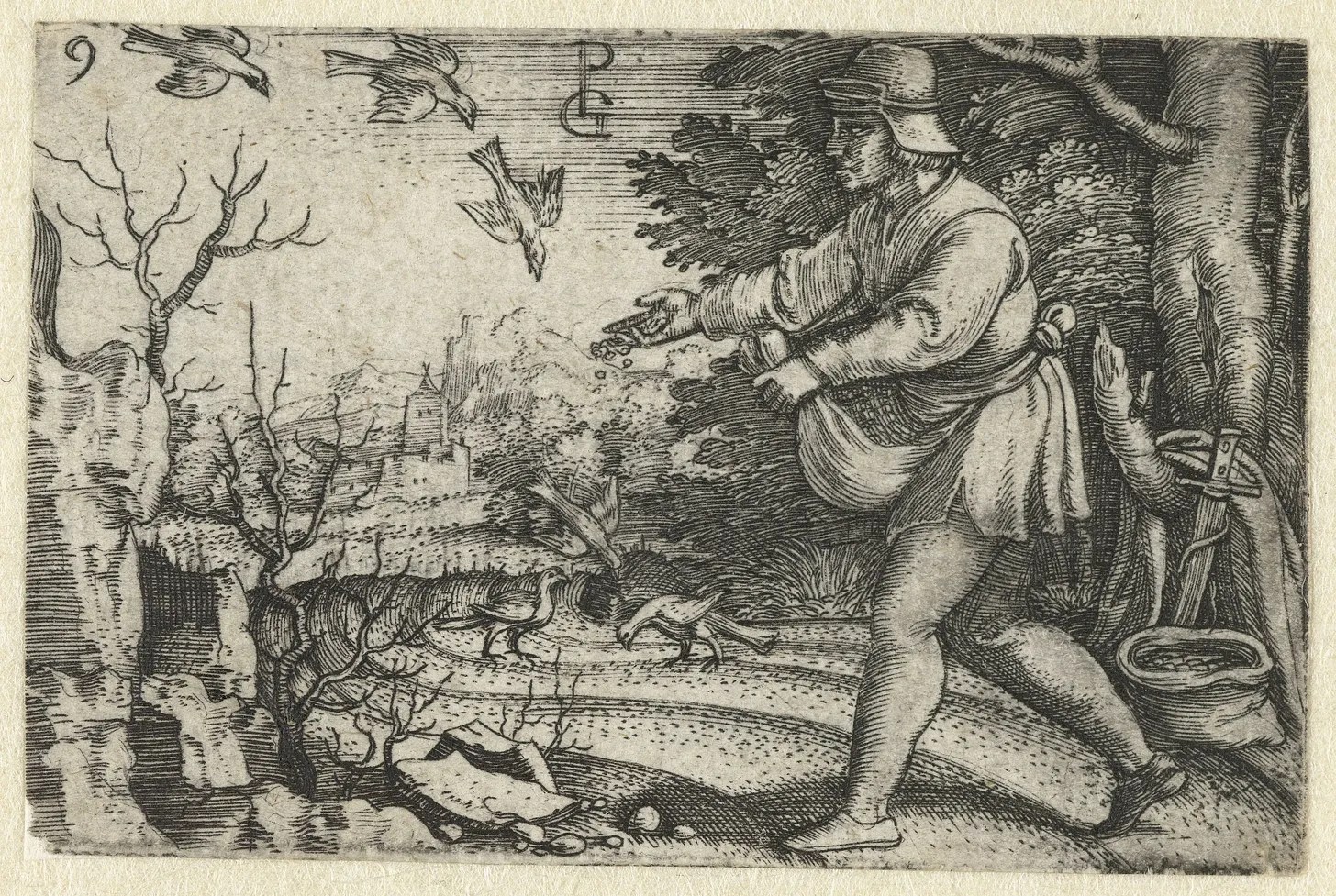
Many readers of the Parable of the Sower tend to categorize people by the soil types the Word of God falls on. Jesus said the parable is about the seed, the Word of God. No matter where it falls, the seed tries to grow, accepting, believing, and holding it sacred at least temporarily. It would have grown fully anywhere if not interrupted.
This parable is about the church, Christian believers, for they are not found only in the good soil, but also among the path, the rocks, and the thorns. A Christian is someone who receives the word of God and believes it. It does not mean that if a person hears the word of God and it doesn’t fall upon good soil from the very beginning, that they would never hear the word of God and believe it. For Christ would be no good steward of the ground if they only sowed seeds in His field once. Any farmer knows he must go out year after year, hoping for better results than the one before. And so knowing that our Lord continues scatter His Word, the very truth of His Son Jesus Christ. The word that Christ has come into the flesh, to be numbered among the sinners and to pay for their debt by the sacrifice of the cross.
So, this means we should strive to be the good soil: we would constantly hear the word of God and let it grow in us, shaping us and conforming us in the image of Christ. We should not interpret this statement as implying that we somehow contribute to salvation. For we could not do such a thing. While, by the power of the Holy Spirit, we are made into good soil as we are to remain steadfast to Christ and His word. So, as we reflect on this parable, we must examine all four kinds of soil so that we are not enticed to return to the path, the stones, or the thorns.
First, Jesus describes the path. The path itself does not change the effectiveness of the word, for it is the all-powerful Word of God. Still, it is the devil who sees Christians as vulnerable, whether they are hearing the word for the first time or once again anew. So the evil one and his minions snatched them away with whispers of lies, doubt, and disbelief. That somehow, the Word of God is not sufficient, or that it only provides captivity and not liberation. They tried to steal away the Word of God because those who believe it will eventually resist them also.
This is why it is important for us to read the word of God or to hear it preached from the pulpit whenever we have the opportunity. The more frequently we hear it and cling to it. It makes it harder for us to be distracted by the devil’s whispers.
Lent is drawing near; open the Word of God and your catechism. Make a plan to study these things and to commit them to memory so that they are written on your heart. For what bird could snatch away a plant in good soil, roots, and all?
Next, Christ describes those seeds among the rocks, saying they formed no meaningful root. They receive the word of God, the promises of Christ, the Savior who died and rose again, with pure joy, but during times of trials and testing, they fall away. Believing in Christ in this life is not a promise that life will become easier; rather, the opposite, as Christ says: “Whoever does not haters own life and does not take up his cross and follow me cannot be my disciple.” Trials do come from the Lord, but they are not intended to take us away from Him. Instead, we are to “count it all as joy when you fall into various trials, knowing that the testing of your faith produces patience.”
In order that these trials do not deter us from Christ, we must be rooted deeply in His abundant goodness, rooted in His sacrifice and grace upon us. He is the well of eternal life. Therefore, we are to drink from Him overabundantly. Remember that you are baptized, washed, and cleansed by His blood, and that He gives you His Holy Spirit. The Spirit to convince you of your sins and to call you to repentance, and also to comfort you with His saving gospel that your sins are no more. The roots of our faith are also nourished and strengthened in the body and blood of our Lord Jesus upon the altar in the elements of bread and wine. His body is the bread of life that sustains us. And His blood is meant to strengthen us in His salvation. For when the sacraments of God become our roots, no stone, pebble, or boulder can overtake us in trial or tribulation.
And now we must consider the thorns. These are the ones who hear the word, but they go their own way, and the word is choked by the cares and riches and pleasures of life, and their fruit does not mature. Where the world says, “Do what feels good.” Use your neighbor to satisfy your wants. Destroy their name, use their body, take what they have, and call it yours. As long as it brought you pleasure and convenience, how could it be wrong? Instead, the word of God says, ‘the exhort will be humble, and the humble will be exalted.’ And “come to me all you who are weary and heavy laden, and learn from me, for I am gentle and lonely at heart, and you will find rest for your soul. For my yoke is easy, and my burden is light.” The things of this world will give some pleasure for the moment, but that will soon fade away. Soon after, you will need to find something else or someone else to satisfy you again.
Instead, we ought to resist these temptations to worldly passion and lust. This resistance is impossible apart from the Holy Spirit. These temptations come from the father of lies, the devil himself. Therefore, our only source of combat and defense is prayer. The act of prayer conforms us to the will of God. By asking for deliverance from temptation, we acknowledge that the things that our flesh desires are contrary to God. And with our thanksgivings, we are made to understand that the things that we possess already come from our good, gracious Heavenly Father, and they are suitable for us. So in moments of temptation, want, fear, desperation, and uncertainty, turn to prayer first and foremost. The Lord desires to hear them from all His children, and answers them according to His good will.
Now, when we, by the power of the Holy Spirit, resist falling into any of these traps, as seen in this parable, we ensure that the Word of God finds good soil in our hearts. Hearts that meditate upon the Word of God. Hearts that are rooted in Christ in faith and for love. Hearts that struggle against the cares of this life. These are evident in the good soil.
So in the end, if you are still concerned, what kind of soil are you in, Christ does not want us to fix our eyes on ourselves, but on Him. The Lord is the sower and the seed itself. For He is the one who has scattered His word without partiality, whether it will be on good soil or not. Jesus Christ, crucified, died, and risen, continues to go out to sow with His word. So trust in him, for He continues to work for your salvation.
 St. John's and Grace Evangelical Lutheran Parish