The gospel brings us into the kingdom of heaven, which was bought and purchased for sinners by the sacrifice of Jesus Christ. As the revelation to St. John shows, the Saints around the throne of God and the Lamb are dressed in white robes that have been washed by His blood. Without Christ’s taking on human flesh, life of willing obedience to the Father, bearing the punishment that was undeserved upon the cross, and his glorious resurrection from the grave, we would still remain in our trespasses and sins. So, it should be no surprise to us that the Lord Christ compares the kingdom of heaven to a king who forgives the debts of the servants.
The gracious king comes out of his palace to settle the accounts of his borrowers; he undoubtedly goes first to the man who owes him the most money. The man owed him ten thousand talents of silver. This is truly an extraordinary number. From what we know about biblical times, on average, a laborer would earn two talents of silver in his entire life. This debt is so great that it would take 5,000 men their entire lives to pay it. Or approximately 300 tons of silver. Knowing that the man is unable to pay the debt, along with his begging for mercy, the king immediately forgives the man’s loan.
Who is this king other than the Lord Jesus Christ? For the Lord already knew how much the man owed even before coming to him. The only way that the man’s account could be settled by the king was through forgiveness. How foolish of the king would it be to give a man such a line of credit if he didn’t already plan to forgive it? Meanwhile, if the man only had a small deficit with the king, his mercy would be practical, as he would no longer want to hear of his servants complaining about his own foolish financial decisions. Yet, this line of credit could certainly be worth more than his entire kingdom, and still, he takes it away completely.
This is how God, our Heavenly Father, has looked upon us. He sends His Son, Jesus Christ, who is one with the Father, the king of all creation, to come to our broken and fallen world in the form of a servant, taking on flesh and blood to settle the account of His Father with all mankind. The Lord Christ, already knowing the deficit of our sins, does not come as our angry debt collector, hunting us down until we promise to sign on the dotted line to pay everything we owe and then some. Notwithstanding, this is certainly what we deserve for our sins, as these are offensive to God, whose will we have transgressed. For our sin is a perversion of the will of God. We have turned it on ourselves, so instead of putting our fear, love, and trust in God above all things, we fear how we are perceived, we love our goals, expectations, and plans most of all, and we put our trust in ourselves, refusing to trust in God. Because at the end of the day, sin is one thing: misdirecting our love for God to ourselves. And when we begin to think about our sins, we find that they sum up to a debt that we cannot repay.
The gracious king, our Lord Jesus Christ, came to settle our accounts by taking on the price of our debt of sin. He looks upon us and all of humanity and says, ‘I will have mercy and compassion upon you because I myself will become the only acceptable payment for sins.’ Not even the effort of all people could pay for a single sin. Yet, the blood of the Son of God is not tainted by sin and is purer than gold and finer than silver. Since he is both God and man, his death makes satisfaction for the sin of every human being from Adam until the end of time.
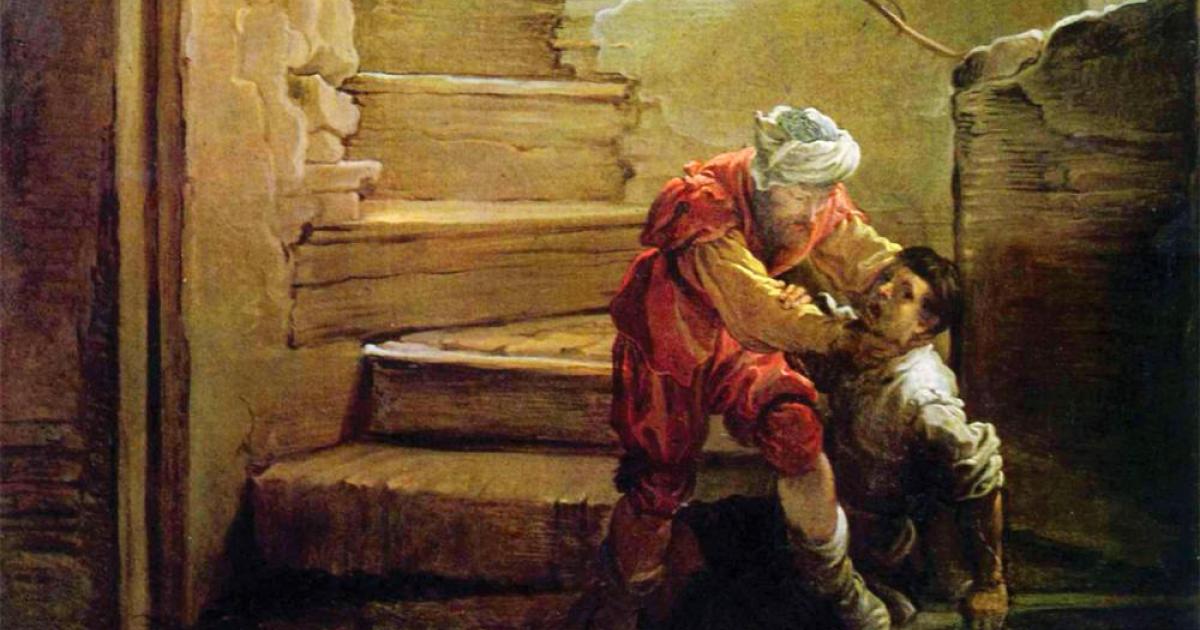
Yet, this is not the end of the parable. The man who has received an overwhelming amount of forgiveness is still unwilling to forgive his fellow servant who owes him a small debt. For the sake of comparison, the first was ten thousand talents, while the second owed a hundred denarii. One talent is worth 6000 denarii. So compared to the first, this second servant owns a few pennies. But he will not allow his fellow servant, his brother in Christ, to be released from his wrongdoing and will hold him accountable, even bringing him to near death so that he repays what we would find between the cushions or in our pockets. You could say that what this servant does is senseless, cruel, and does not mirror the king. If the debt in the parable is sin, then we could say that the second servant also had an enormous price to pay with the king, and the Lord certainly did not hold this one accountable as he did the first. But now, as it is between brothers, he is unwilling to do what his Lord does for himself.
It is easy to pity this man, but are we much different? First, do we deny forgiveness to those who ask for it? This parable teaches otherwise. Second, when we do forgive, is there always a string attached? For example, we could ask for a favor in return, such as a night out on the town without our spouse, an extra day off work, or giving an ultimatum that if this happens again, I’m filing for a divorce, I’m going to corporate, or I’m cutting you out of my life. This does not keep with the words of Jesus, for Christ says, “I do not say to you, up to seven times, but up to seventy times seven.” Meaning there is no amount of forgiveness that can be withheld. And finally, have we already cut people out of our lives even while they seek our forgiveness? Have we already cut out friends and family because we think they are always out to hurt us? That somehow they have gone too far, and they are no longer worthy of being called our loved ones, but just people we are related to.
This is the phenomenon of our age. The term “cut off” is especially common among young people. So if you have been sinned against, look to our Lord Jesus Christ, who goes out and seeks the lost sheep. For our Lord does not say that they have wandered off too often or too far. And the king does not go out to receive payment but to share the good news that their debt is no more. Go to your brother, tell him the sins he has committed against you, call him to repentance, and forgive him. As Christ has forgiven you, so you must forgive others.
As Christ finishes the parable with these words, “So also, My Heavenly Father will do to everyone of you, if you do not forgive your brother from your heart.” Therefore, do not fear these words for one moment. For when we forgive, it is not us on our own, but it is Christ in us; his Holy Spirit uses us to forgive our wrongdoers. As we have received the heart of Christ by faith, it is from Christ and by Christ that we can forgive. So, look to Him who has taken away from you all your burdens and has paid your debt by His cross, and he will strengthen you.
 St. John's and Grace Evangelical Lutheran Parish