It may be a little-known fact among pastors that the texts for each Sunday repeat each calendar year. These are not selected at random. Pastors like myself, choose to read the same Old Testament, Epistle, and Gospel readings every year. So when you come next year, four Sundays after Trinity, we will have the same intro, gradual, and alleluia verse. Some people may ask why the repetition and how to prevent preaching on the same thing. It is repetition that truly teaches year after year, so that you come to know the stories of the text, and you come to expect what to hear in the sermon. Personally, I enjoy the clear theme of each Sunday in the church year.
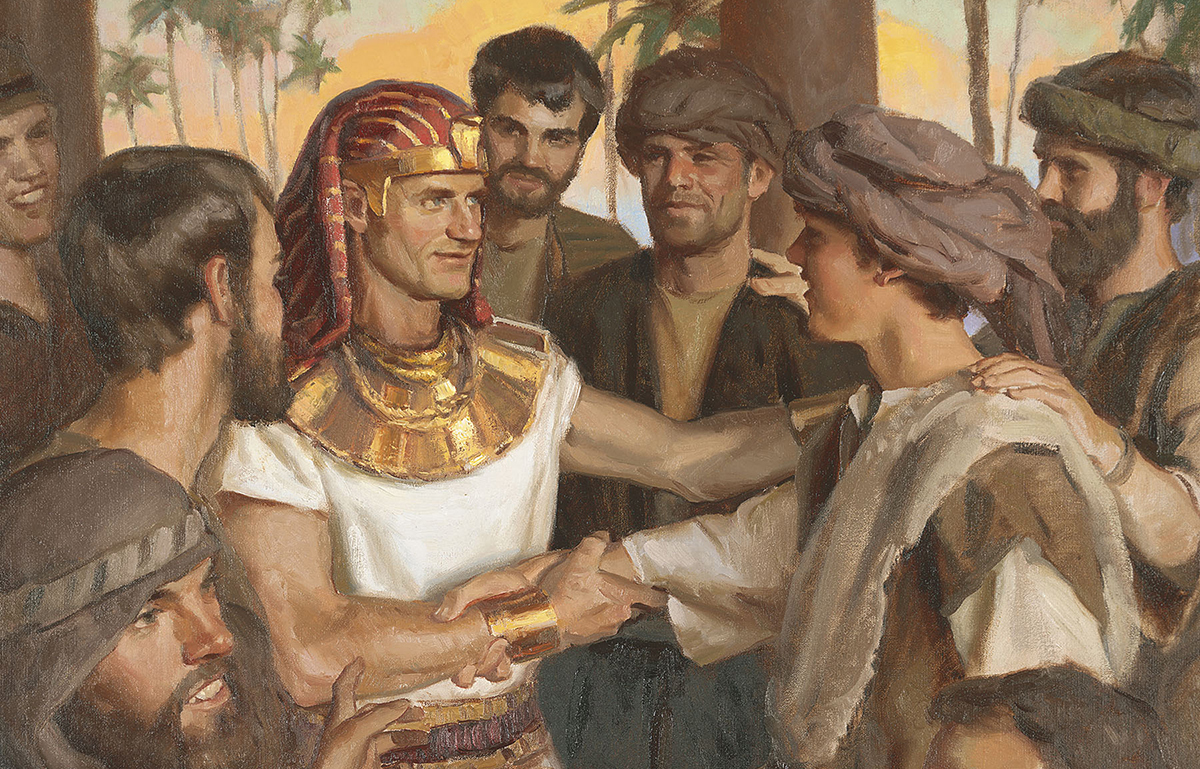
This Sunday is no different. First, we begin with the Old Testament reading. The final patriarch of the book of Genesis is Joseph, one of the 12 sons of Jacob. Earlier in the book of Genesis, he is sold into slavery by his older brother because they are jealous of Jacob’s favoritism towards Joseph and his ability to interpret dreams. Even though Joseph is sold into slavery in Egypt, he becomes one of the most powerful men of that country. And back in Israel, as there was a famine, Joseph’s brothers came to Egypt, not knowing that Joseph was still alive. They were seeking help from this important man. Then Joseph reveals that it was he all along.
He has compassion for his brothers, the same brother who wanted him dead. Yet, he does not seek vengeance, but he desires to save his father, his brothers, and their household from certain death because of the famine. Joseph does not want them to repay. Instead, he tells him that all of the wealth of Egypt is now theirs. And when the brothers are sent home to bring their father and their families to Egypt. Joseph gives them the finest goods of the land to bring to Jacob and provide for them on their journey to Canaan. Joseph saves the lives of those who wanted him dead. He had mercy on those who deserved no mercy and repaid evil with good.
Now, we turn to Saint Paul in Romans 12. In our epistle reading, Paul encourages the church not to let the ways of this world dictate how they treat those who have wronged them. Paul does not instruct them to persecute those who persecuted them. Instead, he tells them to “bless those who curse them and to rejoice with those who rejoice and weep with those who weep.” He does not want the Saints to be vengeful or to pass judgment, for that is not their judgment to give. They are to live in harmony with one another, not just with fellow Christians, but with all people.
Let us consider how impactful these words must have been to the Christians in Rome. Rome is not Jerusalem, where the early Christians were somewhat immune to pagan persecution. But these Christians were in the heart of the Empire. They were considered rebellious because they would not offer sacrifices to the Roman gods. And Paul does not tell them to give in. The people he is writing to are well aware of the Christians killed because they profess Jesus Christ. They are not only to keep steadfast in their worship of the one God. They are also told, “If your enemy is hungry, feed him, if he is thirsty, give him something to drink; for by doing you will heap burning coals into his head.” In other words, they are to be like Joseph to the people of Rome by overcoming evil with good.
And now this brings us into our gospel reading from Saint Luke. The patriarch Joseph and the apostle Paul are expressions of the words of Jesus. As our Lord says, “Be merciful, even as your father is merciful. Judge not, and you will not be judged; condemn not, and you will not be condemned; forgive, and you will be forgiven; give, and it will be given to you.” Jesus instructs us to live in a way contrary to the world. Like Joseph, it would be much easier for him to abandon his brothers in their time of need, as they had abandoned him. And for Paul and the Roman Christians, if they saw someone who killed one of their own, hungry or thirsty, they are told to give them food and drink.
Jesus calls us to a new way of life in the waters of baptism, where he forgives us all our sins, and now we daily rise as a new man. This means that we do not live according to the flash seeking vengeance and passing judgment. Christ desired us to seek him first, and it will be added unto you. As we have received mercy from God, we can now show mercy to our neighbors. For in Jesus Christ, he has become the mercy of God by dying for the sake of sinners, and he has risen again so that we are justified and inherit eternal life with him. Only by Christ and his Cross are we transformed to live according to his will.
And to live according to his will means that we are honest about our sins, the people we have wronged, and our desire to do better. That is the will of God that we acknowledge our sins and believe in Jesus. It is only for the sake of Christ that we are merciful, as our heavenly Father is merciful, and we do not judge or condemn because we have not been judged or condemned. We forgive and give because Christ has forgiven our sins and has given us every grace and blessing. Since we do have the Holy Spirit working in our hearts day by day. We do show mercy, and we do forgive, not because of our own simple ways, but because the Holy Spirit continues to work in us. God is the first to act by showing mercy upon us and forgiving all our sins in order that he may not judge or condemn us. He sends the Holy Spirit to bring it to completion. By the Holy Spirit, we do live out God’s will.
Because of God’s work in us, we take the log out of our own eye, so we can take the speck out of our brother’s eye. When we acknowledge our sin before God, we are able to help our brother. To recognize our own sins will serve our brothers well. We are not to leave our brothers in sin; that would be no benefit to them. This is how we have mercy on our brothers. Even when it may be difficult, we show them their sins that they have not repented of. Then, we point them to Jesus and his forgiveness. This is how we love our brothers. For what better way to love than to show Jesus and his forgiveness?
When Christ does this, we imitate the patriarch Joseph, and we follow the words of Paul. Joseph showed love to his brothers because he knew the love God had for him. And Paul was able to bear his suffering because Christ suffered for his sins. The Lord works repentance in us that we can take out the log of our own eye and, in return, we are merciful by taking the speck out of our brother’s eye. `
So when we are tempted to pass judgment and to withhold forgiveness, do not fall into hypocrisy but fall into the forgiveness of Christ. The death of Christ opens our eyes so that we may see the log in them. Our sins no longer blind us, but we look to Christ, and through him, we see our brothers as forgiven by the blood of Jesus.
 St. John's and Grace Evangelical Lutheran Parish