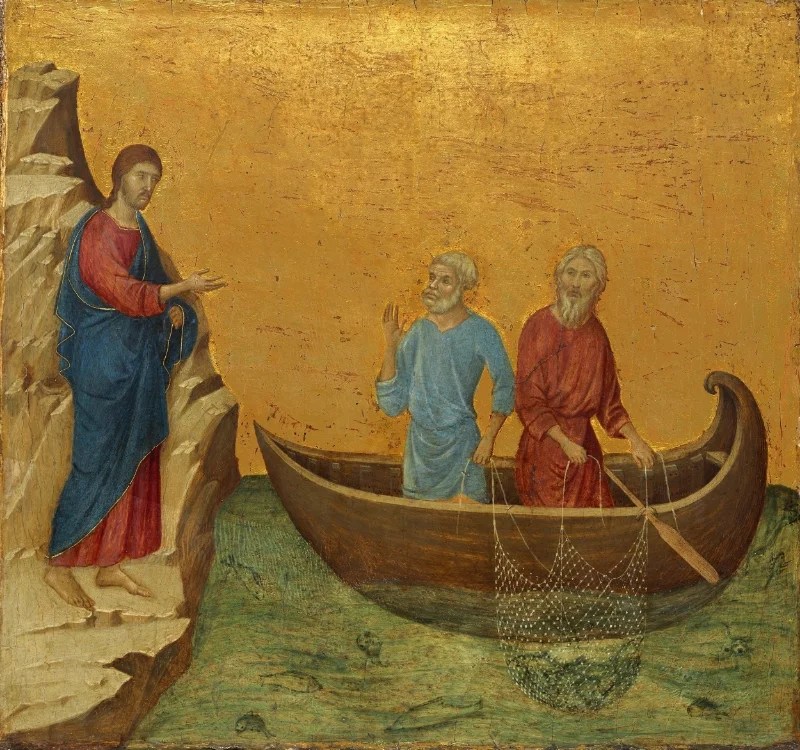
Jesus desires to be with sinners. He calls Simon, who would later be known as Peter, an ordinary man trying to provide for himself and his family. Simon is no Raddi, Pharisee, or tax collector. He is an ordinary fisherman. There is nothing notable about him. He is a sinner. Still, Jesus desires Simon to be a fisher of men. The Lord calls him with a miraculous catch of fish. In this miracle, he says to this ordinary man, “You are mine.” And though Peter tells Jesus to depart because of his own sinfulness. This does not change the Lord’s mind in the slightest.
In the same way, the Lord chooses you to be his sons and daughters. He has desired you to be his disciples, to hear and believe in his word, to bring you to faith, and to make you a fisher of men. God has looked upon you with favor. God has chosen you to believe in his son, not because of something you have done previously, but because of his abundant love and mercy. God loves the ordinary to bring you into the extraordinary, the kingdom of God, through the sacrifice of his son Jesus. For in Christ, your sins are forgiven, and you are made new so that you belong to God and God belongs to you.
You may not have a miraculous catch of fish to show that God has chosen you. Yet, you have something equally miraculous. The gift of faith, which comes by the Holy Spirit. This is the work of God, and not the work of man. For by our own strength, we cannot believe, we cannot be saved, and we cannot inherit eternal life. It is Jesus who does all these things and gives us the Holy Spirit to keep us in this one true faith.
And as believers in Christ, he brings you into the boat of the Christian church, where he protects you and keeps you until he calls you to himself. You who were called like Peter are now like the fish in the miracle. Jesus sustained you and keeps you. And in this church, he gives you the word of God, the water of baptism, the words of absolution, and his holy body and blood to eat and to drink.
These are the gifts of God to sustain you and preserve you in Christian faith. The remainder of my sermon, I would like to speak on one of these gifts of God, the sacrament of the Lord’s Supper. First, you may have noticed some differences in the way I perform the Lord’s Supper compared to other pastors, whether in the vacancy or those who have been called. These differences in practices are not corrections of what has been done here before. I initiated these adjustments to what I believe is a more effective practice and confession of our beliefs about the Lord’s Supper.
Our Lutheran understanding of Holy Communion always comes down to the words that Jesus used when he instituted his body and blood to eat and drink. Our Lord Jesus Christ, in the night that he was betrayed for us to accomplish our salvation by his cross and passion, takes the bread that was at the Passover table and tells us that this is his body. We have no reason not to take him at his word. This is truly a mystery: how can the body of Christ be in bread? And yet it remains bread that has been set aside by the word of God for us. And then, in the same way, he took the cup, which is the cup of wine for the Passover meal, and he said, ‘This is my blood,’ the blood shed for the sins of the entire world. Jesus is the final Passover lamb, and as he died upon the cross, he made a full satisfaction for sins. It is this blood in the wine that we are given to drink in communion.
In 1 Corinthians chapter 11, Saint Paul offers his instruction, which he says “Was passed down from the Lord,” concerning holy communion. Paul states that the bread and wine are the body and blood of the Lord. So even after the words of Jesus are spoken over the bread and wine, they are now the body and blood while they still remain bread and wine. Eating the bread and drinking the wine unworthily results in sinning against the body and blood. So when you come forward to receive the body and blood of Jesus, they are still also bread and wine.
This is why Lutherans hold such a high view of Holy Communion. Since we know the words of Christ and Saint Paul to be true, we should strive to follow them as closely as possible, out of love for Christ and His body and blood in the sacrament. Christ is present through His word. Jesus does not become present simply because the pastor decides to; rather, God uses the pastor to speak His word through him, and his body and blood are present because of the words of Jesus. The pastor, as the instrument of God, behaves and conducts himself in ways that the people are not obligated to.
First, you may notice some of the gestures and postures I make during the service of the sacrament. Many pastors choose to kneel for a brief moment during the words of institution to acknowledge that Christ is present. This is not necessary, but it allows the congregation and the pastor a moment to reflect on the words of Jesus that were just spoken or chanted. And now the sign of the cross, which I will make over the bread and wine that I will consecrate for the body and blood of Christ. The sign of the cross goes back to very early in the church and was a sign of blessing of the Lord. Within the service of holy communion, the sign of the cross is used to indicate that the bread and wine have been blessed by the word of God in order that the people may know that this was done for them to eat and drink. I choose to do these things so that you may know that this sacrament is for you and for your salvation right here in this place.
I would like to discuss one more noticeable difference. After everyone has received the body and blood of Christ, the elder and I will either at the altar or after the divine service consume everything that remains from what was blessed. This may seem odd or wasteful, but there is a reason behind it. Jesus tells us one thing to do with his body and blood, and that is to eat and to drink. We do not know how the bread and wine are the body and blood of Christ, and we do not know when or if they return to ordinary bread or wine. Therefore, we cling to Jesus’ words and promises to eat and drink. Jesus does not offer any additional instructions beyond this. Out of honor for the Sacrament and worship of Christ, I choose to consume everything that has been set aside by the word of God, simply because God does not tell us what else to do.
This may be quite the adjustment for our church. I desire to keep teaching on the sacrament. And as your Pastor, I am eager to serve you Holy communion. I invite you to continue asking questions and receive your Lord in the sacrament as often as you come. I do not do this to look down on former practices; I do all of these things looking to Christ and His abundant love and commitment to us in His body and blood.
Let us give things to God for his dear Son and receive Jesus as he intends in this most holy communion.
 St. John's and Grace Evangelical Lutheran Parish